
Attackers Exploit Public Wi-Fi for Credential Harvesting
Security researchers have identified a sophisticated phishing campaign targeting users of public Wi-Fi networks, particularly in hotels and conference centers. Attackers are actively hijacking the Domain Name System (DNS) settings of these networks. Their goal: to redirect unsuspecting victims to counterfeit Microsoft 365 login pages, thereby stealing sensitive corporate credentials.
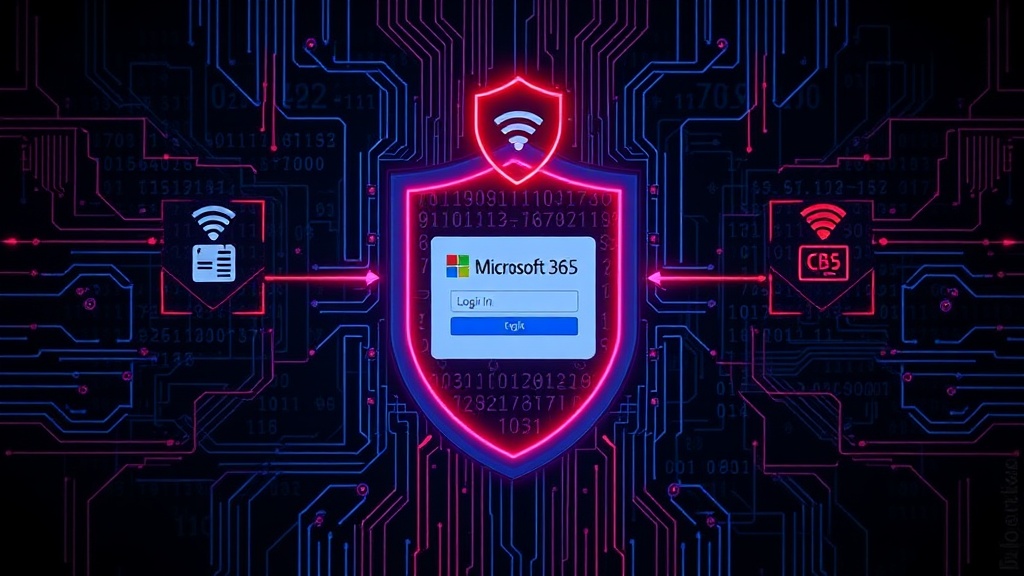
This tactic, detailed by BleepingComputer, exploits the inherent trust users place in public Wi-Fi. When a user connects to a compromised network, the attackers manipulate the DNS server. Instead of resolving legitimate website addresses to their correct IP addresses, the rogue DNS server provides falsified information. This redirects users attempting to access Microsoft 365 services, or even legitimate network login portals, to pages controlled by the attackers.
The fake login pages are designed to be nearly indistinguishable from the real Microsoft 365 login portal. They meticulously replicate the visual design, branding, and even the URL structure (often using subtle variations or subdomains) to trick users into entering their usernames and passwords. Once submitted, these credentials fall directly into the hands of the threat actors.
The Technical Underpinnings of the Attack
The attack chain begins with gaining unauthorized access to the hotel or conference center's Wi-Fi network infrastructure. This could be achieved through various means, including exploiting unpatched vulnerabilities in network equipment, guessing weak administrative passwords, or social engineering network administrators. Once control is established, the attackers modify the DNS server settings. Typically, this involves changing the DNS server address that the Wi-Fi router or access point assigns to connected clients.
When a user on the compromised network attempts to access a Microsoft 365 service, such as Outlook Web Access (outlook.office.com) or the Microsoft 365 admin center (admin.microsoft.com), their device queries the rogue DNS server. The attacker-controlled DNS server then responds with the IP address of their phishing server, rather than the legitimate Microsoft IP address. The user's browser is thus directed to the fake login page. The initial connection might even be to a captive portal that appears legitimate, further lulling the user into a false sense of security before the DNS redirection occurs.
The sophistication of these attacks lies in their ability to remain largely undetected by the end-user. Unlike traditional email phishing, which relies on user error in opening malicious links or attachments, this method targets the network infrastructure itself. Users who are security-conscious about clicking suspicious links might still fall victim if they are connecting to a trusted public network, like their hotel's Wi-Fi.
Implications for Businesses and Individuals
The consequences of falling victim to this attack can be severe. Stolen Microsoft 365 credentials can grant attackers access to a vast array of sensitive corporate data, including emails, documents stored in OneDrive and SharePoint, customer databases, financial records, and internal communications. For businesses, this can lead to data breaches, intellectual property theft, financial fraud, reputational damage, and significant regulatory fines, especially under regulations like GDPR or CCPA.
The attackers are not merely collecting credentials; they are likely leveraging them for further malicious activities. This could include deploying ransomware within a compromised corporate network, conducting business email compromise (BEC) scams by impersonating executives, or selling the stolen credentials on dark web marketplaces. The widespread adoption of Microsoft 365 as a primary productivity and collaboration suite makes it a particularly attractive target for these broad-stroke phishing campaigns.
For individuals, the compromise of their Microsoft 365 account can lead to personal data theft, identity theft, and unauthorized access to linked services. The interconnected nature of cloud services means that a single compromised account can have cascading effects.
Mitigation Strategies and Best Practices
Defending against such DNS hijacking attacks requires a multi-layered approach, combining technical controls with user education. Organizations should mandate the use of multi-factor authentication (MFA) for all Microsoft 365 accounts. MFA acts as a critical last line of defense, making stolen credentials significantly less useful to attackers.
Users should be trained to be vigilant even on trusted networks. This includes:
- Verifying URLs: Always double-check the URL in the address bar for subtle misspellings or unusual domain names before entering credentials.
- Looking for HTTPS: Ensure the connection is secured with HTTPS and that the certificate is valid, although sophisticated phishing sites can also use valid certificates.
- Avoiding Sensitive Logins on Public Wi-Fi: If possible, refrain from accessing highly sensitive corporate or financial accounts while connected to public Wi-Fi. Using a trusted VPN is highly recommended for added security.
- Reporting Suspicious Activity: Encourage users to report any unusual login prompts or network behavior to their IT department immediately.
IT administrators responsible for public Wi-Fi networks, such as those in hotels, have a crucial role to play. They must ensure their network infrastructure is secure, regularly patched, and protected against unauthorized access. Implementing DNS security solutions that can detect and block malicious DNS requests can also provide a valuable layer of defense. Regularly auditing DNS settings and monitoring for unauthorized changes are essential proactive measures.
The ongoing evolution of phishing tactics, moving from email to network infrastructure, underscores the need for continuous adaptation in cybersecurity strategies. As attackers become more sophisticated, so too must the defenses employed by both organizations and individuals.