The Problem: Opaque Hackathon Judging
Traditional hackathon platforms suffer from a critical flaw: a lack of transparency in their judging and results. While most platforms offer similar features for submission and judging, they stop short of providing verifiable outcomes. Organizers often set criteria, but the weighting and normalization processes are frequently undocumented or inscrutable. This leaves participants and observers with no recourse but to trust the platform’s opaque ranking system. The result is a system where winners are declared, but the fairness and accuracy of the decision-making process remain a black box.
This opacity erodes trust and discourages participants who wish to understand how their projects were evaluated. It’s akin to receiving a grade on an exam without seeing the grading rubric or how points were assigned. The common practice of score normalization, often advertised as a feature, lacks clear documentation, leaving its implementation open to interpretation and potential bias. Without the ability to recompute results from raw scores, the final ranking is an assertion, not a verifiable conclusion.
DOGFOOD's Solution: Verifiable and Recomputable Results
Hackathon Raptors, a group focused on building practical tools for hackathon organizers, has developed DOGFOOD, a submission and judging platform designed to address this fundamental transparency issue. The core tenet of DOGFOOD is simple yet powerful: any result generated by the platform must be recomputable and verifiable by anyone, using only the raw scoring data and the defined judging parameters. This eliminates the need for blind trust in the host platform.
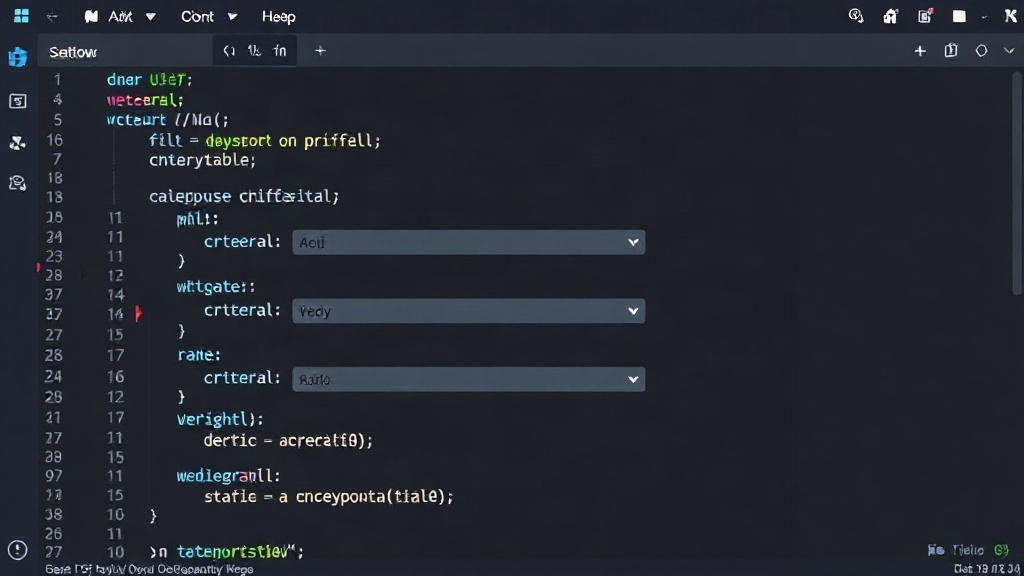
DOGFOOD operates on a straightforward scoring mechanism. Judges assign each criterion a score from 1 to 5. Organizers then define the weight for each criterion. These weighted scores are combined into a composite score, which is kept on the original 1 to 5 scale. The platform then employs a statistical model to account for judge leniency. This additive model, structured as 'mu plus a project effect plus a judge bias,' effectively removes individual judge biases. The final ranking is determined by the bias-removed quality score, which is then shrunk towards the mean to further mitigate outliers and ensure robustness.
The Mechanics of Transparency
The emphasis on verifiability means that every step of the calculation is auditable. When a judge scores a project, their input, along with the assigned weights and the judge's bias, is recorded. The system then applies a transparent normalization process. Unlike existing platforms where normalization might be a black box, DOGFOOD's approach is designed to be understood and replicated. The 'shrinkage' towards the mean, for example, is a standard statistical technique to prevent extreme scores from disproportionately influencing the final ranking, and its application is clearly defined within the platform's logic.
This approach ensures that if an organizer decides to change a criterion's weight or a judge’s bias is identified, the resulting impact on the final ranking can be precisely calculated and demonstrated. This level of detail is crucial for maintaining fairness, especially in competitive environments like hackathons where stakes can be high for participants seeking recognition, prizes, or future opportunities. The platform’s design encourages organizers to be explicit about their judging methodologies, fostering a more accountable environment.
Beyond the Score: Fostering Trust
The implications of a verifiable results system extend beyond mere technical accuracy. It fundamentally shifts the relationship between organizers, participants, and observers from one of implicit trust to one of explicit validation. Participants can gain deeper insights into their performance, understanding precisely why they placed where they did. This feedback can be invaluable for learning and improvement. Organizers, in turn, can defend their judging decisions with data, rather than relying on subjective pronouncements.
DOGFOOD’s architecture is built for forkability and self-hosting. This means that hackathon organizers are not locked into a single vendor’s interpretation of fairness. They can take the codebase, modify it to suit their specific event needs, and run it themselves. This decentralization of the judging infrastructure further enhances trust, as organizers can be confident in the integrity of the tools they are using. The platform aims to become a community standard for transparent hackathon management, moving away from proprietary, opaque systems.
The Future of Fair Judging
While DOGFOOD’s initial focus is on hackathons, the principles of verifiable and recomputable results have broader applications. Any scenario involving subjective scoring and ranking, from academic competitions to grant reviews, could benefit from such a transparent approach. The platform’s success could pave the way for similar systems in other domains where objective fairness and auditability are paramount.
The question remains: will other hackathon platforms adopt similar transparency measures, or will DOGFOOD's forkable model become the de facto standard for organizers seeking to build genuine trust with their communities? The move towards verifiable data in all aspects of technology development suggests that transparent judging is not just a feature, but a necessary evolution.