
The Enduring Legend of Pascal
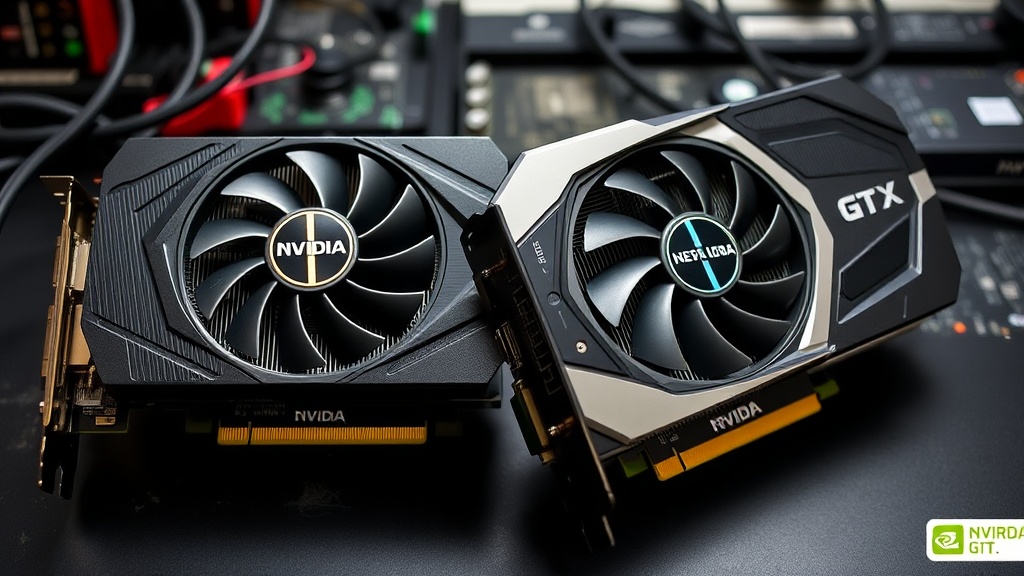
In the ever-accelerating world of graphics hardware, where new generations of GPUs arrive with predictable cadence, it's rare for a card released nearly a decade ago to warrant a second look. Yet, the NVIDIA GeForce GTX 1080, launched in May 2016, remains a subject of fascination. Built on the Pascal architecture, it was a titan of its time, offering a significant leap in performance and efficiency over its predecessors. But in 2024, with titles demanding ever-increasing VRAM and processing power, can this veteran still hold its own? LTT Labs set out to answer this question, subjecting a pair of GTX 1080s to a gauntlet of modern benchmarks and gaming scenarios.
Methodology: A Rigorous Modern Test
The LTT Labs team didn't just fire up a few old benchmarks. Their approach was to simulate real-world usage for a contemporary PC enthusiast. The test rig itself was a balanced system, designed to minimize CPU or RAM bottlenecks, featuring a modern high-end processor and ample system memory. This ensured that the performance figures would be as representative of the GPU's capabilities as possible. The GTX 1080s were tested in both single-card and SLI configurations where applicable, though the limitations of SLI in modern titles were a key point of observation.
The benchmark suite included a mix of demanding AAA titles released in the last few years, alongside popular esports titles that often benefit from high frame rates. Resolution targets ranged from 1080p to 1440p, with some limited 4K testing to establish absolute performance ceilings. Beyond raw frame rates, the team also focused on frame pacing and consistency, as choppy gameplay can be just as detrimental to the experience as low averages. Power consumption and thermal performance were also monitored, given the age of the hardware and the potential for degradation.
Gaming Performance: A Tale of Two Resolutions
At 1080p, the GTX 1080 still proves surprisingly capable in many titles. It can comfortably achieve playable frame rates, often exceeding 60 FPS, in a wide array of games, especially those that are not excessively VRAM-hungry. Esports titles like CS:GO or Valorant are easily handled, pushing well over 100 FPS, making it viable for competitive play at this resolution. However, when pushing into newer, graphically intensive titles like Cyberpunk 2077 or Alan Wake 2, the card begins to show its age. Settings often need to be dialed back to medium or low to maintain a smooth experience, and even then, frame rates can dip below acceptable levels, particularly in dense urban environments or during intense action sequences.
The 8GB of GDDR5X VRAM, which was generous in 2016, becomes a significant limitation at higher resolutions and with modern texture settings. At 1440p, the GTX 1080 struggles more noticeably. While some less demanding games or titles with aggressive optimization might still offer a decent experience, many AAA games will require significant compromises. Frame rates often hover in the 30-50 FPS range, necessitating the use of adaptive sync technologies or further reductions in graphical fidelity. The SLI configuration, while showing some uplift in games that support it, is largely a footnote in 2024. Driver support and game developer adoption of SLI have dwindled to the point where it offers inconsistent, and sometimes even detrimental, performance gains.
Compute and Productivity: Beyond Gaming
The GTX 1080's Pascal architecture, with its robust CUDA core count and respectable memory bandwidth for its era, also finds applications beyond gaming. LTT Labs explored its performance in common productivity tasks, such as video editing, 3D rendering, and even some machine learning inference. In video editing, the card provides a noticeable acceleration for timeline scrubbing and rendering compared to integrated graphics or older dedicated cards, though it falls far short of modern GPUs with dedicated media encoders and more advanced ray-tracing capabilities.
For 3D rendering, particularly in applications that utilize CUDA, the GTX 1080 can still be a workhorse for hobbyists or those on a strict budget. It offers a significant speed-up over CPU rendering, making it a viable option for small projects or learning the ropes. However, for professional workflows demanding faster render times or handling of complex scenes, its limitations in raw compute power and VRAM become apparent. The area where the GTX 1080 shows the most surprising resilience is in certain machine learning inference tasks. While not competitive for training large, modern neural networks, its mature driver support and available VRAM can make it suitable for running smaller, pre-trained models, especially for individuals experimenting with AI on a budget.
The Verdict: A Legend, But Not a Contender
The LTT Labs analysis concludes that the GeForce GTX 1080, while a legendary card in its time, is largely relegated to historical curiosity or niche budget builds in 2024. For 1080p gaming with adjusted settings, it can still offer a playable experience in many titles, especially if acquired second-hand at a very low price. However, it cannot compete with modern GPUs in terms of performance, feature set (like ray tracing or DLSS), or power efficiency. The 8GB VRAM is a critical bottleneck for contemporary titles at higher resolutions. As a compute card, it retains some utility for specific, less demanding tasks or for educational purposes, but it is far from a competitive solution for serious professional work.
The surprising detail here is not that the GTX 1080 struggles, but rather how many games at 1080p it can still render at acceptable frame rates, showcasing the architectural prowess of Pascal. It serves as a potent reminder of how far GPU technology has advanced, and how quickly hardware can become obsolete when faced with the relentless demands of software evolution. If you have a GTX 1080 lying around, it might be worth dusting off for some retro-inspired 1080p gaming, but for anyone building a new system or looking for a primary gaming or productivity GPU today, newer hardware is essential.