
What is Grok Build?
Grok Build emerges as a new contender in the rapidly evolving landscape of large language model (LLM) development. It positions itself as an open-source, end-to-end platform designed to simplify and accelerate the entire LLM lifecycle. From the initial stages of data curation and preprocessing to the complexities of model training and fine-tuning, and finally to the critical steps of evaluation and deployment, Grok Build seeks to offer a cohesive solution for developers and researchers.
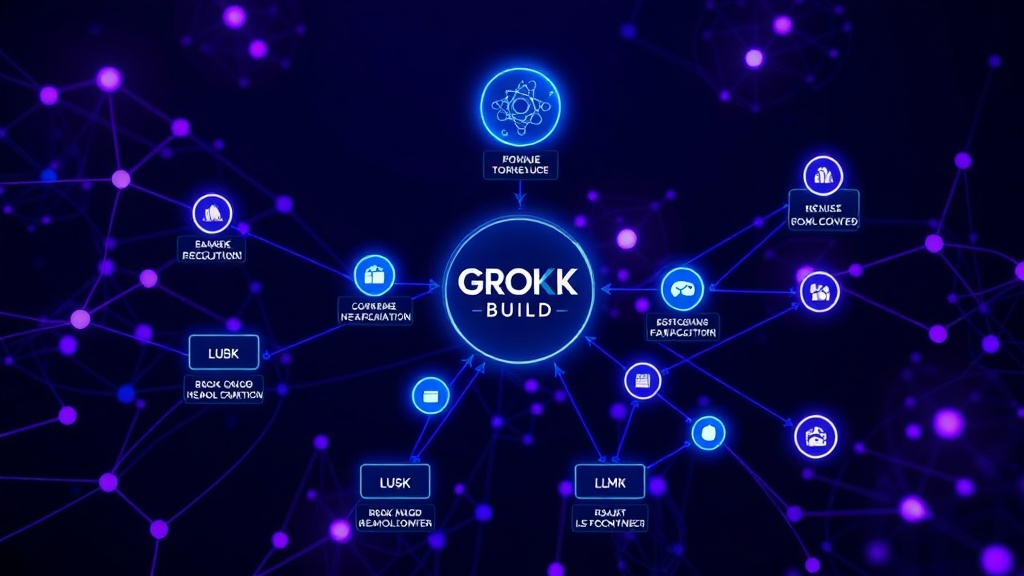
The project, hosted on GitHub, is driven by the XAI organization. Its core objective is to address the fragmentation often encountered in LLM development workflows. Typically, teams rely on a patchwork of disparate tools for data handling, training frameworks, and deployment infrastructure. Grok Build aims to consolidate these capabilities into a single, integrated environment. This unification is intended to reduce the overhead associated with managing multiple dependencies, configurations, and interfaces, thereby allowing teams to focus more on model innovation and less on infrastructure plumbing.
The project's philosophy appears to be rooted in democratizing advanced LLM development. By providing an open-source framework, Grok Build encourages community contribution, transparency, and wider adoption. This open approach also means that users can inspect, modify, and extend the platform to suit their specific needs, fostering a more adaptable and resilient development ecosystem.
Key Components and Features
While the specifics of Grok Build's architecture and feature set are still being detailed, the project's stated goals suggest several key areas of focus:
- Data Management and Preparation: A significant bottleneck in LLM development is acquiring, cleaning, and preparing high-quality training data. Grok Build likely includes tools for data ingestion from various sources, automated data cleaning, deduplication, and formatting suitable for LLM training. This could involve sophisticated techniques for handling large datasets efficiently and ensuring data diversity and representativeness.
- Model Training and Fine-tuning: The platform is expected to support various popular LLM architectures and provide optimized training pipelines. This might include distributed training capabilities to leverage multiple GPUs and TPUs, as well as tools for efficient fine-tuning on custom datasets. The aim is to abstract away much of the low-level complexity associated with setting up and running large-scale training jobs.
- Evaluation and Benchmarking: Robust evaluation is crucial for understanding model performance and identifying areas for improvement. Grok Build will likely offer integrated tools for assessing model accuracy, perplexity, bias, and other relevant metrics. This could also extend to standardized benchmarking against established LLM leaderboards to provide objective performance comparisons.
- Deployment and Inference: Getting a trained model into production requires careful optimization for inference speed and cost-efficiency. Grok Build aims to facilitate this transition, potentially offering tools for model quantization, compilation, and serving on various hardware infrastructures, from cloud environments to edge devices.
- Experiment Tracking: Managing numerous training runs, hyperparameters, and their associated results is essential for reproducible research and iterative development. The platform is expected to incorporate experiment tracking capabilities, allowing users to log, compare, and analyze different model configurations and outcomes.
The Need for Unified LLM Platforms
The LLM development space has seen an explosion of specialized tools, each addressing a particular aspect of the workflow. For data scientists and ML engineers, this has led to a complex ecosystem where significant effort is spent on integration and compatibility rather than core model development. For instance, a team might use libraries like Hugging Face Datasets for data loading, PyTorch or TensorFlow for training, Weights & Biases for experiment tracking, and Kubernetes for deployment. While each of these tools is powerful in its own right, stitching them together requires considerable engineering expertise and time.
Grok Build's value proposition lies in bridging these gaps. By providing a unified interface and integrated components, it aims to reduce the cognitive load on developers. This is particularly important for smaller teams or startups that may not have dedicated infrastructure engineers. The platform could democratize access to advanced LLM development capabilities, enabling a broader range of individuals and organizations to build and deploy sophisticated AI models.
Consider the process of fine-tuning a model. Traditionally, this might involve downloading a base model, preparing a custom dataset in a specific format, writing training scripts, managing GPU resources, and then evaluating the results. Grok Build aims to abstract much of this complexity. A developer might simply point the platform to their dataset and specify the base model, and Grok Build would handle the rest, providing metrics and a deployable artifact upon completion. This is akin to a chef having a single, well-organized kitchen with all the necessary tools and ingredients readily available, rather than having to gather them from multiple specialized shops.
Community and Future Development
As an open-source project, Grok Build's success will heavily depend on community engagement. The GitHub repository serves as the central hub for its development, inviting contributions in the form of code, documentation, bug reports, and feature requests. The XAI organization is likely looking to foster a vibrant community that can help shape the platform's future direction and ensure its continued relevance in the fast-paced AI field.
The project's longevity will also be determined by its ability to keep pace with the rapid advancements in LLM research. New model architectures, training techniques, and optimization strategies emerge constantly. Grok Build will need to be agile and adaptable, integrating support for these innovations to remain a valuable tool for practitioners. The open-source nature is a significant advantage here, as it allows the community to collectively drive these updates.
The promptness of community response on Hacker News, where the project gained traction, suggests there is significant interest in such a unified development platform. Developers are actively seeking ways to simplify their LLM workflows and reduce the time spent on infrastructure management. Grok Build, if executed effectively, could become a foundational tool for a new generation of AI development.
Potential Challenges and Considerations
Despite its promising vision, Grok Build faces several challenges. The primary one is the sheer complexity of building and maintaining an end-to-end platform that effectively integrates diverse functionalities. Each component—data processing, distributed training, inference optimization—is a complex domain in itself. Achieving seamless integration without introducing performance bottlenecks or usability issues will be a significant engineering feat.
Another challenge is the competitive landscape. While Grok Build is open-source, proprietary platforms and managed services from major cloud providers (AWS, Google Cloud, Azure) and AI companies (OpenAI, Anthropic) offer comprehensive LLM development solutions. Grok Build will need to demonstrate clear advantages in terms of flexibility, cost-effectiveness, or specialized features to attract users away from these established options.
Furthermore, the open-source community dynamics can be unpredictable. Sustaining development momentum, managing contributions, and ensuring the project's long-term viability requires dedicated effort and a clear governance model. The initial buzz on Hacker News is a positive sign, but sustained community involvement is key.
Ultimately, Grok Build represents an ambitious effort to bring order to the chaotic world of LLM development. Its success will hinge on its ability to deliver a truly integrated, user-friendly, and performant platform that empowers developers to build the next generation of AI applications more efficiently.