
The Developer's First Question: How Do I Make It Work?
Many API documentation sites fall into a common trap: they prioritize comprehensive reference material over practical usability. The result is a developer staring at endless lists of parameters, data types, and status codes, utterly lost on how to achieve their initial goal. This approach misunderstands the fundamental user journey. Developers don't consult API docs to read a manual; they consult them to build something functional, ideally on the first attempt.
A truly effective API documentation strategy answers the developer's most pressing question first: "How do I make one successful request?" Providing a clear, runnable example that works out-of-the-box builds immediate trust and confidence. Once this initial hurdle is cleared, developers are far more likely to engage with the detailed reference material, understanding its context and purpose.
Think of it less like a dense textbook and more like a skilled mentor. The mentor doesn't hand you a complete encyclopedia of every possible scenario on day one. Instead, they show you a simple, effective way to accomplish a basic task, then guide you through the nuances as you become more comfortable.
The Ideal Documentation Structure
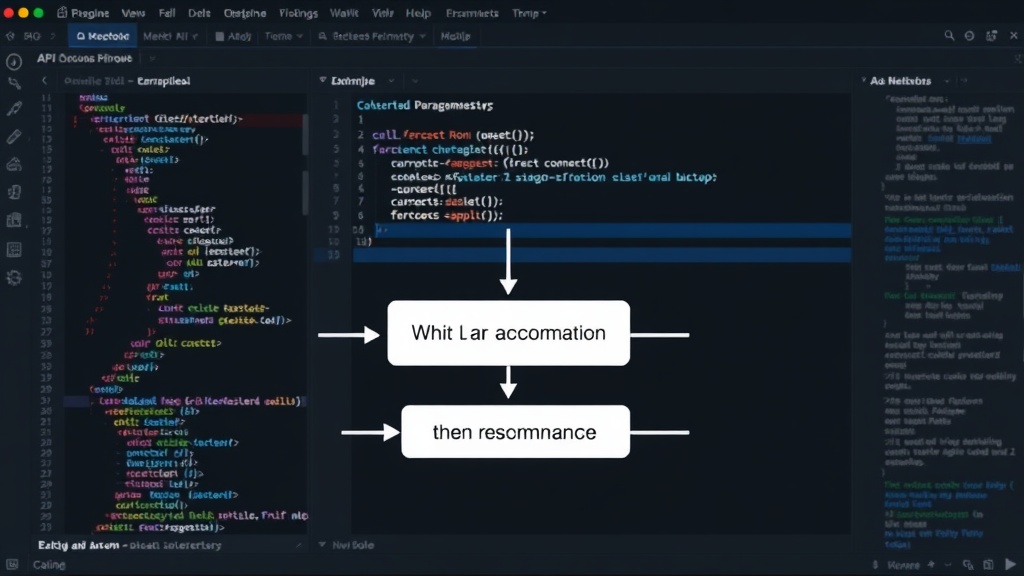
A superior documentation structure prioritizes clarity and immediate utility. It begins with a concise, plain-language explanation of what an endpoint accomplishes. This isn't abstract jargon; it's a direct statement of purpose. For instance, instead of "retrieves the resource," a better description is "gets the details for a single order." This immediately grounds the developer and sets expectations.
Following this brief, clear description, the most critical element is a fully functional, copy-pasteable example. This example should be designed to succeed with minimal modification. Modern documentation generators can create these code snippets dynamically, ensuring they are accurate and up-to-date with the latest API version. This is the gateway to user engagement. Seeing a request work, receiving a positive response, validates the developer's effort and the API's promise.
Only after this successful interaction should the detailed reference information be presented. This includes comprehensive parameter lists, descriptions of edge cases, and thorough error code explanations. This section can be dense; its purpose is to provide depth and cover all eventualities. However, its value is exponentially increased when the developer has already experienced success with the API, understanding its core functionality.
Beyond the Parameter Table: Building Trust and Utility
The common mistake of leading with parameter tables creates an immediate cognitive load. Developers are presented with a complex array of options and requirements before they understand the basic objective. This is akin to giving someone a detailed map of every street in a city before they've even asked for directions to the nearest landmark.
A documentation site that prioritizes a working example first demonstrates empathy for the developer's workflow. It acknowledges that the primary goal is to build and integrate, not to memorize an API specification. This user-centric approach fosters a positive developer experience, reducing frustration and accelerating adoption. When developers can quickly achieve a tangible result, they are more likely to explore advanced features and invest time in understanding the API's full capabilities.
This is not to say that exhaustive reference material is unimportant. It is a necessary component for any robust API. However, its placement and presentation are paramount. It should serve as a supplement to, not a replacement for, clear, actionable guidance. By reordering priorities, API providers can significantly improve developer onboarding, reduce support requests, and ultimately build stronger relationships with their developer community. The initial success, facilitated by a well-crafted example, is the foundation upon which all deeper learning and integration are built.