The Problem: Risky Auditor Access
External auditors frequently need read-only access to your AWS environment. The common, yet insecure, practice involves creating dedicated IAM users with access keys and sharing them. Alternatively, some provision console access via an organization's identity provider. Both methods are unnecessary and introduce significant security risks. Sharing access keys means those credentials are now outside your direct control, creating a potential attack vector if compromised. Granting console access provides more permissions than typically required and adds administrative overhead.
The fundamental issue is that auditors don't need to *log in* as an employee or manage infrastructure. They need to *inspect* your cloud resources and configurations. AWS has supported a more secure, granular method for this exact scenario for over ten years: cross-account IAM roles with trust relationships.
The Solution: Cross-Account IAM Roles
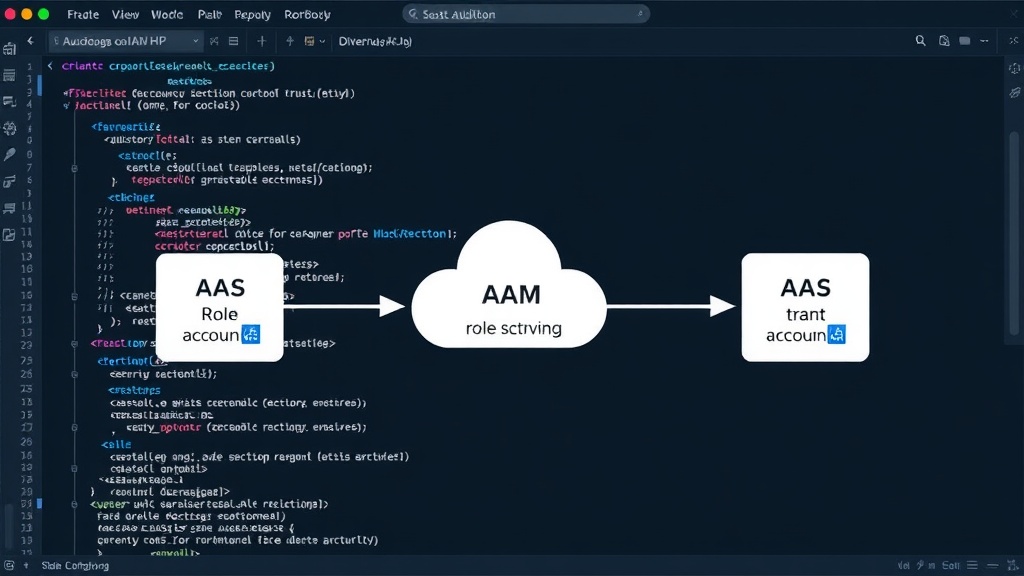
This pattern leverages AWS Identity and Access Management (IAM) to allow an external entity (your auditor) to assume a role in your AWS account without ever handling your primary credentials. The process involves two main components: a role in the auditor's AWS account (or a dedicated role for the auditor in your account) and a trust policy that allows the auditor's account or specific principals to assume that role.
Here's how it works:
- Role Creation in Your Account: You create an IAM role in your AWS account. This role is configured with a trust policy that specifies who can assume it. For auditors, this trust policy would typically allow principals from the auditor's AWS account ID to assume the role.
- Permissions: The role is then granted specific, read-only IAM policies. These policies define exactly what resources the auditor can view. This is crucial for limiting their access to only what's necessary for the audit. Think of it like giving a building inspector a key to the main entrance and the electrical room, but not to every office or the executive suite.
- Assume Role: The auditor, using their own AWS account or credentials, uses the AWS CLI or SDK to assume the role you've provisioned. They provide your account ID and the role name. AWS validates the trust policy. If valid, AWS issues temporary security credentials for the assumed role.
- Auditing: The auditor uses these temporary credentials to access your AWS resources via the API or console, performing their inspection. These credentials have a limited lifespan and cannot be reused once expired.
This method ensures that your master AWS account credentials, or even individual IAM user credentials, are never exposed. The auditor's access is ephemeral and strictly controlled by the permissions you define.
Implementing with CloudFormation
Deploying this manually for every account can be tedious. Fortunately, AWS CloudFormation, or other Infrastructure as Code (IaC) tools, streamline the process. The author provides two templates for ease of deployment:
Single Account CloudFormation Template
This template is designed for organizations with a single AWS account requiring auditor access. It defines an IAM role with a trust policy that allows principals from a specified external AWS account ID to assume it. The role is attached with a read-only policy, typically granting access to view resources across various AWS services relevant to an audit (e.g., EC2, S3, IAM, CloudTrail, Config).
The template requires you to input the auditor's AWS account ID and the desired name for the role. Once deployed, you share the account ID and role name with your auditor. They can then configure their AWS CLI or SDK to assume this role.
AWS Organizations CloudFormation Template
For larger organizations using AWS Organizations, managing auditor access across multiple accounts manually is impractical. This template extends the single-account approach to work with AWS Organizations. It deploys the necessary IAM role and trust policy to a specified Organizational Unit (OU) or across all accounts, depending on configuration.
The key difference is how the trust policy is constructed. Instead of trusting a single external account ID, it can be configured to trust principals from the auditor's account *if* they are performing the assume-role action from within a specific OU or when targeting accounts managed by AWS Organizations. This allows for centralized management of auditor access without needing to configure each member account individually. The template also allows for specifying which AWS services the auditor can access, ensuring least privilege principles are maintained across the organization.
Benefits of the Cross-Account Role Approach
The advantages of using cross-account IAM roles for auditors are substantial:
- Enhanced Security: Eliminates the risk of credential leakage associated with sharing static access keys.
- Principle of Least Privilege: You can precisely define the permissions granted to the auditor, ensuring they only have read-only access to necessary resources.
- Auditable Access: AWS CloudTrail logs all assume-role actions, providing a clear audit trail of who accessed what and when.
- Reduced Administrative Overhead: No need to manage user lifecycles or rotate credentials. Access is temporary and governed by the role's policies and session duration.
- Compliance: Many compliance frameworks (e.g., SOC 2, ISO 27001) mandate strict credential management and access control, which this pattern helps satisfy.
If your auditor asks for direct access keys or a permanent console login, that should indeed be your first finding. It signals a misunderstanding of secure cloud access practices and indicates a potential gap in their own security awareness or methodology.
What's Next for Auditors?
The security community has long advocated for ephemeral, role-based access over static credentials. The fact that sharing access keys is still a common practice for auditors highlights a persistent gap between best practices and operational reality. As cloud environments become more complex, relying on outdated methods for granting third-party access is no longer tenable. Auditors themselves will need to adapt their tooling and methodologies to embrace these more secure, programmatic access patterns. This shift is not just about improving your security posture; it's about aligning with the evolving standards of secure cloud auditing.