Understanding Granger Causal Networks
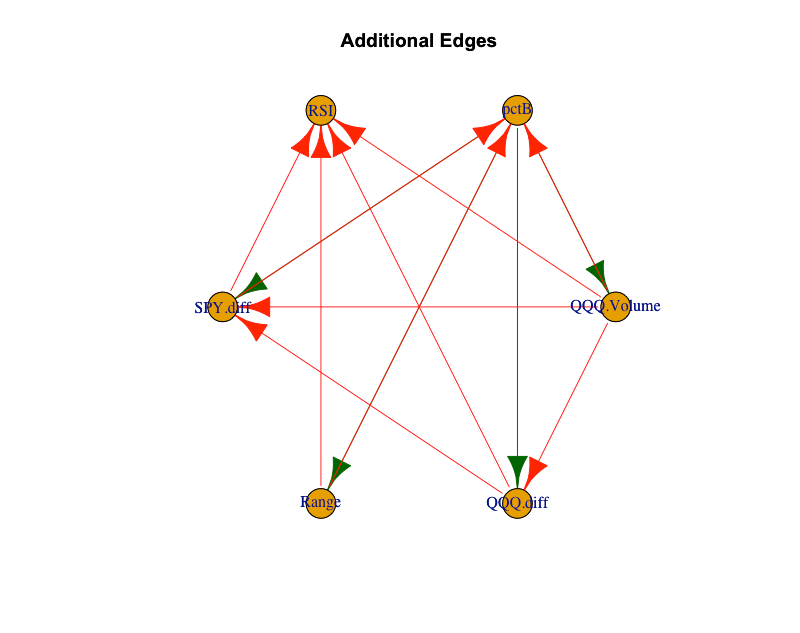
Granger causality, a statistical concept, determines whether one time series is useful in forecasting another. It doesn't imply true causation, but rather predictive power. When applied to multiple time series, these relationships can form networks. A Granger causal network maps these predictive relationships, illustrating how different variables influence each other over time. The challenge often lies in disentangling direct influences from indirect ones, especially in systems with numerous interacting components.
Traditional methods for building these networks, like Vector Autoregression (VAR) models, often rely on parametric assumptions. These assumptions can limit their applicability when dealing with real-world data that may not conform to strict linear relationships or Gaussian error distributions. Identifying indirect feedback loops – where variable A influences B, which in turn influences C, and C then influences A – is particularly complex. These loops can create spurious correlations and make it difficult to pinpoint the true drivers of system behavior.
The Towards Data Science article highlights a move towards non-parametric variable selection for Structural VARs (SVARs). This approach aims to overcome the limitations of traditional parametric models. By not assuming a specific functional form for the relationships between variables, non-parametric methods can potentially capture more complex, non-linear dynamics. This is crucial for accurately mapping Granger causal networks and, importantly, for identifying indirect feedback mechanisms that might be missed by parametric techniques.
The Problem of Indirect Feedback
Indirect feedback is a pervasive challenge in analyzing complex systems. Consider a financial market: interest rates might influence stock prices, which in turn affect consumer confidence, which then feeds back into interest rate policy. A Granger causal analysis might detect a link from interest rates to stock prices and from stock prices to consumer confidence. However, discerning the *indirect* effect of interest rates on consumer confidence, mediated by stock prices, requires careful statistical maneuvering. Without accounting for this indirect path, one might overestimate the direct impact or miss crucial system dynamics.
Structural VARs (SVARs) are designed to address some of these issues by imposing contemporaneous relationships or short-run restrictions. However, even within SVAR frameworks, identifying and isolating indirect effects can be computationally intensive and sensitive to model specification. When dealing with a large number of variables, the number of potential indirect paths grows exponentially, making a comprehensive analysis daunting. This is where innovative variable selection techniques become invaluable.
Non-Parametric Approaches for Network Inference
The core innovation discussed is the application of non-parametric variable selection to SVARs. Instead of pre-defining the structure of the model based on assumptions, non-parametric methods allow the data to reveal the relationships. This can involve techniques such as:
- Regularization methods: Techniques like LASSO or Elastic Net can be adapted to select relevant variables in a VAR setting, effectively pruning away non-influential time series. When applied in a non-parametric context, these methods can identify non-linear dependencies.
- Information criteria: While often used in parametric model selection, information criteria can be adapted to guide the selection of variables in non-parametric models, balancing model fit with complexity.
- Machine learning algorithms: Algorithms capable of learning complex, non-linear relationships can be employed to infer the structure of the Granger causal network. This moves beyond simple linear correlations to uncover more nuanced dependencies.
By leveraging these non-parametric tools, researchers can build more robust Granger causal networks. The key benefit is the ability to identify both direct and indirect influences without being constrained by assumptions about the underlying data distribution or the functional form of the relationships. This is akin to having a more flexible lens through which to view the interactions within a system, one that doesn't force the observed phenomena into predefined shapes.
Implications for System Analysis
The ability to more accurately identify indirect feedback loops has significant implications across various fields. In economics, understanding how monetary policy indirectly affects consumer behavior through asset prices can lead to more nuanced policy design. In neuroscience, mapping the complex interplay of neural signals requires models that can capture indirect influences between brain regions. In climate science, disentangling the web of atmospheric and oceanic interactions benefits from methods that can differentiate direct forcing from cascading effects.
This advancement in non-parametric variable selection for Granger causal networks moves us closer to a data-driven understanding of complex systems. It offers a path to more accurate modeling of feedback mechanisms, which are often the engines of system dynamics and emergent behavior. While the exact algorithms and their implementation can be complex, the principle is clear: let the data speak, unburdened by restrictive assumptions, to reveal the true patterns of influence.