The Reign of the GPU
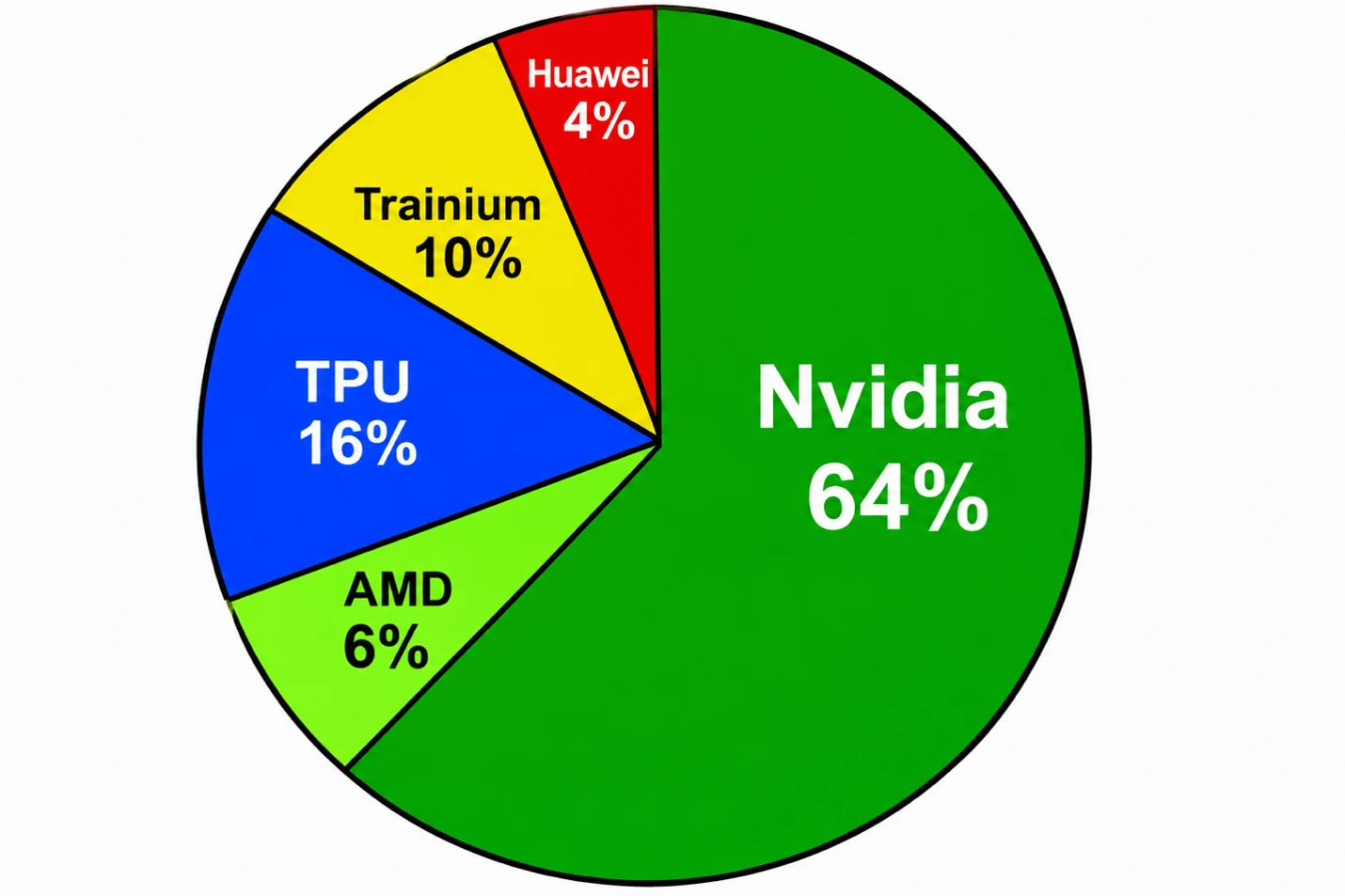
For years, Graphics Processing Units (GPUs) have been the undisputed champions of artificial intelligence computation. Their parallel processing architecture, originally designed for rendering graphics, proved exceptionally adept at handling the matrix multiplications and tensor operations that form the backbone of deep learning models. NVIDIA, in particular, has built a dominant empire on this foundation, becoming synonymous with AI hardware. Companies developing AI models, from startups to tech giants, have largely relied on NVIDIA’s CUDA ecosystem and its ever-improving Tensor Cores to train and deploy their neural networks. This reliance has led to a concentration of power and a predictable hardware roadmap for AI development.
However, the landscape of AI compute is shifting. The insatiable demand for more powerful AI models, coupled with the sheer scale of operations undertaken by hyperscale cloud providers and leading AI research labs, is driving a new wave of innovation. These organizations are not only pushing the boundaries of what GPUs can do but are also exploring and developing their own custom silicon solutions. This move towards specialized hardware is a direct response to the limitations and costs associated with relying solely on general-purpose GPUs for increasingly specific and massive AI workloads.
Hyperscalers Build Their Own
The most significant challenge to GPU dominance is coming from the very companies that have been NVIDIA’s largest customers. Google, Amazon (AWS), and Microsoft, along with major AI players like OpenAI, are investing heavily in designing their own Application-Specific Integrated Circuits (ASICs). These custom chips are tailored precisely to the types of computations required by their AI services and models, offering potential advantages in performance, power efficiency, and cost.
Google’s Tensor Processing Units (TPUs) have been in development for years and are now powering a significant portion of their AI inference and training. AWS has introduced its Inferentia and Trainium chips, designed to optimize the performance and cost-effectiveness of machine learning workloads on its cloud platform. OpenAI, while not a hardware manufacturer in the traditional sense, has been vocal about its efforts to develop custom hardware solutions, recognizing that the unique demands of their large-scale models may not be optimally met by off-the-shelf GPUs. This trend is not merely about cost savings; it's about gaining a competitive edge by having hardware that is perfectly aligned with their software stack and specific AI objectives.
The Economics of AI Compute
The economics of training and deploying massive AI models are becoming a critical factor. While GPUs offer flexibility and a mature ecosystem, their cost, power consumption, and thermal requirements at scale are substantial. For hyperscalers that operate data centers housing hundreds of thousands of accelerators, even marginal improvements in efficiency can translate into billions of dollars in savings. Custom ASICs allow these companies to optimize for specific use cases, potentially reducing the number of chips needed, lowering energy bills, and increasing the overall throughput of their AI infrastructure.
Furthermore, the development of custom silicon provides these tech giants with greater control over their hardware roadmap. They are less beholden to the release cycles and pricing strategies of external vendors. This vertical integration allows them to innovate faster, integrate hardware and software more seamlessly, and differentiate their AI offerings in the market. The ability to fine-tune hardware for specific model architectures, such as transformer models that are prevalent in natural language processing, gives them a significant advantage.
Beyond ASICs: The Evolving Hardware Landscape
While ASICs are the most prominent contenders, the innovation in AI compute hardware extends beyond custom chips. Researchers and companies are exploring novel architectures and technologies. This includes advancements in Field-Programmable Gate Arrays (FPGAs), which offer a degree of customization without the full design cycle of ASICs, and emerging memory-centric computing approaches that aim to reduce data movement bottlenecks. There is also significant interest in neuromorphic computing, which attempts to mimic the structure and function of the human brain, potentially offering extreme power efficiency for certain AI tasks.
The challenge for these alternative architectures is often ecosystem maturity and scalability. GPUs benefit from decades of software development, a vast community of developers, and a robust supply chain. Any new hardware contender must not only offer superior performance or efficiency but also provide a compelling development environment and a path to mass production. The integration of these diverse hardware solutions within a unified AI development framework is also a significant hurdle.
The Future: Heterogeneity and Specialization
The most likely future for AI compute is not a single winner-take-all hardware solution but a heterogeneous environment. GPUs will likely continue to play a crucial role, especially for research, development, and workloads that benefit from their flexibility and broad software support. However, they will increasingly share the stage with specialized ASICs designed for specific tasks and scales. Hyperscalers will leverage their custom silicon for their core AI services, while other companies might opt for specialized AI accelerators from emerging vendors or continue to rely on GPUs.
This shift towards specialization means that developers will need to become more aware of the underlying hardware powering their AI applications. The choice of hardware could significantly impact performance, cost, and deployment strategies. The dominance of the GPU is not ending abruptly, but it is certainly evolving into a more complex and diverse ecosystem where specialized solutions are carving out significant market share.
The question is not whether GPUs can continue to dominate, but rather what their role will be in a future where AI compute is characterized by a broad spectrum of specialized hardware, each optimized for different aspects of the AI lifecycle. The competition is healthy, driving innovation and ultimately benefiting the advancement of artificial intelligence.