The Limits of Simple Voice Loops
Most voice assistant demonstrations follow a predictable, linear flow: user speaks, model processes, agent responds. This model excels at retrieving information or answering direct questions. However, this elegant simplicity shatters when the voice agent is tasked with controlling a real-world device. The moment an agent needs to interact with hardware—navigating interfaces, executing commands, and waiting for device feedback—the interaction model breaks down.
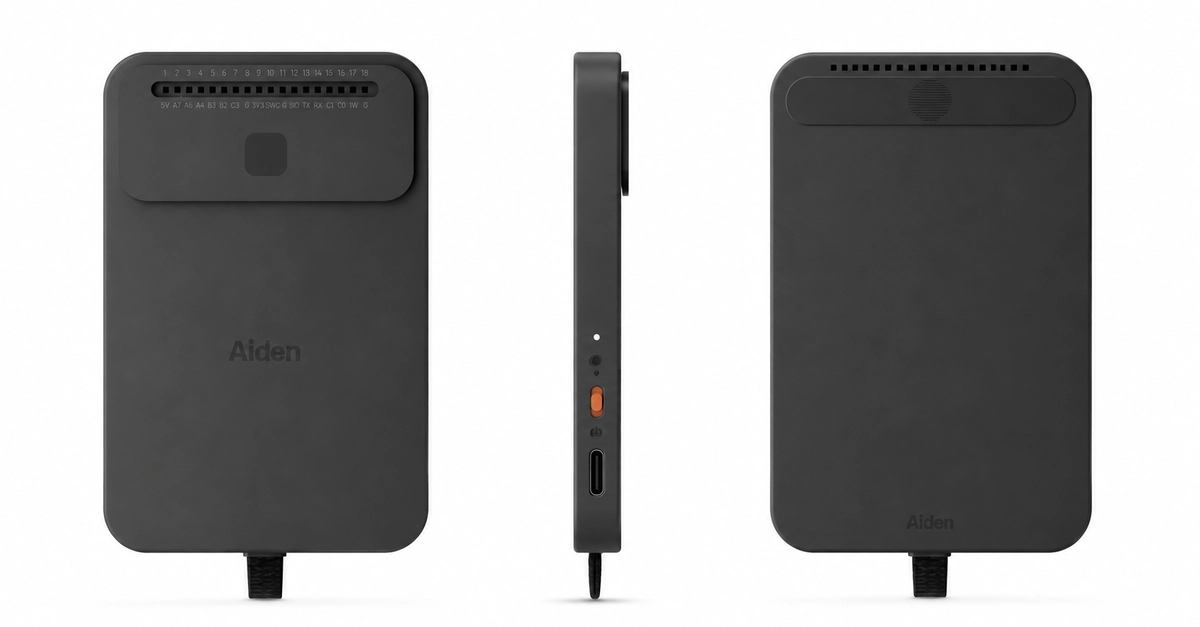
Consider an agent like Aiden, designed to operate a phone through an external hardware interface. A single task can involve a cascade of actions: capturing screenshots, interpreting their content, making tool calls based on that interpretation, simulating taps and swipes, and then waiting for the device to react and present a new state. This entire process is inherently asynchronous and stateful.
The Unforeseen Complexity of Real-World Control
During this multi-step device manipulation, the user doesn't go silent. They might issue commands like “Stop,” “Actually, open the other app,” “Wait, I’ll handle this part,” or simply ask, “What is it doing right now?” These mid-task interventions highlight a critical flaw in treating voice as just another input channel within the existing agent loop. The fundamental issue isn't the technical challenge of streaming audio or even the accuracy of speech-to-text; it’s about managing the state of control and the flow of communication.
The initial instinct for developers is often to overlay voice commands onto the existing agent architecture. This means the voice input is treated as another prompt, another piece of data to be fed into the agent's decision-making process. However, this abstraction fails because it doesn't account for the dynamic nature of device control. When an agent is actively engaged in performing a sequence of actions on a device, it owns a particular task context. Introducing new voice commands during this process creates a conflict: who is in control? Is it the agent executing its programmed sequence, or the user attempting to interrupt or redirect it?
This conflict is not merely a matter of prioritizing inputs. It’s about understanding the ownership of the ongoing task. When an agent is swiping through screens or waiting for a server response, it’s in a state of active engagement. A user saying “stop” isn't just a new query; it’s a command to abort the current operation. The agent needs to recognize this as a directive that supersedes its current action, not just another input to process alongside it. The system must gracefully handle these interruptions, providing feedback to the user about what is happening, why it might be paused, or what the new state is.
Redefining the Interaction Model
The core problem lies in the communication protocol between the user, the voice agent, and the controlled device. The current paradigm often assumes a single thread of execution or a simple queue. For device control, a more sophisticated model is required, one that acknowledges concurrent interaction and explicit state management. This involves:
- Task Ownership Hand-offs: The system must clearly delineate when the agent has control and when the user does. This isn't a binary on/off switch but a spectrum. For instance, an agent might be allowed to proceed with a sequence only if the user explicitly grants permission or remains silent for a defined period.
- Asynchronous Message Delivery: Voice commands issued during device operation should not be treated as simple prompts. They need to be queued, prioritized, and delivered to the agent in a way that respects the ongoing task. The agent must be able to process these commands, potentially pausing its current execution, or confirming that it has received and understood the interruption.
- Real-time State Feedback: Users need to know what the agent is doing, especially when it's controlling a device. This means providing continuous, understandable feedback, not just a final result. If the agent is waiting for a device to respond, it should communicate this state to the user. If it’s about to perform a potentially irreversible action, it should confirm with the user first.
The surprise here is not that this is difficult, but how fundamentally the existing agent architecture is misaligned with the requirements of real-time, interactive device control. It’s like trying to conduct a symphony orchestra with a single conductor who can only give one instruction at a time, while musicians are also shouting out suggestions. The conductor needs a system that allows for parallel communication streams and clear roles.
What remains unaddressed is how to build a robust, generalizable framework for such interactive control that doesn't require bespoke solutions for every device and every complex task. Developers are left grappling with custom state machines and intricate logic to bridge the gap between simple voice queries and the complex reality of device manipulation.
For developers building the next generation of voice-enabled applications, the takeaway is clear: the simple Q&A loop is insufficient. A new interaction model is necessary, one that embraces asynchronous operations, explicit state management, and a nuanced understanding of task ownership. Without this shift, voice agents will remain primarily conversational tools, rather than true interactive controllers of our physical and digital environments.