Introducing GPT-Live: Seamless Voice Interaction with ChatGPT
The way we interact with AI is rapidly evolving. While text-based interfaces have been the standard, the demand for more natural and intuitive communication methods is growing. GPT-Live emerges to meet this demand, offering a full-duplex voice experience for ChatGPT. This means users can engage in conversations with the AI that feel remarkably like talking to another person, without the awkward pauses and turn-taking limitations of traditional voice assistants.
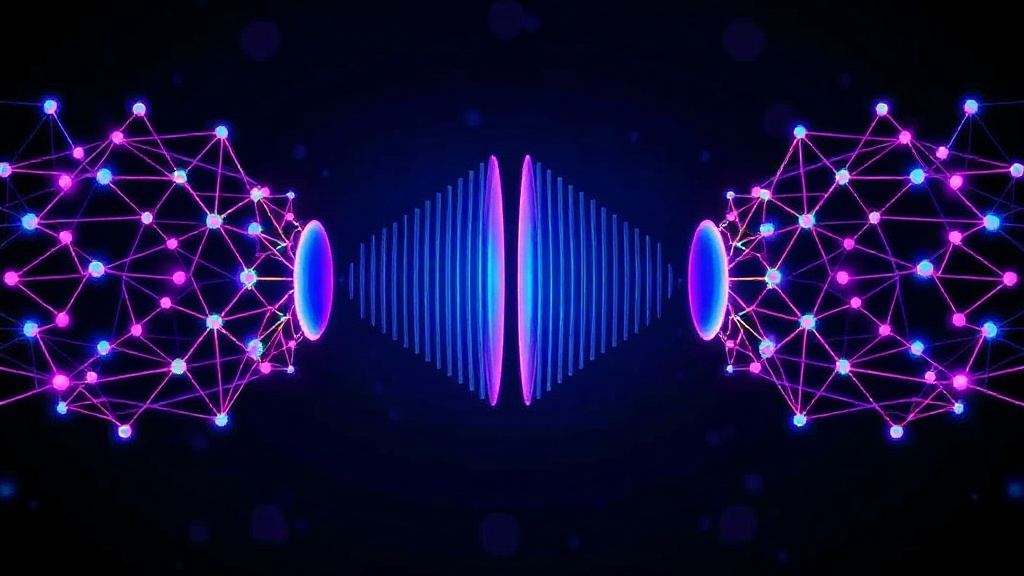
Full-duplex communication, a technology familiar from phone calls, allows both parties to speak and be heard simultaneously. Applying this to AI interaction removes the artificial constraints that have plagued previous voice-enabled AI tools. Instead of waiting for the AI to finish processing and responding before you can speak again, GPT-Live allows for interruptions, overlapping speech, and a continuous flow of dialogue. This fundamentally changes the user experience, making AI interaction less like issuing commands and more like a genuine exchange.
How GPT-Live Reimagines AI Conversation
At its core, GPT-Live leverages advanced speech recognition and synthesis technologies to bridge the gap between human speech and the AI's text-based processing. When a user speaks, their audio is captured and processed in real-time by sophisticated speech-to-text models. Crucially, this processing happens with minimal latency, ensuring that the AI receives the input almost instantaneously. Simultaneously, as the AI generates a text response, GPT-Live's text-to-speech engine converts it back into natural-sounding audio, playing it back to the user without delay.
The magic lies in the 'full-duplex' aspect. Unlike half-duplex systems where only one party can transmit at a time (like a walkie-talkie), full-duplex allows for simultaneous transmission and reception. For GPT-Live, this translates to a user being able to interject, ask follow-up questions mid-response, or even correct the AI without breaking the conversational thread. Imagine asking ChatGPT a complex question, and as it begins to explain, you realize you need to clarify a term. With GPT-Live, you can simply speak your clarification, and the AI can incorporate it into its ongoing response, much like a human would.
This level of interactivity is particularly beneficial for complex problem-solving, brainstorming sessions, or educational purposes. Users can explore ideas more fluidly, test hypotheses on the fly, and receive immediate feedback in a conversational format. The AI becomes less of a tool to be queried and more of a collaborative partner.
Technical Underpinnings and Potential Challenges
Implementing full-duplex voice for an AI like ChatGPT involves overcoming several significant technical hurdles. The primary challenge is managing latency. For a natural conversation, the round-trip time from speech input to audio output must be extremely low. This requires highly optimized speech recognition models, efficient natural language processing pipelines, and low-latency text-to-speech synthesis. Any delay can disrupt the flow and make the interaction feel stilted.
Another consideration is handling overlapping speech. When both the user and the AI are speaking, the system must be robust enough to differentiate between the two audio streams and process them appropriately. This involves advanced audio processing techniques to isolate and prioritize input signals while still allowing the synthesized output to be heard. The system needs to be intelligent enough to know when to pause the output to better capture user input, or when to continue speaking through minor user interjections.
Furthermore, the quality of the speech synthesis is paramount. For the interaction to feel natural, the AI's voice must be clear, expressive, and free from robotic artifacts. Advances in neural network-based text-to-speech have made significant strides in this area, but maintaining natural prosody and emotional intonation in real-time remains an ongoing area of research and development. The success of GPT-Live hinges on the seamless integration of these cutting-edge technologies.
The Future of AI Interaction
GPT-Live represents a significant step towards making AI interactions as natural and intuitive as human conversation. By breaking down the barriers of traditional voice interfaces, it unlocks new possibilities for how we learn, work, and create with AI. For developers, this opens up avenues for building more engaging AI-powered applications, from educational tutors that can engage in dynamic dialogues to virtual assistants that can manage complex tasks through spoken commands and clarifications.
The implications extend beyond mere convenience. A more natural interface could lower the barrier to entry for AI technologies, making them accessible to a wider audience, including those who may not be comfortable with text-based interfaces. It transforms the AI from a static tool into a dynamic conversational partner, fostering deeper engagement and more creative exploration.
As GPT-Live matures, we can anticipate further refinements, potentially including personalized voice characteristics, emotional responsiveness, and even more sophisticated ways of handling multi-party conversations with AI. The era of truly natural AI dialogue is dawning, and GPT-Live is at the forefront, demonstrating what full-duplex voice can achieve.
What remains to be seen is how broadly this full-duplex capability will be integrated into various AI platforms and what new application paradigms will emerge from this more fluid interaction model. The potential for more intuitive human-AI collaboration is immense.