
Android's New AI Copilot: Gotcha Aims for True Hands-Free Operation
Gotcha, a new entrant in the AI assistant space, has launched what it claims is the world's first AI copilot specifically designed for Android devices. The product, available on Product Hunt, promises to allow users to operate their phones entirely through voice commands, translating spoken instructions into on-screen actions. This ambitious goal positions Gotcha as a potential game-changer for accessibility and user convenience on the Android platform, aiming to move beyond the limited command sets of existing voice assistants.
The core promise of Gotcha is simple yet powerful: users talk, and the AI acts. Unlike traditional voice assistants that often require specific phrasing or can only perform a limited range of pre-defined tasks, Gotcha aims to interpret natural language to navigate apps, perform complex sequences of actions, and manage device settings. This would effectively turn a smartphone into a device that can be operated without ever touching the screen, a significant leap forward for users with mobility impairments, or simply for those seeking maximum efficiency.
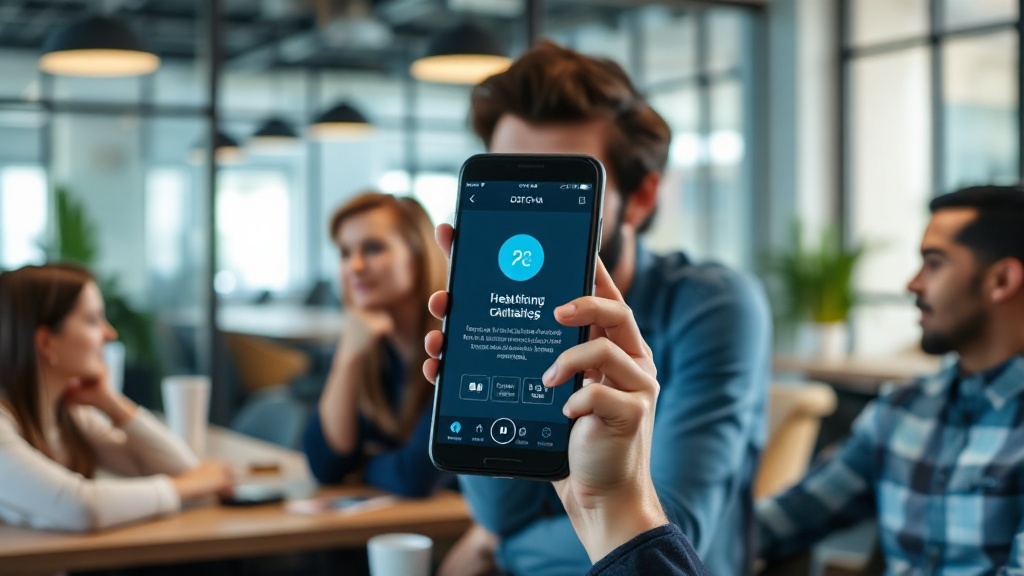
How Gotcha Works: Translating Speech to Screen Actions
While the technical specifics of Gotcha's underlying technology are not fully detailed in the initial announcement, the concept hinges on sophisticated natural language understanding (NLU) combined with intelligent screen interaction. The AI likely analyzes the current state of the Android user interface, identifies interactive elements (buttons, text fields, toggles), and simulates user input (taps, swipes, text entry) based on the voice command. This process is considerably more complex than simply triggering a pre-programmed skill or API call.
For instance, a command like "Find a highly-rated Italian restaurant near me, book a table for two at 7 PM tonight, and then get directions" would require Gotcha to:
- Access location services.
- Open a maps or restaurant discovery app.
- Parse search results for "Italian restaurant."
- Filter by "highly-rated."
- Identify and interact with booking functionality.
- Input "two" for party size and "7 PM tonight" for time.
- Confirm the booking.
- Initiate navigation to the restaurant.
This level of dynamic interaction, if achieved reliably, would represent a significant advancement over current voice assistants like Google Assistant or Amazon Alexa, which are often limited to specific app integrations or basic device functions. The challenge lies in the sheer variability of Android UIs across different devices, manufacturers, and app versions. Gotcha must be able to adapt to a vast and constantly changing landscape of visual elements and interactive components.
Potential Impact and Use Cases
The implications of a truly functional AI copilot for Android are far-reaching. For individuals with disabilities, it could unlock a new level of independence and usability for smartphones, which have become essential tools for communication, information, and daily life. The ability to manage complex tasks hands-free could also benefit professionals in fields where multitasking is common, such as field technicians, drivers, or even surgeons, allowing them to interact with their devices without breaking focus or requiring physical contact.
Beyond accessibility, Gotcha could streamline everyday tasks for all users. Imagine composing emails, managing social media, adjusting smart home devices, or even performing simple mobile banking transactions, all with spoken commands. This could fundamentally alter how we interact with our devices, moving towards a more conversational and intuitive computing experience. It taps into the long-held sci-fi vision of interacting with technology seamlessly through natural speech.
Challenges and the Road Ahead
Despite the exciting potential, significant challenges remain. The accuracy and reliability of voice recognition and NLU are critical. Misinterpretations could lead to frustrating user experiences or even unintended actions. Furthermore, the security implications of an AI that has deep access to a device's interface and data need careful consideration. Users will need assurance that their sensitive information remains protected and that the AI acts only as instructed.
The competitive landscape is also a factor. Google Assistant is deeply integrated into the Android ecosystem, and while it has its limitations, its continued development means Gotcha faces a formidable incumbent. The success of Gotcha will likely depend on its ability to demonstrably outperform existing solutions in terms of understanding, versatility, and ease of use, while also addressing privacy and security concerns head-on.
What remains to be seen is how effectively Gotcha can generalize its capabilities across the vast diversity of Android applications and device configurations. Building an AI that can reliably navigate and interact with any app, on any Android phone, is a monumental engineering feat. The initial launch suggests a strong proof of concept, but scaling this to a robust, everyday tool will be the true test.
For developers and users alike, Gotcha represents a bold step towards a more natural and efficient way to interact with mobile technology. Its success could redefine the role of the smartphone assistant and pave the way for a new era of voice-first mobile computing.