
A New Approach to AI Generation
Traditional AI content generation tools often present users with a single, expansive text box. The user crafts a prompt, the AI generates output, and the cycle of refinement begins. This process frequently devolves into a lengthy back-and-forth as users try to coax the AI into understanding nuanced requirements. AI Wizard, a new tool developed by an independent creator, proposes a different paradigm: an interactive interview.
The core idea behind AI Wizard is to move beyond simple prompt engineering. Instead of expecting users to perfectly articulate their needs in a single go, the tool guides them through a structured, yet adaptive, questioning process. This approach aims to gather sufficient context upfront, thereby reducing the need for extensive post-generation editing and iteration.
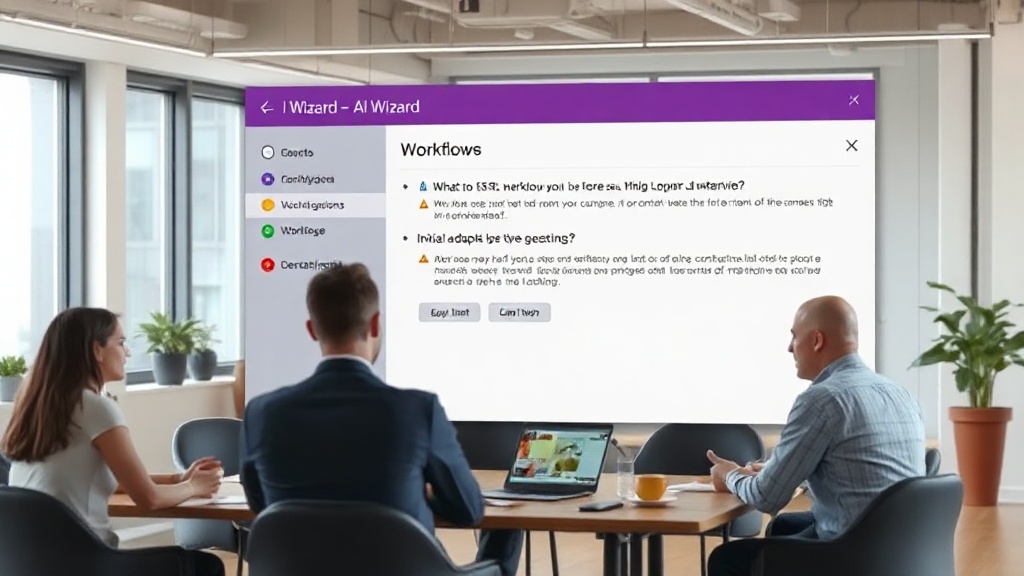
Users begin by selecting a specific workflow, such as generating a website, an app, a pitch deck, a logo, or an API. Once a workflow is chosen, AI Wizard initiates a series of questions. These questions are not static; they adapt based on previous answers. This dynamic Q&A format is designed to progressively narrow down the user's intent and requirements, much like a human expert would do during an initial consultation.
The developer behind AI Wizard, who is absorbing API costs personally, has made the tool free to use. Payment is not currently an option through traditional channels like Stripe or PayPal due to limitations in their country. Instead, a Binance link is provided for those who wish to contribute, though this is explicitly stated as optional.
The developer is seeking direct feedback on this novel approach. The central question is whether this interview-style interaction feels like a superior user experience, or if it is perceived as an unnecessary hurdle.
The Interview-Style Advantage
The fundamental difference lies in how AI Wizard elicits information. Most generative AI tools operate on the principle of "garbage in, garbage out." The quality of the output is directly proportional to the quality and specificity of the input prompt. This places a significant burden on the user, who must possess a certain level of prompt engineering skill to achieve desirable results. Even then, ambiguity in language can lead to misinterpretations by the AI.
AI Wizard bypasses this by structuring the input process. Think of it less like shouting instructions into a void and more like a conversation with a highly efficient assistant. You tell the assistant you need a website, and instead of just saying "build me a website," you answer specific questions about target audience, key features, desired aesthetic, and primary goals. Each answer refines the assistant's understanding, leading to a more accurate initial draft.
This method is particularly effective for complex or multi-faceted projects. For instance, generating a pitch deck requires not just a topic but also an understanding of the target audience, the problem being solved, the proposed solution, market analysis, and financial projections. AI Wizard's adaptive questioning can systematically gather these distinct pieces of information, ensuring that the final output is comprehensive and coherent.
Potential User Experience Trade-offs
While the interview approach promises more accurate initial outputs, it introduces its own set of considerations. For users who are highly proficient in prompt engineering or who have very straightforward generation needs, the series of questions might indeed feel like extra steps. They might prefer the speed and direct control offered by traditional prompt-based interfaces.
The effectiveness of AI Wizard hinges on the quality and relevance of its questions. If the questions are too generic, too numerous, or poorly phrased, the interview process could become frustrating and time-consuming. Conversely, if the questions are insightful and efficiently guide the user, they can significantly streamline the creative process. The adaptive nature of the questions is key here; it means the tool doesn't ask about pricing if the user is generating a logo, or about user authentication if they're building a simple landing page.
The success of this model also depends on the AI's ability to interpret the gathered information accurately. The adaptive questioning is only half the equation; the backend generation engine must be capable of translating the contextual data into high-quality, relevant output. The developer's claim that the tool produces "genuinely useful" results suggests confidence in this interpretation layer.
Broader Implications for Generative AI
AI Wizard's approach challenges the prevailing model of generative AI interaction. It suggests that for many users and many types of generative tasks, a guided, conversational input method might be superior to an open-ended prompt. This could signal a shift towards more structured and less technically demanding interfaces for AI tools.
What remains to be seen is how scalable this interview-style approach is across a wider range of generative tasks. While effective for structured outputs like websites or pitch decks, its utility for more fluid or creative tasks, such as writing fiction or generating abstract art, is less clear. The current workflows mentioned—website, app, pitch deck, logo, API—are all relatively well-defined problem spaces where specific inputs lead to predictable outputs.
The financial model, while altruistic, is also a point of interest. By absorbing costs, the developer is prioritizing user adoption and feedback. This contrasts with many AI startups that seek rapid monetization. It will be fascinating to observe how this plays out, both in terms of user engagement and the long-term sustainability of the project.
Ultimately, AI Wizard represents an experiment in human-AI interaction. It prioritizes understanding the user's intent through dialogue before execution. Whether this conversational front-end becomes a standard for generative AI, or remains a niche solution for specific use cases, will be determined by user adoption and the continued evolution of AI interaction design.
Feedback and Future Development
The developer explicitly requests honest feedback. This is crucial for refining the adaptive questioning logic and ensuring the AI's responses are aligned with user expectations. If users find the interview tedious, the questions need adjustment. If they find it clarifying, the approach is validated.
The project is currently free, with the developer bearing the operational costs. This open-source-like approach to development, combined with a novel interaction model, positions AI Wizard as an interesting case study in the rapidly evolving AI landscape. Its future will likely depend on its ability to demonstrate tangible benefits in output quality and user efficiency compared to existing, prompt-centric tools.