
The AI Prototype Purgatory
The current landscape of AI development is a tale of two worlds. On one hand, developers can quickly spin up impressive AI-powered applications over a weekend, fueled by accessible LLMs and rapid prototyping tools. This era of 'vibe coding' allows for swift iteration and exciting proof-of-concepts. However, the journey from a polished prototype to a robust, enterprise-ready application is fraught with peril. Statistics paint a grim picture: a staggering 95% of AI prototypes never see the light of production. They fall victim to the inherent friction of large organizations, where rigid infrastructure, stringent compliance requirements, and a deep-seated fear of disruption can stifle innovation. This chasm between the speed of individual developer creativity and the cautious pace of enterprise adoption is a significant bottleneck for many companies looking to leverage AI at scale.
The frustration is palpable for many. Witnessing the rapid deployment of AI features on social media while being mired in endless corporate review cycles is a common experience. To understand how this gap can be bridged, we look to the engineering practices at YouTube, a platform that routinely balances rapid feature development with the demands of a global user base. Their approach offers a blueprint for other organizations grappling with the same challenges.
Bridging the Prototype-Production Divide at YouTube
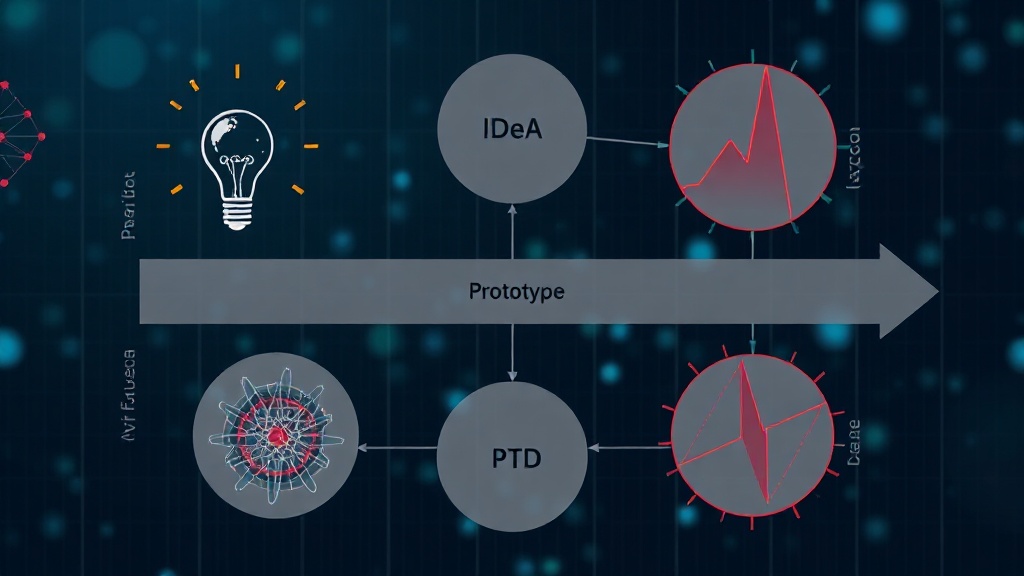
YouTube's engineering teams have developed a sophisticated framework to navigate the complexities of deploying AI models into a live, high-traffic environment. Their strategy is not about abandoning rapid prototyping, but about systematically evolving it into production-ready systems. This involves a multi-stage process that emphasizes iterative development, rigorous testing, and careful integration with existing infrastructure.
The core of their solution lies in a structured approach to model development and deployment. Instead of treating the prototype as the final product, it's viewed as the first step in a longer lifecycle. This lifecycle includes several key phases: experimentation, validation, integration, and continuous monitoring. Each phase has specific objectives and gates that must be passed before moving to the next.
During the experimentation phase, engineers are encouraged to rapidly iterate and explore new AI capabilities, much like in the weekend project scenario. However, as soon as an idea shows promise, it enters the validation phase. This is where the 'corporate purgatory' often begins. YouTube's system circumvents this by having dedicated teams and processes for validation. This includes extensive offline testing with curated datasets, A/B testing frameworks that can safely roll out new models to small user segments, and performance benchmarks against existing systems. The goal is to gather empirical data that proves the model's efficacy, reliability, and safety before wider deployment.
The Role of Infrastructure and Tooling
A significant hurdle for AI prototypes is their incompatibility with enterprise infrastructure. Many prototypes are built using frameworks and environments that are not designed for scale, security, or compliance. YouTube addresses this by providing a standardized MLOps (Machine Learning Operations) platform. This platform offers managed environments, automated deployment pipelines, and robust monitoring tools. It acts as an accelerator, allowing developers to focus on the AI model itself, rather than getting bogged down in infrastructure setup and maintenance.
Think of this MLOps platform less like a rigid IT department dictating tools, and more like a highly efficient, well-equipped workshop. It provides the specialized tools, safety equipment, and standardized processes needed to build complex machinery (AI models) safely and efficiently, ensuring that what's built can withstand the rigors of a busy factory floor (production environment).
This platform standardizes everything from data ingestion and model training to version control, deployment, and performance monitoring. It ensures that models are reproducible, auditable, and can be rolled back quickly if issues arise. This level of standardization is crucial for meeting compliance requirements and building trust with leadership teams who are naturally risk-averse.
Mitigating Risk Through Iteration and Monitoring
The fear of 'breaking things' is a primary reason AI prototypes fail to reach production. YouTube tackles this by embedding risk mitigation into the deployment process itself. Instead of a single, high-stakes deployment, they employ a strategy of gradual rollout and continuous monitoring. New models are typically deployed to a small percentage of users first. Their performance, accuracy, and impact on user experience are then meticulously tracked using a comprehensive suite of metrics and dashboards.
This continuous monitoring is not just about detecting errors; it's about understanding the model's behavior in the real world. User feedback, drift detection (where model performance degrades over time due to changes in input data), and system resource utilization are all constantly evaluated. If any metrics deviate from acceptable thresholds, the system can automatically trigger alerts or even roll back the model to a previous stable version. This 'fail-safe' mechanism provides a critical layer of confidence for both engineers and stakeholders.
The surprising detail here is not the specific metrics they track, but the proactive nature of their rollback strategy. It's not a reactive fix after a failure, but a pre-programmed response to subtle performance degradations, preventing catastrophic failures before they occur. This iterative deployment and monitoring cycle allows them to de-risk the process, gather real-world data, and build confidence incrementally, turning a 95% failure rate into a manageable transition.
The Human Element: Collaboration and Ownership
Ultimately, bridging the prototype-to-production gap is not just a technical challenge; it's a cultural one. YouTube fosters a collaborative environment where product managers, engineers, researchers, and operations teams work closely together. There is a shared understanding of the goals, the risks, and the processes involved. Ownership of AI models extends beyond the initial development phase into their operational lifecycle.
This collaborative ownership means that the engineers who build the models are also responsible for their performance and behavior in production. This incentivizes them to build robust, well-tested, and easily maintainable systems from the outset. It also ensures that feedback loops are short and effective, allowing for rapid adjustments based on real-world performance and user impact.
For organizations aiming to succeed in AI deployment, the lessons from YouTube are clear: build with production in mind from day one, leverage standardized MLOps platforms, implement gradual rollouts with continuous monitoring, and foster a culture of shared ownership and collaboration. It transforms AI development from a series of disconnected prototypes into a continuous stream of value delivered to users.