
A Unified Vision? Not Yet for Google's AI
Google boasts a suite of powerful AI tools, from generative text models to image creation capabilities. Demos and tutorials frequently highlight these impressive features. Yet, a growing chorus of users and observers points to a significant problem: fragmentation. Unlike competitors such as Anthropic or OpenAI, which are striving to present a cohesive ecosystem, Google’s AI efforts often feel scattered across disparate products with constantly shifting names and interfaces. This lack of integration creates a frustrating user experience, forcing individuals to navigate multiple platforms and services just to leverage different AI functionalities.
The perception among some users is that Google's internal AI teams operate in silos, failing to collaborate effectively on a unified product strategy. This contrasts sharply with the agile, AI-first image many modern tech companies project. Instead, Google’s approach can feel more akin to an established enterprise struggling to adapt, rather than a nimble innovator leading the AI charge. This fragmentation isn't just an inconvenience; it actively hinders content creation and experimentation, creating unnecessary friction for users who want to explore and utilize the full potential of Google’s AI advancements.
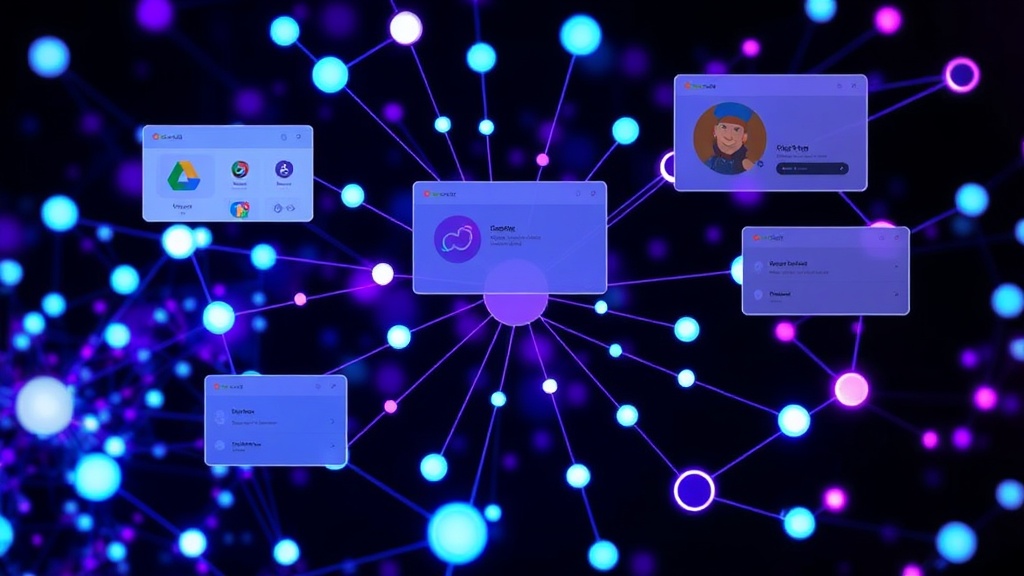
The User Experience Nightmare
Imagine wanting to generate an image, then refine it with text-based AI, and finally integrate it into a presentation. For users seeking to accomplish such a workflow using Google’s AI tools, the reality is often a labyrinth. They might find themselves logging into separate accounts, learning different interfaces, and trying to decipher which product name corresponds to which specific capability. This constant context-switching and learning curve are significant barriers. It’s not just about finding the right tool; it’s about understanding how, or even if, these tools are designed to work together. The absence of a central hub or a clearly defined pathway between related AI services makes it difficult to build a consistent workflow.
This fragmentation extends beyond mere user interface design. It impacts discoverability and adoption. When AI capabilities are spread thin across various Google products – some integrated into existing services like Workspace or Search, others as standalone experimental platforms – it becomes challenging for users to grasp the full scope of what Google offers. Developers looking to build applications leveraging Google’s AI face similar hurdles, needing to understand and integrate with multiple, potentially independent, APIs and SDKs. This can lead to duplicated efforts and a slower pace of innovation compared to platforms offering more consolidated AI development environments.
Competitive Landscape: A Stark Contrast
The competitive landscape offers a clear counterpoint to Google’s current approach. OpenAI, for instance, has focused on building a central platform with its API, offering access to various models like GPT-4 and DALL-E through a unified developer interface. Similarly, Anthropic, with its Claude models, emphasizes a more integrated experience, often presenting its AI capabilities as a cohesive suite rather than a collection of isolated features. These companies are not just developing advanced AI models; they are actively constructing ecosystems designed for ease of use, integration, and developer accessibility. This strategic focus on coherence allows them to build stronger brand recognition and a more loyal user base, as individuals and businesses can rely on a predictable and integrated set of tools.
Google’s current strategy, conversely, risks diluting its AI brand and confusing potential adopters. While the underlying technology may be world-class, the delivery mechanism is perceived as suboptimal. This is particularly surprising given Google’s historical strength in creating integrated ecosystems, such as its ubiquitous search, maps, and email services. The disconnect in its AI offerings stands out as a peculiar anomaly, raising questions about internal priorities and strategic alignment. The company’s vast resources and research prowess are undeniable, but translating that into a user-friendly, unified AI product strategy appears to be a work in progress, with the current state leaving many users feeling lost in the digital wilderness.
The Unanswered Question: What's the Long-Term Strategy?
What remains unclear is Google’s long-term vision for its AI product landscape. Is this fragmentation a temporary phase, a consequence of rapid, decentralized innovation within its various research divisions? Or is it a deliberate, albeit confusing, strategy to cater to niche use cases with specialized tools? Without a clear roadmap or a more unified brand identity for its AI offerings, users and developers are left to speculate. The company has the technological foundation to create a dominant AI ecosystem, but the path forward is obscured by a confusing array of products and services. The critical question is whether Google will consolidate its AI efforts into a more coherent, user-centric platform before competitors solidify their own integrated offerings, potentially leaving Google playing catch-up in a space it is uniquely positioned to lead.