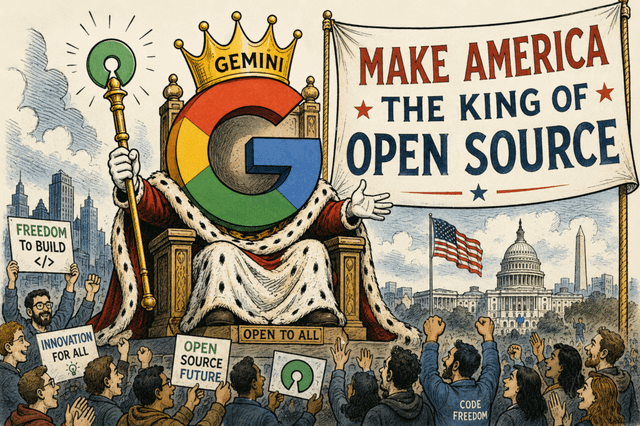
The Case for Open-Sourcing Gemini
The debate around open-sourcing advanced AI models has intensified, with a vocal segment of the AI community calling on Google to release its powerful Gemini models to the public. Proponents argue that open-sourcing Gemini would democratize AI development, foster rapid innovation, and provide a much-needed counterbalance to the increasingly closed ecosystems dominated by a few tech giants. This perspective posits that the benefits of widespread access and community-driven development far outweigh any perceived competitive risks for Google.
The argument centers on the idea that Gemini, as one of the most capable multimodal AI models currently available, represents a significant leap in artificial intelligence. Making its architecture, weights, and training methodologies accessible would allow researchers, startups, and individual developers worldwide to scrutinize, adapt, and build upon its capabilities. This could lead to unforeseen applications, accelerated discovery of AI safety mechanisms, and a more robust, diverse AI landscape.
Think of it less like a proprietary software release and more like the Linux kernel. While Red Hat offers commercial support and enterprise solutions, the core operating system is open, allowing a global community to contribute, identify bugs, and drive innovation at a pace rarely matched by closed-source alternatives. Advocates believe Gemini could serve a similar role in the AI space, acting as a foundational layer for a new generation of AI applications.

Accelerating Innovation Through Community
The core of the open-source argument lies in the power of collective intelligence. When a model as sophisticated as Gemini is made available, it empowers a vastly larger pool of minds to experiment with it. This experimentation can lead to:
- Faster Iteration: A global community can identify and fix bugs, optimize performance, and develop new features far more rapidly than a single corporate team.
- Novel Applications: Developers outside Google's immediate purview might discover use cases or applications the company never envisioned. This could range from specialized scientific research tools to creative artistic endeavors.
- Democratization of AI: Smaller companies and researchers, who may lack the resources to train models of Gemini's scale from scratch, could access state-of-the-art AI capabilities, leveling the playing field.
- Enhanced Transparency and Safety: Open access allows for greater scrutiny of the model's biases, potential failure modes, and ethical implications. This transparency is crucial for building trust and ensuring responsible AI development.
The current trajectory of AI development, heavily influenced by large, closed models, risks creating an AI oligopoly. Open-sourcing Gemini would directly challenge this, offering an alternative path that prioritizes shared progress and broader access. It could spur competition not just on model performance, but on innovation built *on top* of these foundational models.
Addressing Concerns and Potential Risks
Naturally, the call for open-sourcing Gemini is not without its counterarguments. Google, like any major technology company, has significant investments in its AI research and development. Releasing Gemini entirely could be seen as forfeiting a competitive advantage, potentially allowing rivals to leverage Google's work without commensurate investment. There are also valid concerns about the misuse of powerful AI models if they fall into the wrong hands, such as for generating sophisticated disinformation campaigns or enabling new forms of cyberattacks.
However, proponents suggest these risks are manageable and are already present to some degree with existing open-source models. They argue that the benefits of transparency and community oversight in mitigating these risks are often underestimated. Furthermore, Google could potentially release different versions of Gemini, perhaps offering a fully open-source version for research and development while retaining more controlled versions for commercial products. This hybrid approach could offer a balance between broad access and strategic control.
The surprising detail here is not the potential for Google to lose market share, but the growing consensus among AI practitioners that open collaboration is the most effective path forward for *all* of AI, not just for specific companies. This sentiment suggests a potential shift in how the AI industry views intellectual property and competitive advantage.
What This Means for the AI Ecosystem
If Google were to open-source Gemini, the ripple effects would be substantial. It would likely trigger a new wave of innovation, similar to what was observed when other foundational AI models were released. Startups could build highly specialized AI products with unprecedented speed and sophistication. Academic institutions could push the boundaries of AI research without the constraints of proprietary APIs. The broader developer community would gain access to tools that were previously out of reach, fostering a more inclusive AI future.
This move would also put pressure on other AI leaders to consider more open approaches. The dominance of closed, API-gated models has created a tiered system where only large corporations can truly innovate at the frontier. Open-sourcing Gemini would demonstrate a commitment to a more collaborative and distributed model of AI advancement, potentially setting a new industry standard.
The question that remains is whether Google will embrace this vision of shared progress. The potential rewards in terms of community goodwill, accelerated research, and a more vibrant AI ecosystem are immense. The decision to open-source Gemini would be a bold statement about Google's commitment to the future of artificial intelligence, moving beyond proprietary advantage to foster collective advancement.