
The End of the Link-Based Era
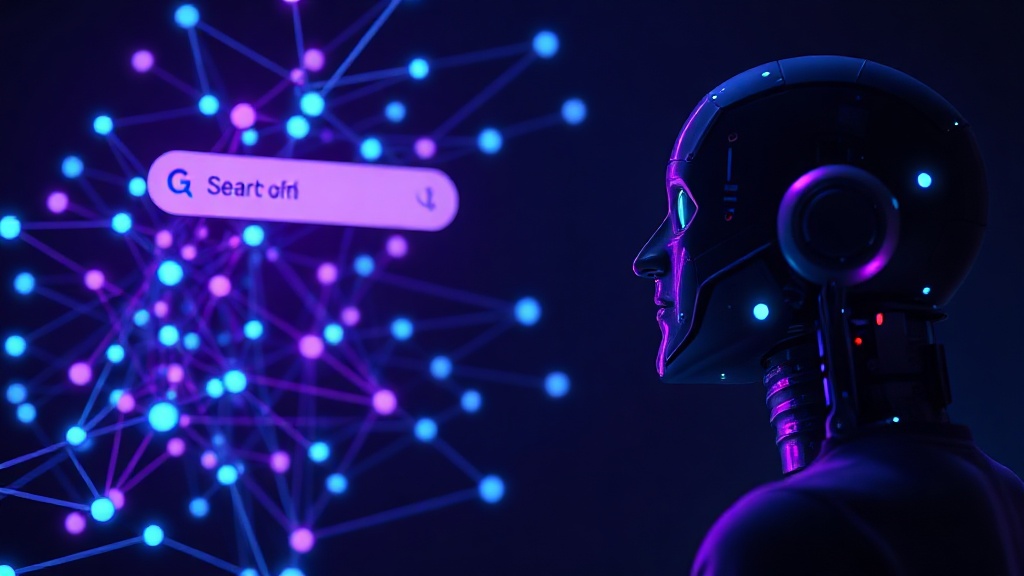
Google Search, a service that has defined internet navigation for a generation, is facing an existential crisis. The fundamental shift is not about a new competitor offering slightly better search results; it's about a completely different paradigm. For decades, Google's success has been built on indexing the web and presenting users with a list of links, each representing a potential destination. Advertisers paid to appear alongside these links, creating a near-monopoly on information discovery and a revenue stream that powered a tech behemoth. Now, generative AI chatbots are poised to dismantle this model by providing direct answers, bypassing the need for users to click through to websites.
This isn't a hypothetical scenario. Companies like OpenAI with ChatGPT, Anthropic with Claude, and Google itself with Gemini are increasingly integrating conversational AI into their product offerings. These AI agents are designed to understand complex queries and synthesize information from vast datasets to provide a single, coherent answer. This is a direct challenge to the core utility of a search engine, which has always been about directing users to information, not providing it directly. The implications are profound, not just for Google, but for the entire ecosystem of websites, publishers, and businesses that rely on search traffic.
Consider the user experience. A user asking, "What are the best hiking trails near Denver with moderate difficulty and dog-friendly options?" might previously have sifted through several search result pages, clicking on blog posts, park websites, and review sites. With an AI chatbot, the user could receive a concise summary listing the top three trails, with details on difficulty, dog policies, and even links to maps or rental services, all within the chat interface. This immediate gratification, this elimination of the click, is precisely what threatens Google's ad-supported foundation. If users get their answers without visiting websites, those websites lose traffic, and the advertisers who pay to reach those users lose their audience.
The Economic Disruption: A New Ad Model or No Model?
Google's advertising empire is built on the click. Search ads, display ads, YouTube ads – they all rely on users engaging with content or the platform itself. When AI chatbots provide answers directly, the journey from query to website is truncated. This means fewer ad impressions, fewer clicks, and ultimately, less revenue. The question for Google, and indeed for the entire digital advertising industry, is whether a new, effective advertising model can emerge within these AI-driven interfaces. Early attempts, such as sponsored snippets or AI-generated ad recommendations, are still nascent and unproven at scale. It's like trying to sell billboards on a road that no longer exists.
The core problem is that the value proposition of search has been to connect information seekers with information providers. Publishers and content creators have built entire businesses around being discoverable via search engines, optimizing their content for SEO to capture this traffic. AI chatbots, by summarizing and synthesizing information, risk becoming a black box that consumes content without attribution or direct referral. This could disincentivize the creation of high-quality, original content, as creators see no clear path to monetization. Why invest in in-depth articles, original research, or curated guides if an AI can simply digest and regurgitate the information without sending traffic back to the source?
This economic disruption is not merely a technical challenge; it's a fundamental reordering of the internet's value chain. The billions of dollars flowing into Google's coffers are derived from the traffic it sends. If that traffic ceases, or is drastically reduced, the entire digital economy built around it is at risk. This includes not only publishers but also affiliate marketers, e-commerce sites that rely on search-driven leads, and countless small businesses that use search as their primary customer acquisition channel.
What Comes Next? Uncertainty and Potential Futures
The future of information discovery is uncertain, but several potential paths are emerging. One is the rise of AI-native search engines or interfaces that are built from the ground up for conversational interaction. These might monetize through different means, perhaps subscription models for premium AI features, or by integrating e-commerce directly into the AI's responses in ways that are more transparent and less disruptive than current ad models. Another possibility is a hybrid model, where AI provides initial answers but prominently features links to authoritative sources, thereby preserving some traffic for content creators and advertisers.
However, the more concerning prospect, and the one suggested by the headline's ominous tone, is that the transition might not be smooth or equitable. If AI chatbots become the primary interface for information, and if the economic models to support content creation and distribution aren't rapidly developed and adopted, we could see a significant decline in the quality and diversity of online information. Content creators, starved of traffic and revenue, might turn to simpler, more easily digestible formats, or cease producing original work altogether. This would leave users with a curated, potentially biased, or even inaccurate information landscape, controlled by the AI providers.
The speed of this transition is also a critical factor. Google has had years to prepare for competition from Bing or DuckDuckGo, but the generative AI revolution is happening at an unprecedented pace. The company's immense infrastructure and data advantage are significant, but its business model is deeply entrenched in a paradigm that AI is actively dismantling. If Google cannot pivot effectively and rapidly, its dominance in search could erode much faster than anyone anticipates. The implications for users are stark: a potential future where the vast, open web we know is replaced by a more closed, AI-mediated experience, with unknown consequences for access, accuracy, and the very fabric of online knowledge.