The Problem: Accessing Patent Data
For professionals tracking technological advancements or competitor activity, obtaining timely patent filing data is crucial. However, official routes to this information have become increasingly restrictive. The USPTO Open Data Portal, a primary source, requires an API key and returned a 401 error without one. The USPTO’s bulk data endpoint, another potential source, suffered from unreliable 503 errors for extended periods. PatentsView, a similar resource, recently transitioned to requiring an API key with an approval queue, further complicating access for many users and developers.
This landscape left many, including developers needing programmatic access for competitive intelligence or research, in a difficult position. The desire was simple: a weekly feed of new patent filings based on specific keywords, offering a clear view into emerging technologies and competitor strategies. Without a reliable, accessible data stream, this fundamental research task became a significant hurdle.
The Discovery: An Undocumented XHR Endpoint
The solution emerged not from official documentation, but from direct observation of the Google Patents website. By inspecting the network traffic using browser developer tools, it was revealed that the entire Google Patents frontend operates via a single, undocumented XHR (XMLHttpRequest) endpoint. This endpoint serves all the data displayed on the site, including search results, patent details, and crucially, new filings, without requiring any API key or login credentials. This discovery offers a viable, albeit unofficial, pathway to programmatic access to a vast repository of patent information.
The core of this data retrieval mechanism lies in the following endpoint:
https://patents.google.com/xhr/query?url=q%3D(solid%2Bstate%2Bbattery)%26sort%3DnewThe key component of this URL is the url parameter. This parameter itself contains a URL-encoded string that mirrors the syntax used in the Google Patents search bar. When this encoded string is decoded, it reveals the underlying query structure. For example, the provided URL decodes to q=(solid+state+battery)&sort=new. Here, q represents the search query (in this case, patents related to 'solid state battery'), and sort=new indicates that the results should be sorted by the newest filings first.
Leveraging the Endpoint for Tracking
The implications of this discovery are significant for anyone needing to monitor patent activity. Developers can now construct scripts to query this endpoint directly, automating the process of tracking new patent filings. By dynamically constructing the url parameter with specific keywords and sorting preferences, it's possible to receive real-time or near-real-time data feeds. This bypasses the cumbersome approval processes, potential downtimes, and API key management associated with official channels.
The structure of the query allows for flexibility. Beyond simple keyword searches, users can incorporate advanced search operators that Google Patents supports, such as boolean logic (AND, OR, NOT), specific field searches (e.g., inventor, assignee, publication date ranges), and classification codes. This makes the undocumented endpoint a powerful tool for highly specific patent monitoring, comparable to what a well-designed official API would offer.
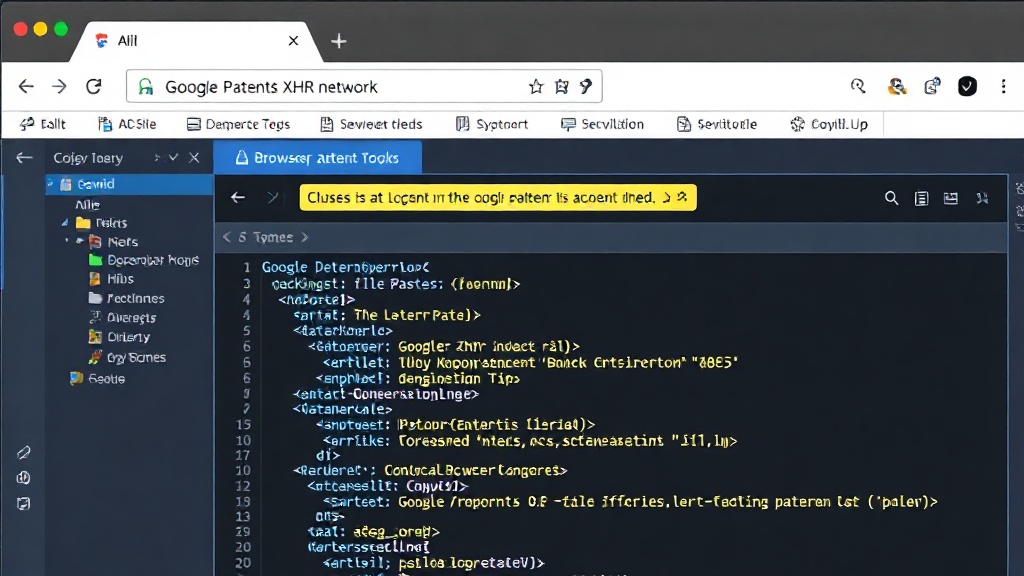
The data returned by the endpoint is typically in JSON format, making it straightforward to parse and integrate into existing applications or data analysis pipelines. This format is standard for XHR responses and is easily handled by most programming languages. The ability to programmatically access this data without authentication or rate limiting (though users should be mindful of responsible usage to avoid overwhelming the service) democratizes access to patent intelligence.
Potential Use Cases and Considerations
This method opens up numerous possibilities. Startups can monitor patents filed by larger competitors in their niche. Researchers can track the latest innovations in academic fields. Patent attorneys can stay abreast of filings relevant to their clients' portfolios. The ability to automate this process means that competitive landscaping, prior art searches, and technology trend analysis can be performed with significantly less manual effort.
However, relying on an undocumented endpoint comes with inherent risks. Google could change the endpoint’s structure, parameters, or even shut it down without prior notice. This is a critical consideration for any production system that depends on this data source. Unlike official APIs, there is no service level agreement, no support channel, and no guarantee of stability. Developers building tools based on this endpoint should implement robust error handling and monitoring, and ideally, have a fallback strategy.
Despite these risks, the immediate availability and ease of use make this undocumented endpoint a valuable resource. It provides a pragmatic solution for those who need patent filing data now and cannot wait for official channels to become more accessible or reliable. The key is to use this method judiciously, understanding its limitations while capitalizing on its accessibility.