Google Sunsets Custom Search API
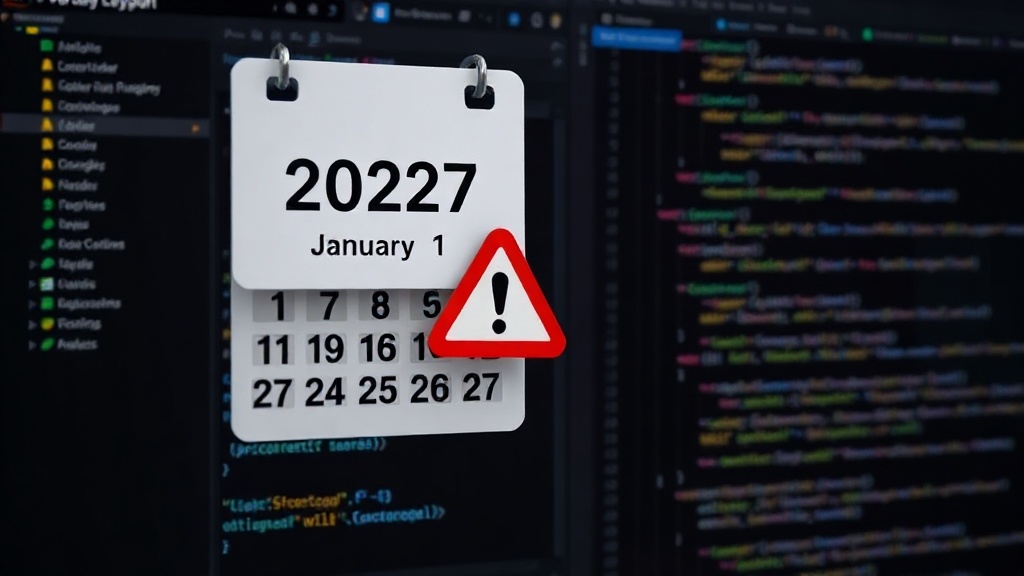
Google has announced the deprecation of its Custom Search API, a service that has enabled developers to integrate Google's powerful search capabilities into their own applications and websites. The official sunset date for the API is January 1, 2027. This decision means that any application, tool, or service that relies on this API to provide site-specific search functionality will need to find an alternative solution before the deadline.
The Custom Search API allowed developers to create search engines that could index and search specific websites or sets of websites. This was invaluable for a wide range of use cases, from academic research tools that needed to search specific journals, to internal knowledge bases for companies, to niche content aggregators. The ability to tailor search results to a defined scope provided a focused and efficient way to access information.
For years, developers have leveraged this API to build custom search experiences that went beyond what standard web search could offer. They could define the exact scope of the search, refine ranking algorithms for specific content types, and integrate the search results seamlessly into their own user interfaces. This level of control and integration is precisely what made the API so valuable to a dedicated segment of the developer community.
Implications for Developers and Businesses
The deprecation of the Custom Search API presents a significant challenge for the numerous developers and businesses that have built their services around it. The immediate implication is the need to migrate to alternative solutions within the next nine months. This migration is not a trivial task. It involves identifying suitable replacements, understanding their capabilities and limitations, and then undertaking the engineering effort to re-implement the search functionality.
For many, the Custom Search API was a cost-effective and reliable way to provide a critical feature. The alternatives may come with increased costs, different technical requirements, or a less refined feature set. Developers will need to evaluate options such as building their own search index using open-source technologies like Elasticsearch or Apache Solr, or exploring third-party search-as-a-service providers. Each of these paths requires significant investment in time, resources, and potentially ongoing operational costs.
The surprising detail here is not just the deprecation itself, but the relatively short notice provided for such a foundational API. While Google often iterates on its product offerings, a sunset date of January 1, 2027, leaves a nine-month window for migration. This timeline is tight for complex applications that may have deep integrations with the API. Developers who have relied on this service for their core business functions will need to act swiftly.
What Replaces the Custom Search API?
Google's official communication around the deprecation does not explicitly name a direct, one-to-one replacement within its current product suite for the Custom Search API's specific functionality. The broader Google Search API, which powers general web search, remains available. However, this API is designed for general web indexing and does not offer the same granular control over site-specific indexing and ranking that the Custom Search API provided.
This lack of a clear successor forces developers to consider external solutions. Building a custom search engine from scratch is a complex undertaking. It requires expertise in data crawling, indexing, querying, and relevance tuning. For many, this would be a significant diversion from their core product development. Services like Algolia, Elasticsearch (often self-hosted or managed via cloud providers), and Meilisearch offer powerful search functionalities that could potentially fill the void. However, each comes with its own learning curve, pricing models, and infrastructure requirements.
The decision also raises questions about Google's long-term strategy for niche search services. The Custom Search API was a powerful tool for creating highly specialized search experiences. Its removal suggests a potential shift in Google's focus, perhaps towards consolidating its offerings or prioritizing services that align with its core advertising business model. What this means for other specialized APIs or developer tools remains to be seen.
A Call to Action for Developers
If you are a developer or a business using the Google Custom Search API, the message is clear: start planning your migration now. The nine-month window is a critical period for assessment, planning, and execution. Ignoring this deadline will inevitably lead to service disruptions and a loss of critical functionality for your users.
Begin by auditing your current application to fully understand the extent of your reliance on the Custom Search API. Identify all the specific features and functionalities that are powered by it. Next, research and evaluate potential alternative solutions. Consider factors such as cost, technical complexity, scalability, and the level of customization each alternative offers. Engage with your engineering team to estimate the effort and resources required for the migration.
The transition will not be without its challenges. It may require significant refactoring of existing codebases and potentially a re-evaluation of your product's search strategy. However, by addressing this proactively, you can mitigate risks and ensure a smoother transition, maintaining the search capabilities that your users depend on. The landscape of search technology is constantly evolving, and this deprecation, while disruptive, also presents an opportunity to adopt more modern and flexible search solutions.