Bridging the Gap: AI Agents and Cloud Deployment
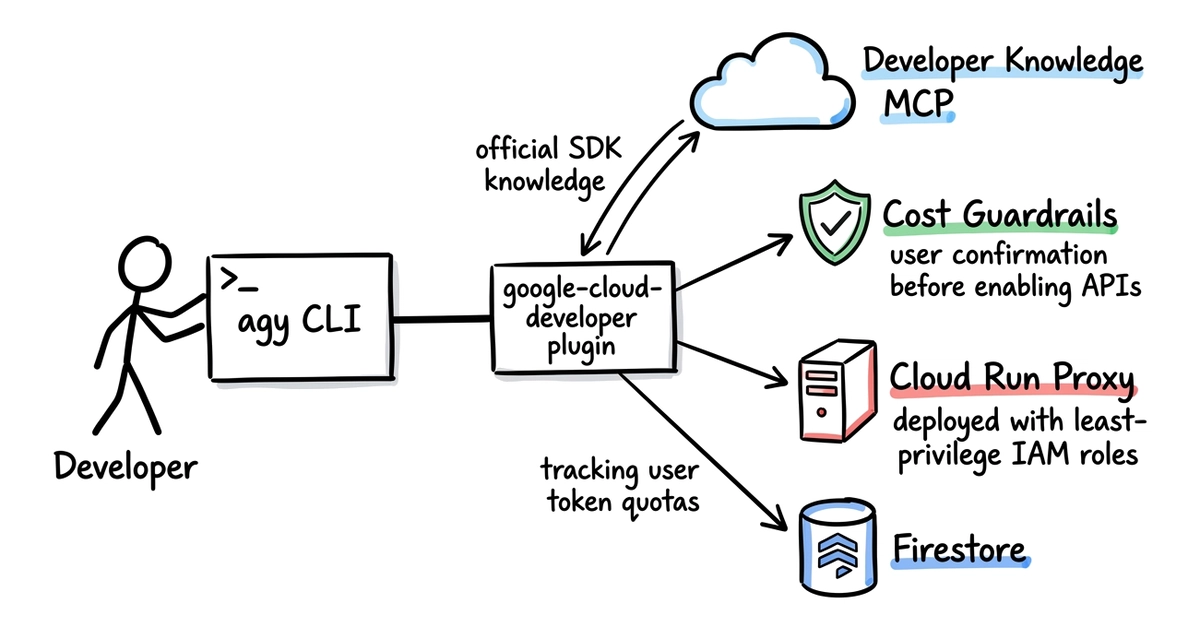
Coding agents in the terminal can rapidly scaffold microservices, but deploying them to cloud environments presents a significant hurdle. Without specialized guidance, these agents often falter. They might hallucinate outdated SDK calls, attempt operations without necessary permissions, or inadvertently enable costly billable APIs, leading to unexpected expenses. The new google-cloud-developer plugin directly addresses this challenge by integrating Google Cloud best practices into AI agent workflows.
This plugin transforms how AI agents interact with Google Cloud. It provides them with the context and knowledge to perform cloud-specific tasks accurately and efficiently. Instead of generic code generation, agents equipped with this plugin can generate deployment-ready configurations, manage cloud resources, and adhere to security and cost management guidelines inherent to Google Cloud. This capability is crucial for developers who want to leverage AI for faster development cycles without sacrificing operational rigor or incurring surprise bills.
How the google-cloud-developer Plugin Works
The google-cloud-developer plugin functions by providing AI agents with a structured set of tools and knowledge bases specifically tailored for Google Cloud. When an agent is tasked with a cloud-related operation, such as deploying an application or configuring a service, it can leverage the plugin to access relevant information. This includes up-to-date SDK commands, proper authentication mechanisms, and best practices for resource provisioning.
Think of it less like a general-purpose assistant and more like a highly specialized cloud engineer embedded directly into your AI agent. This engineer knows the intricacies of Google Cloud, understands common pitfalls, and guides the agent to avoid them. For example, if an agent needs to create a Cloud Storage bucket, the plugin ensures it uses the correct API version, specifies appropriate region and storage class for cost optimization, and sets the correct IAM policies for security. This prevents the agent from defaulting to less optimal or insecure configurations.
The plugin supports various AI agents, including Antigravity CLI, Claude Code, and Codex CLI. This broad compatibility means developers can integrate this enhanced cloud intelligence into their existing AI development tools. The goal is to make cloud deployment as seamless and reliable as local development, powered by AI.
Key Benefits and Use Cases
The primary benefit of the google-cloud-developer plugin is its ability to instill confidence in AI-generated cloud operations. Developers can trust that the code and configurations produced by their agents will align with Google Cloud’s recommended practices.
Several use cases highlight the plugin's value:
- Microservice Scaffolding and Deployment: Agents can not only scaffold new microservices but also generate the necessary Google Cloud infrastructure-as-code (e.g., Terraform or Cloud Deployment Manager configurations) and deployment scripts, ensuring services are set up correctly from the start.
- Cost Management: By providing guidance on service tiers, resource sizing, and API usage, the plugin helps agents avoid enabling expensive services unnecessarily or choosing suboptimal configurations that lead to high bills.
- Security Compliance: The plugin ensures agents apply appropriate IAM roles, network security settings (like VPC firewall rules), and data encryption practices, reducing the risk of security misconfigurations.
- API Versioning and Deprecation: Agents are guided to use current and supported API versions, preventing issues caused by deprecated SDK calls that are common with generic AI models.
- Onboarding and Training: For new developers or those less familiar with Google Cloud, agents powered by this plugin can act as intelligent tutors, demonstrating best practices through their generated code and configurations.
Beyond Basic Code Generation
What sets this plugin apart is its focus on the entire lifecycle of cloud operations, not just code generation. It addresses the operational realities of cloud computing: cost, security, and reliability. Generic coding agents might be proficient at writing Python or JavaScript functions, but they lack the domain-specific knowledge required for robust cloud deployments. This plugin bridges that knowledge gap.
Consider the scenario of deploying a containerized application. A standard agent might generate a Dockerfile. An agent with the google-cloud-developer plugin can go further: it can suggest the most cost-effective Google Kubernetes Engine (GKE) configuration, generate the necessary Kubernetes manifests, and even advise on setting up Cloud Build for CI/CD pipelines, all while adhering to Google Cloud's security recommendations for containerized workloads. This level of integrated, best-practice-driven automation is what the plugin enables.
The surprise element here is how effectively a plugin can imbue a general-purpose AI agent with highly specific, nuanced operational knowledge. It’s akin to giving a talented but inexperienced junior developer a senior architect’s playbook. The result is code and configurations that are not just functional, but also optimized, secure, and cost-effective from the outset.
The Future of AI-Assisted Cloud Development
The introduction of the google-cloud-developer plugin signifies a maturing phase in AI-assisted development. As AI agents become more sophisticated, the focus shifts from mere code generation to intelligent, context-aware assistance that understands the complexities of production environments. This plugin is a step towards making AI agents indispensable tools for cloud-native development, empowering teams to build, deploy, and manage applications on Google Cloud with greater speed, confidence, and efficiency.
For developers, this means less time spent debugging cloud configuration errors and more time focusing on core application logic. For organizations, it translates to reduced operational risk, better cost control, and faster time-to-market for cloud-based services. The challenge ahead will be for other cloud providers and AI platforms to develop similar specialized plugins that cater to their unique ecosystems, further democratizing best practices across the industry.