Understanding the Wrong Password Error in PDF Decryption
When processing supplier invoices, encountering a "wrong password" error during PDF decryption in Go can halt automated workflows. This error message, however, is often a simplification of a more complex issue. It doesn't definitively prove the supplier provided an incorrect credential. Several factors can contribute to this failure, including truncated PDF bytes during transmission, alterations to the credential en route, or incompatibilities between the reader's supported PDF encryption standards and the document's specific security settings. ISO 32000-2, the standard for PDF, outlines various encryption methods, and a mismatch here can manifest as a password error.
For systems handling order-to-invoice pipelines, particularly in sectors like edtech, it's crucial to isolate attachment failures. If an encrypted supplier PDF cannot be decrypted, this failure should not impede the rendering of the invoice itself, assuming trusted order data is available for reconstruction. The critical constraint becomes whether the supplier's attachment is a mandatory component of the final output. Including it significantly increases the fidelity requirement and the complexity of the rendering process, elevating the impact of decryption failures.
Strategic Handling of Decryption Failures
The immediate action when a "wrong password" error occurs should be to quarantine the affected supplier's encrypted PDF. This means preserving the original bytes of the attachment without attempting further decryption with the same, potentially incorrect, credential. It is ill-advised to repeatedly retry the same secret across multiple invoice jobs, as this consumes resources and offers no diagnostic value. Instead, a secure and approved channel should be used to request the corrected credential from the supplier. This structured approach ensures that attempts to access sensitive documents are logged and managed appropriately.
Consider an edtech platform processing orders and generating invoices. If a supplier sends an encrypted PDF that fails decryption, the system should flag this specific attachment. The invoice generation process, however, can continue using data from the original order. The system should not attempt to re-decrypt the problematic PDF with different combinations of the same failed password. This isolation prevents a single point of failure—the attachment—from disrupting the entire invoice processing pipeline. The ultimate decision on how to handle such an attachment depends on its necessity for the final document. If the supplier's PDF is merely supplementary, its absence due to decryption issues might be acceptable. If it's a critical component, a more robust error-handling and supplier communication protocol is required.
Preserving Data Integrity and Workflow Continuity
The technical implementation for handling these errors involves robust error management within the Go application. When a decryption function returns an error indicating a wrong password, the application should not treat this as a terminal failure for the entire invoice. Instead, it should log the error with specific details, including the invoice ID, supplier name, and the timestamp. The original encrypted PDF attachment should be stored in a secure, isolated location—a quarantine zone—for later review or re-processing once a correct credential is obtained.
This strategy is analogous to a mailroom receiving a locked package. Instead of trying to force it open or discarding it, the mailroom would log the package, store it securely, and initiate a process to contact the sender for the correct key. This ensures the package isn't lost and that attempts to access it are controlled and auditable.
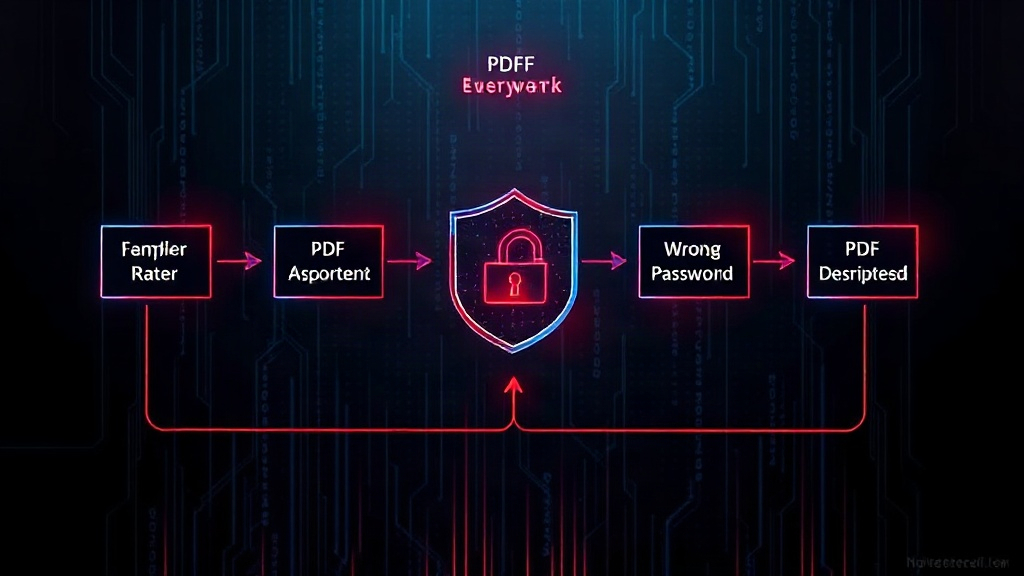
Furthermore, the system should be designed to differentiate between a corrupted PDF file and a password-protected PDF with an incorrect password. If the PDF structure itself is compromised (e.g., truncated bytes), the decryption error might be secondary to a fundamental file integrity issue. A preliminary check for file size and basic PDF structure validation can help distinguish these scenarios. The goal is to maintain workflow continuity by processing all other aspects of the invoice, such as line items, totals, and tax information, while the problematic attachment is handled separately. This ensures that the core financial data is captured and processed, even if a supplementary document requires manual intervention.
The Importance of Approved Communication Channels
Requesting corrected credentials from suppliers must adhere to established security protocols. Using unapproved channels, such as direct email replies to the error notification or ad-hoc messaging, introduces significant security risks. These methods can be susceptible to phishing, man-in-the-middle attacks, or accidental disclosure of sensitive information. Therefore, the process should mandate using pre-defined, secure communication methods, perhaps integrated into a supplier portal or a dedicated ticketing system. This ensures that credential exchange is authenticated, encrypted, and auditable, maintaining the integrity of the invoice handling process and protecting sensitive financial data.
What remains unaddressed in many automated systems is the long-term policy for handling persistently problematic suppliers. If a supplier repeatedly sends incorrectly encrypted documents or fails to provide correct credentials promptly, the system should ideally have a mechanism to flag this supplier for further review, potentially leading to a temporary suspension of automated processing for their invoices until a resolution is found. This proactive approach prevents recurring disruptions and encourages suppliers to maintain compliance with established security standards.
Broader Implications for Automated Document Processing
The challenge of handling encrypted supplier documents highlights a broader trend in automated document processing: the increasing reliance on external data formats that may incorporate varying levels of security and complexity. As businesses integrate more digital workflows, the ability to gracefully handle exceptions—like decryption failures—becomes paramount. Systems must be resilient, capable of isolating errors, and possess clear protocols for human intervention or supplier communication. The "wrong password" error is a microcosm of this larger challenge, demanding thoughtful engineering that prioritizes data integrity, workflow continuity, and security.