
Distinguishing Legitimate Crawlers from Scrapers
WebDecoy for Vercel offers a solution for website owners struggling to differentiate between legitimate search engine crawlers and malicious bots that can overload servers, scrape content, or attempt exploits. The tool integrates with Vercel projects to monitor incoming traffic, analyzing each request to determine its origin and intent.
Identifying bots is crucial for several reasons. Legitimate crawlers, like those from Google, Bing, or DuckDuckGo, are essential for website discoverability and SEO. They index content, making it available to users searching online. However, a surge in traffic from unknown or suspicious sources can indicate a botnet activity, scraping attempts, or even denial-of-service (DoS) reconnaissance. Without proper identification, website owners might inadvertently block essential search engine bots while allowing harmful ones to proceed, impacting both SEO performance and security posture.
WebDecoy aims to provide clear visibility into this often-opaque layer of web traffic. By analyzing request headers, IP reputation, and behavioral patterns, the system can build a profile for each incoming entity. This allows it to flag suspicious activities that deviate from known crawler signatures. The goal is to empower Vercel users with the knowledge of who is visiting their site, enabling them to make informed decisions about traffic management and security.
How WebDecoy Works for Vercel Deployments
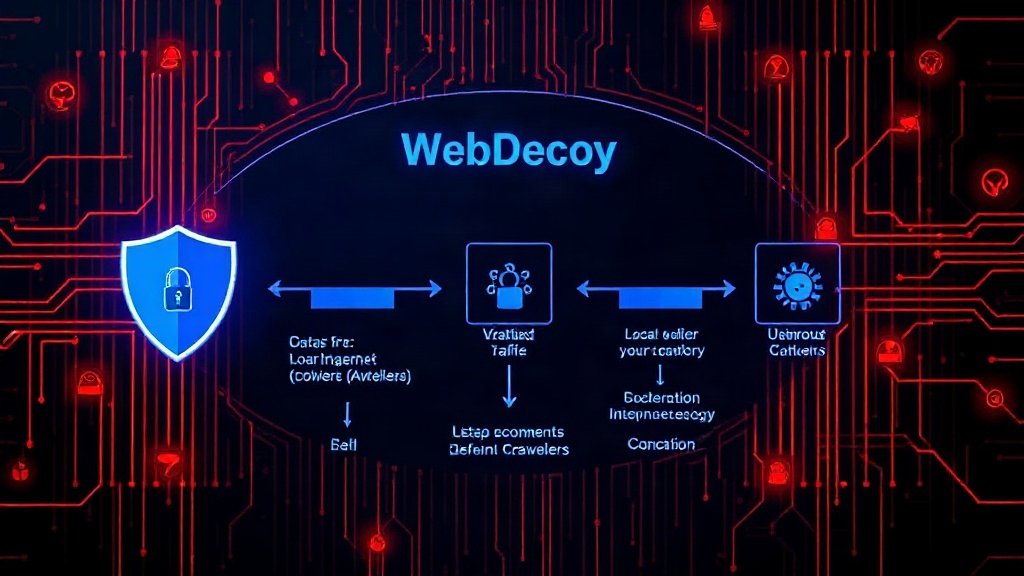
The core functionality of WebDecoy revolves around real-time traffic analysis. When deployed on a Vercel project, it acts as a gatekeeper, inspecting each HTTP request before it fully reaches the application logic. This inspection process involves several layers of verification. Initially, it checks the User-Agent string against a curated list of known legitimate bots. This is a foundational step, but not sufficient on its own, as User-Agent strings can be easily spoofed.
Beyond User-Agent checks, WebDecoy utilizes IP geolocation and reputation databases. It cross-references the source IP address against lists of known malicious IPs, botnet command-and-control servers, and proxies. A request originating from a highly reputable IP known to belong to Googlebot, for example, is far more likely to be legitimate than one from an IP associated with known bot activity.
Furthermore, the system looks for behavioral anomalies. Legitimate crawlers tend to exhibit predictable crawling patterns. They might request a site's `robots.txt` file first, respect crawl delays, and navigate the site in a structured manner. Malicious bots, on the other hand, might hammer specific URLs, bypass `robots.txt`, or exhibit rapid, erratic request patterns. WebDecoy's analysis engine correlates these factors to assign a confidence score to each request, categorizing it as either a trusted crawler, a suspicious bot, or potentially malicious traffic.
Key Features and Benefits
WebDecoy for Vercel offers a suite of features designed to simplify bot management for developers and site owners.
- Real-time Bot Identification: Provides immediate classification of incoming crawlers, distinguishing between search engines, scrapers, and other bots.
- Vercel Integration: Designed to seamlessly integrate with Vercel's serverless architecture, ensuring minimal performance overhead.
- Customizable Rules: Allows users to define their own rules or adjust thresholds for bot classification based on specific application needs.
- Traffic Logging and Analytics: Offers detailed logs of crawler activity, including IP addresses, User-Agents, request paths, and classification results, aiding in security audits and SEO analysis.
- Blocklist/Allowlist Functionality: Enables users to manually block specific IPs or User-Agents deemed harmful, or allowlist trusted bots that might be misclassified.
The primary benefit is enhanced control over website traffic. By understanding precisely which bots are accessing a site, Vercel users can optimize their server resources, preventing overload from illegitimate bots and ensuring that search engines can crawl their content effectively. This directly impacts SEO performance, as search engines are more likely to index and rank sites that are accessible and well-behaved.
Security is another major advantage. Identifying and blocking suspicious bot traffic can preemptively thwart scraping attacks, credential stuffing attempts, and reconnaissance for further exploits. For businesses that rely on unique content or intellectual property, preventing unauthorized scraping is paramount. WebDecoy provides a proactive layer of defense against these threats within the Vercel ecosystem.
The Importance of Bot Management for Vercel Users
Vercel's platform excels at deploying modern web applications, often at scale, with a focus on performance and developer experience. This makes it an attractive target for both legitimate traffic and malicious bot activity. Without robust bot management, even the most optimized Vercel deployment can suffer from performance degradation or security vulnerabilities introduced by unchecked bot traffic.
Consider a scenario where a sophisticated scraper attempts to harvest product data from an e-commerce site. This scraper might rotate IP addresses, use realistic User-Agents, and mimic human browsing behavior. A standard WAF might miss such an attack. WebDecoy, by analyzing a broader spectrum of indicators, can identify this activity as non-human and potentially harmful, allowing the Vercel application to respond appropriately, perhaps by serving degraded content or blocking the source IP entirely.
The counter-intuitive aspect here is that while Vercel abstracts away much of the server management, visibility into traffic layers like bot activity remains critical. Developers often focus on application code and deployment pipelines, but the sheer volume and sophistication of bots mean that neglecting this area can lead to unexpected issues. WebDecoy bridges this gap, offering specialized bot intelligence tailored for the Vercel environment. It's less about blocking all bots and more about intelligently managing them, ensuring the right bots get through while the wrong ones are stopped.
What This Means for Developers and Businesses
For developers building on Vercel, WebDecoy offers a tool to gain granular control over their site's interaction with the automated web. It simplifies the process of distinguishing good bots from bad, which can be a complex task to implement from scratch. This allows developers to focus more on feature development and less on building custom bot detection logic.
For businesses, particularly those sensitive to SEO or data integrity, WebDecoy provides a critical layer of defense and optimization. It ensures that valuable server resources are not wasted on illegitimate traffic and that search engines can effectively index their content. This can translate into better search rankings, improved user experience, and a stronger security posture against automated threats. The ability to monitor and analyze bot traffic also provides valuable insights for understanding market trends and competitive intelligence, albeit indirectly.
The question remains: how will Vercel itself or other platform providers evolve their native offerings to address bot management more comprehensively? As bot traffic continues to grow in volume and sophistication, solutions like WebDecoy highlight a persistent need for intelligent, application-aware bot detection that complements existing infrastructure.