
The Vision: Why Gubernator?
The container orchestration landscape is dominated by Kubernetes, a powerful but often overkill solution for smaller projects, homelabs, or edge deployments. Docker Swarm offers simplicity but lacks the sophisticated scheduling capabilities of more advanced systems. This gap is precisely where Gubernator, a new container orchestrator written in Go, aims to fit. Conceived as a "Goldilocks" solution, Gubernator seeks to combine the user-friendly experience of Docker Compose with the decentralized targeting and reliability of HashiCorp Nomad.
The project, co-authored with Antigravity, Google DeepMind's agentic AI pair programmer, started as a single-node API and has evolved into a fully decentralized, multi-node VM cluster. Key features include autonomous DNS resolution and local ingress routing, demonstrating a significant leap in complexity and capability from its initial iteration.
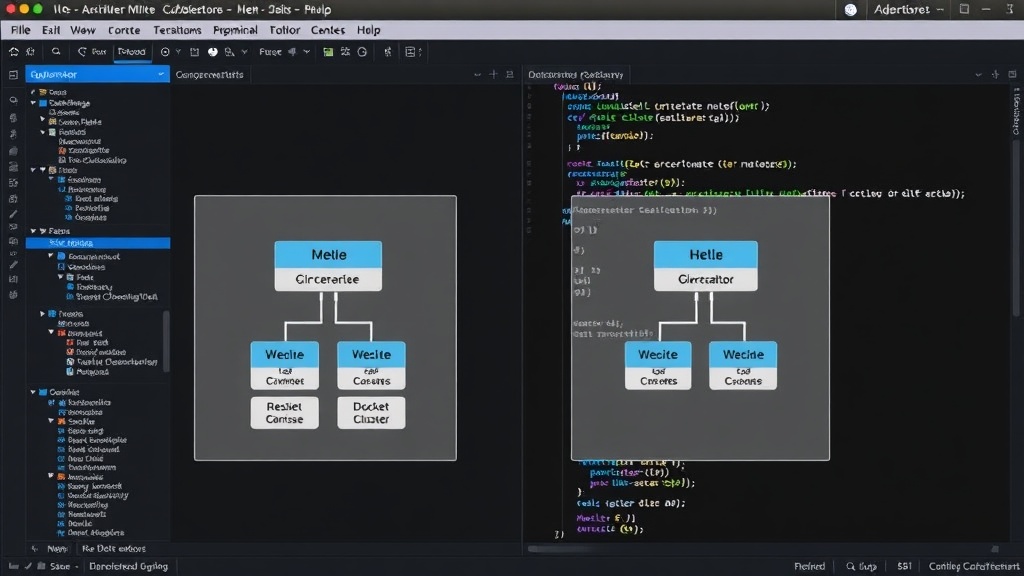
Journey to Multi-Node
The initial version of Gubernator focused on establishing a robust single-node API. This laid the groundwork for managing containers on a single machine, offering a familiar developer experience akin to Docker Compose. However, the true potential of an orchestrator lies in its ability to manage distributed systems. The next phase involved scaling this architecture to a multi-node cluster, a process that required addressing several core challenges.
Transitioning to a multi-node environment meant moving beyond a single API endpoint to a decentralized control plane. This involved implementing peer-to-peer communication protocols, ensuring state synchronization across nodes, and developing a consensus mechanism for task allocation and management. The goal was to achieve the reliability and fault tolerance expected of modern distributed systems, without the steep learning curve and operational burden of solutions like Kubernetes.
Autonomous DNS Resolution
A critical component for any distributed application is reliable service discovery and DNS resolution. In a dynamic multi-node cluster, IP addresses can change, and new services may come online at any time. Gubernator tackles this by implementing autonomous DNS resolution. This system allows services deployed within the cluster to discover and communicate with each other using stable hostnames, regardless of the underlying IP addresses or the specific node a service is running on.
This feature simplifies application configuration and enhances resilience. Developers don't need to manually track or update service endpoints. The orchestrator handles the dynamic mapping of service names to their current network locations. This is achieved through a combination of gossip protocols for node discovery and a distributed key-value store for maintaining service registration and DNS records. The system is designed to be self-healing, automatically updating DNS entries as nodes join or leave the cluster, or as services are rescheduled.
Local Ingress Routing
Exposing services running within the cluster to the outside world, or even to other services across different subnets, requires intelligent routing. Gubernator's local ingress routing capability addresses this. Instead of relying on external load balancers for every service, Gubernator manages ingress traffic directly at the node level. This provides a more efficient and localized routing solution, particularly beneficial for edge deployments or smaller clusters where managing external infrastructure is cumbersome.
The ingress controller can dynamically route incoming requests to the appropriate service instances based on hostnames, paths, or other routing rules defined by the user. This is often achieved by leveraging technologies like HAProxy or Nginx, configured dynamically by Gubernator based on service definitions. The system ensures that traffic is directed to healthy instances of a service, automatically bypassing any nodes or containers that have failed. This local approach reduces latency and simplifies network configuration for distributed applications.
The Role of AI Pair Programming
The development of Gubernator was significantly accelerated by the involvement of Antigravity, Google DeepMind's AI pair programmer. AI pair programming tools can assist developers by suggesting code, identifying potential bugs, writing boilerplate code, and even generating test cases. In the context of building a complex system like a distributed orchestrator, an AI partner can be invaluable for handling repetitive tasks, exploring different implementation strategies, and ensuring code quality.
Antigravity's contribution likely involved generating significant portions of the codebase, particularly for areas requiring complex networking logic, state management, or protocol implementation. This collaboration allowed the human developer to focus on higher-level architectural decisions, system design, and the overall vision for Gubernator, while the AI handled much of the detailed coding and implementation. The result is a more mature and feature-rich orchestrator developed in a shorter timeframe than might have been possible with human effort alone.
Future Directions and Implications
Gubernator represents a compelling alternative for developers seeking a more manageable container orchestration solution. Its design philosophy prioritizes ease of use and operational simplicity without sacrificing essential features like distributed task scheduling, service discovery, and ingress routing. The success of this project also highlights the growing potential of AI pair programming tools in accelerating complex software development, particularly in specialized domains like distributed systems.
While Kubernetes remains the standard for large-scale enterprise deployments, Gubernator could carve out a significant niche in developer-centric environments, small businesses, and specialized edge computing scenarios. The ongoing development, fueled by both human ingenuity and AI assistance, will likely see Gubernator mature into a robust and competitive player in the container orchestration space.