The Unseen Bottleneck: Compute Capacity Under Strain

The digital economy's relentless expansion, fueled by the accelerating adoption of artificial intelligence, machine learning, and increasingly data-intensive cloud services, is encountering a critical bottleneck: a global shortage of compute power. This isn't a hypothetical future problem; it's a present-day reality impacting everything from cutting-edge AI research to the everyday availability of cloud infrastructure. The insatiable appetite for processing power, driven by massive language models, complex simulations, and the ever-growing volume of data, is outstripping the industry's ability to supply the necessary hardware and infrastructure. The ramifications are far-reaching. For AI developers, it means longer wait times for training models, increased costs, and a potential slowdown in the pace of innovation. For cloud providers, it translates to an inability to meet surging customer demand, leading to higher prices and capacity constraints. Even established tech giants are feeling the pinch, scrambling to secure the advanced chips and server space required to maintain their competitive edge. This shortage is a complex interplay of factors. The demand for high-performance GPUs, essential for AI workloads, has exploded. Simultaneously, the supply chain for these specialized components remains fragile, susceptible to geopolitical tensions, manufacturing limitations, and the sheer scale of production required. Building new fabrication plants takes years and billions of dollars, meaning that even with significant investment, supply cannot instantaneously match demand.

The AI Demand Surge: A New Paradigm

Artificial intelligence, particularly the development and deployment of large language models (LLMs) and generative AI, is the primary driver of this compute crunch. Training models with billions or even trillions of parameters requires immense computational resources, often measured in petaflop-days. As these models become more sophisticated and their applications expand across industries, the demand for the specialized hardware, predominantly high-end GPUs, has skyrocketed. NVIDIA, a dominant player in this market, has seen its revenue surge, yet it still struggles to keep pace with orders. Consider the training of a single state-of-the-art LLM. It can consume thousands of GPU-hours, costing millions of dollars and requiring substantial data center infrastructure. Now, multiply that by the hundreds of companies and research institutions worldwide racing to develop and refine their own AI models. The aggregate demand is staggering, creating a scenario where demand consistently outstrips supply. This is akin to a global construction boom hitting a cement shortage; the ambition is there, but the fundamental building blocks are scarce. This demand is not limited to AI research. The operationalization of AI, deploying these models for inference in real-world applications, also requires significant compute. From recommendation engines and autonomous vehicles to medical diagnostics and financial modeling, the need for continuous processing power is escalating.
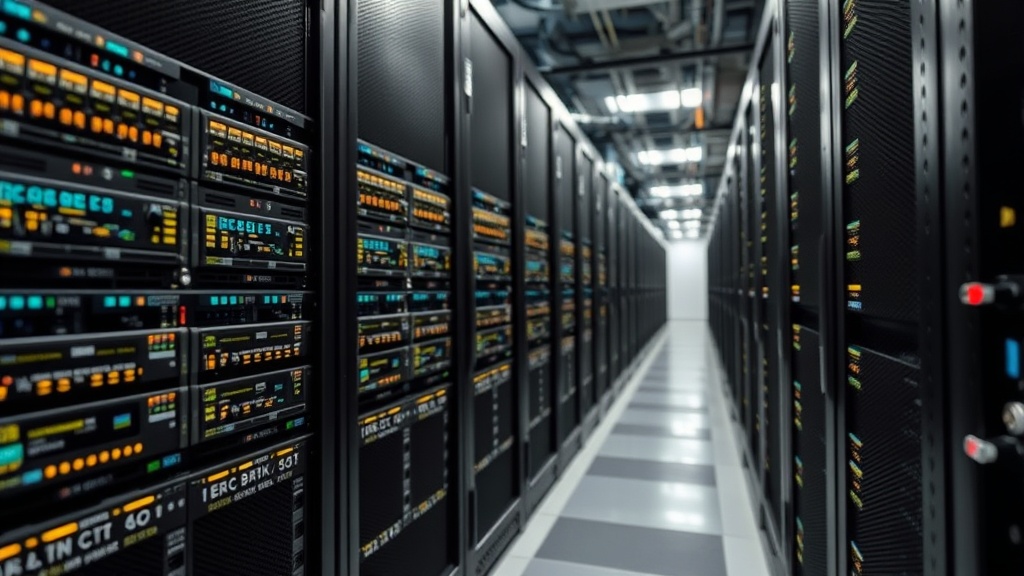
Data center racks filled with high-performance computing servers

Beyond AI: Cloud Infrastructure and Data Growth

While AI is a major catalyst, the compute shortage is exacerbated by broader trends in cloud computing and data proliferation. Businesses continue to migrate workloads to the cloud, seeking scalability, flexibility, and cost efficiency. This migration, coupled with the exponential growth of data generated by IoT devices, social media, and digital services, places continuous pressure on data center capacity. Cloud providers, in turn, are in a perpetual arms race to expand their infrastructure, but the lead times for procuring and deploying new hardware are considerable. Furthermore, the shift towards more complex microservices architectures and containerization, while offering agility, can also increase compute overhead. The need for high-throughput, low-latency processing is becoming paramount for many applications, pushing demand for specialized hardware beyond just GPUs, including high-end CPUs and specialized accelerators.

Supply Chain Fragility and Geopolitical Realities

The semiconductor industry, the backbone of modern computing, is notoriously capital-intensive and complex. Manufacturing advanced chips requires highly specialized equipment, precise environmental controls, and a skilled workforce. Building new fabrication facilities, or