
GitHub Copilot Workspace: An Agentic Approach to Development
GitHub today announced the preview of Copilot Workspace, a significant evolution in its AI-powered developer tools. This new environment is not just an incremental update; it's designed as a complete agentic system, aiming to transform the entire workflow from problem identification to a ready-to-merge pull request. The core promise is speed: taking a GitHub issue and generating the necessary code, tests, and documentation in mere seconds. This represents a shift from Copilot's previous role as a code completion assistant to a proactive development partner.
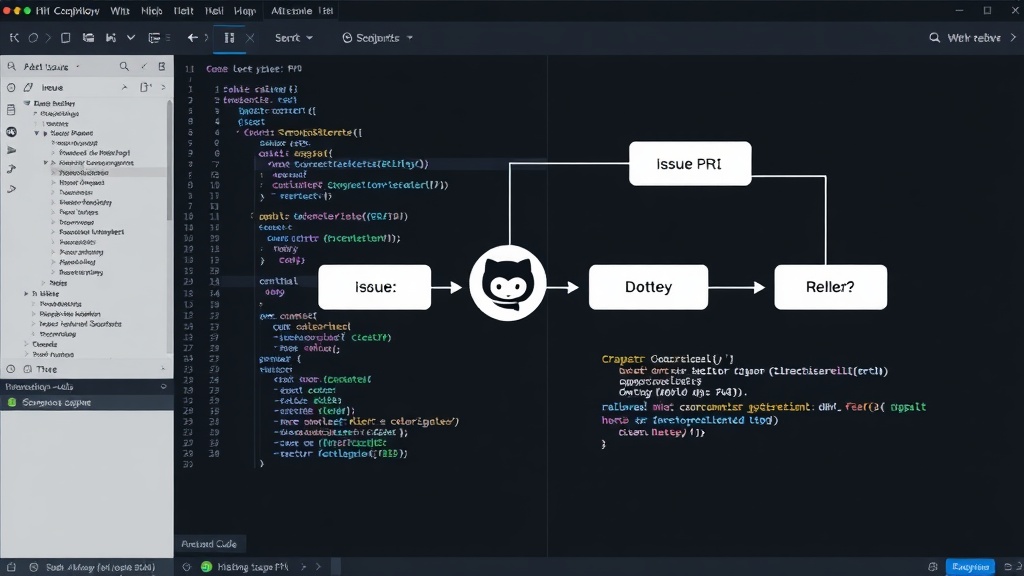
Automating the From-Issue-to-PR Loop
The traditional software development lifecycle involves numerous manual steps after a bug is reported or a feature is defined. Developers must interpret the issue, plan the implementation, write code, create unit tests, ensure integration, and finally, draft a pull request with relevant descriptions. Copilot Workspace aims to automate the bulk of this process. Users will be able to take an existing GitHub issue or even a blank canvas and instruct Copilot Workspace to begin coding. The system will then generate a solution, often including tests, and present it within a dedicated workspace for review.
This agentic capability means Copilot Workspace doesn't just suggest code snippets; it understands context, intent, and the broader project structure. It can reason about the problem, break it down into smaller coding tasks, and execute them. The generated code is not presented as a black box. Instead, it appears in a chat-like interface within the workspace, allowing developers to interact with the AI, ask clarifying questions, request modifications, or provide feedback. This iterative process is designed to be fast and collaborative, with the AI handling the heavy lifting of initial implementation and testing.
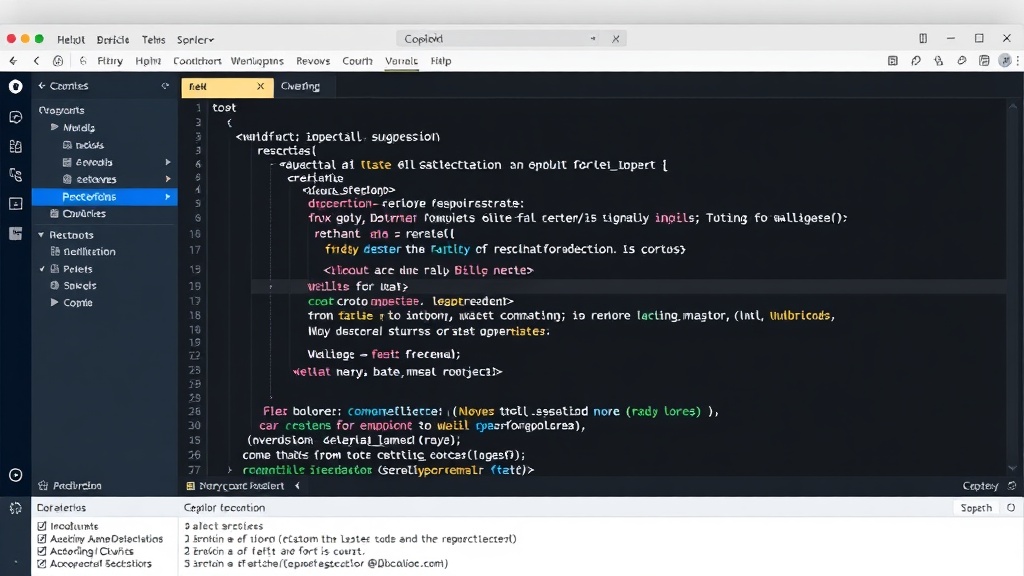
The Technical Underpinnings and Workflow
While specific technical details remain under wraps as the product is in preview, GitHub has indicated that Copilot Workspace leverages advanced AI models capable of understanding complex codebases and development contexts. The system is designed to operate directly within the development environment, integrating seamlessly with GitHub repositories. This allows it to access repository history, project structure, and existing code to generate relevant and contextually appropriate solutions.
The workflow is envisioned as follows: A developer selects an issue or initiates a new task. They then prompt Copilot Workspace to start coding. The AI analyzes the request and the repository's context. It generates code, potentially including tests and documentation, and presents this as a proposed solution within the workspace. Developers can then review the generated code, make edits through natural language prompts (e.g., "refactor this to use async/await," or "add error handling for network failures"), or ask the AI to generate additional features or tests. Once satisfied, the developer can commit the changes, and Copilot Workspace will help craft the pull request, summarizing the changes and their rationale.
This approach differs from traditional IDE plugins that offer code completion. Copilot Workspace acts as a more autonomous agent, capable of tackling larger, more complex coding tasks. It's akin to having a junior developer who can quickly draft initial implementations based on clear instructions and then engage in a rapid feedback loop for refinement. The goal is to significantly reduce the time spent on repetitive coding tasks, boilerplate generation, and initial test writing, freeing up developers to focus on higher-level problem-solving, architectural design, and code review.
What This Means for Developers and the Future of Coding
The implications of Copilot Workspace are substantial. For developers, it promises to accelerate the pace of development dramatically. Tasks that might take hours could potentially be reduced to minutes. This could lead to faster release cycles, quicker iteration on features, and more efficient bug fixing. The interactive nature of the workspace ensures that developers remain in control, guiding the AI and validating its output, thus mitigating concerns about AI-generated code being opaque or incorrect.
However, this also raises questions about the evolving role of developers. As AI takes on more of the initial coding and testing heavy lifting, developers will need to hone their skills in prompt engineering, AI interaction, architectural oversight, and critical code review. The ability to effectively guide and critique AI-generated code will become paramount. The surprising detail here is not just the automation but the focus on an *agentic* environment—implying a level of autonomy and reasoning that goes beyond simple code generation. It's about creating a partner that can understand and execute development tasks.
For organizations, Copilot Workspace could lead to significant productivity gains. Teams can potentially deliver more features and address technical debt more rapidly. The barrier to entry for contributing to complex codebases might also be lowered, as developers can rely on AI to help them navigate and implement changes. The preview stage suggests GitHub is seeking feedback to refine this powerful new tool, aiming to make it an indispensable part of the modern developer toolkit. If successful, it could redefine what it means to ship code in the 21st century.