The End of Premium Requests
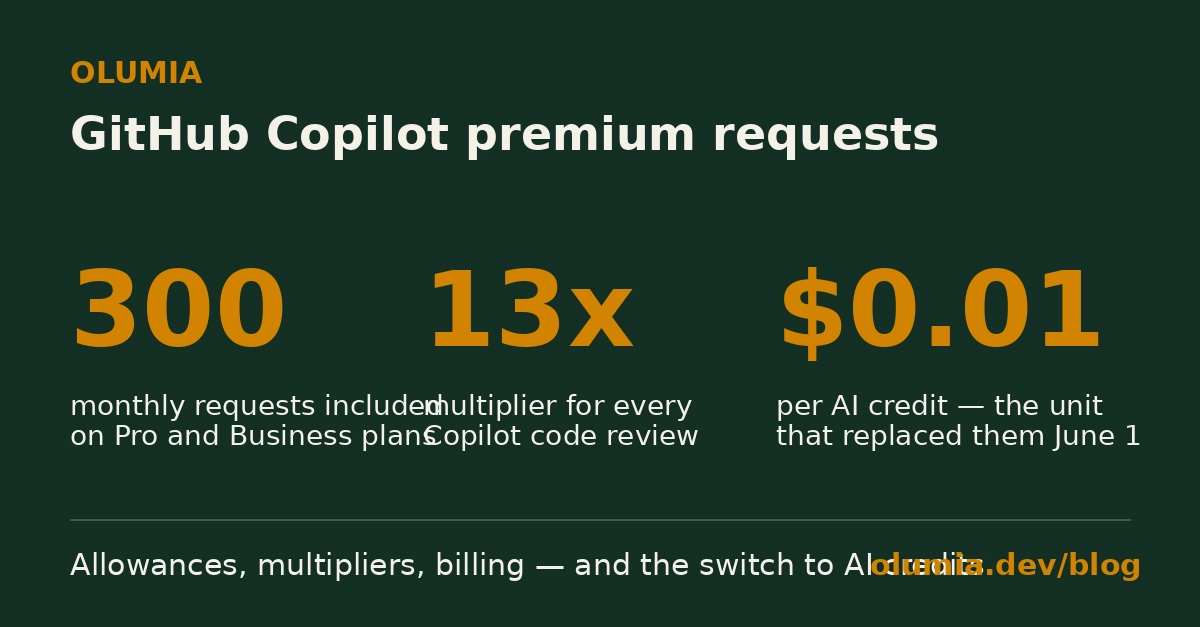
As of June 1, 2026, GitHub has transitioned its Copilot billing model from the legacy "premium requests" system to a new "GitHub AI Credits" structure. This significant shift impacts how users, particularly those on annual Copilot Pro and Pro+ plans, are charged for advanced AI-assisted coding features. While the new credit system is now the standard for new subscriptions, understanding the previous premium request model remains crucial for existing subscribers and for grasping the evolution of Copilot's pricing strategy.
Understanding Premium Requests: The Legacy System
Before the introduction of AI Credits, GitHub Copilot's advanced features were metered using "premium requests." This system operated on a tiered approach. Each user was allocated a fixed monthly allowance of these premium requests as part of their subscription plan. When an advanced Copilot feature was utilized, it consumed a certain number of premium requests. The exact number consumed was determined by a "per-model multiplier," meaning different AI models or feature complexities had different request costs.
For instance, a complex code generation task might consume more premium requests than a simple code completion suggestion. This model provided a predictable way for users to manage their usage against a defined budget. However, it also meant that understanding the precise cost of each interaction required knowledge of both the user's plan allowance and the specific multipliers associated with the features being used. Overages beyond the monthly allowance would incur additional charges, often at a higher per-request rate.

The Transition to GitHub AI Credits
The new system, GitHub AI Credits, fundamentally changes how usage is measured and billed. Instead of a fixed allowance of "requests," users are now charged based on actual usage, with each credit costing one cent. This shift aims to provide a more granular and potentially more flexible billing structure. The "legacy" designation for premium requests means that while existing annual subscribers may still be billed under the old system until their renewal, all new billing and documentation now reflect the AI Credits model.
The mechanics of AI Credits are simpler at face value: one credit equals one cent of usage. This removes the complexity of understanding per-model multipliers and fixed monthly allowances for new users. However, it also means that usage is no longer capped by a predefined allowance unless explicitly managed by administrators. The key challenge for developers and teams will be to monitor their AI Credit consumption closely to avoid unexpected costs, as overages are now directly tied to granular usage rather than a fixed request quota.
Billing and Overages in the New Model
For annual Copilot Pro and Pro+ subscribers who remain on their existing plans, the premium request system continues to govern their billing. They still operate within their monthly allowance of premium requests, and any consumption beyond this allowance triggers overage charges. The exact rate for these overages would be detailed in their specific plan terms.
For users and organizations adopting the new AI Credits model, billing is usage-based. While there isn't a fixed "allowance" in the same sense as premium requests, administrators can set spending limits or monitor consumption through GitHub's platform. The primary concern shifts from managing a request quota to managing a budget in terms of monetary spend. GitHub's documentation now details how AI Credits are consumed by various Copilot features, allowing for more direct cost-benefit analysis of AI tool adoption. The transition requires a re-education for teams on how to budget for AI assistance, moving from a unit-based approach to a value-based expenditure.
What This Means for Developers and Teams
The move from premium requests to AI Credits signifies a broader industry trend towards usage-based pricing for AI services. For developers, this means a potential for more predictable costs if usage is consistent, but also a need for heightened awareness of how their interactions with Copilot translate into charges. Features that were previously "free" within an allowance now have a direct monetary cost associated with each use. This could encourage more mindful utilization of advanced AI features, focusing on tasks where they provide the most significant productivity gains.
For team leads and IT administrators, the shift necessitates a new approach to managing AI tool budgets. Instead of tracking request counts, they will need to monitor monetary spend against AI Credit consumption. GitHub's tooling will likely provide dashboards and alerts to help manage these costs. The flexibility of AI Credits could also open doors for more tailored adoption strategies, allowing teams to scale their Copilot usage more dynamically based on project needs and budget constraints. The legacy system, while perhaps simpler in its allowance structure for some, lacked the granular control and direct cost correlation that AI Credits promise to deliver.