GitHub's Agentic Autofix: A New Approach to Security Alerts
GitHub announced agentic autofix for code scanning alerts in public preview on July 10, 2026. This feature aims to automatically generate patches for security vulnerabilities identified by GitHub's code scanning tools. While the prospect of automated fixes is appealing, the company emphasizes that this is a preview and outlines a proposed evaluation framework for its effectiveness. The core idea is to move beyond simply measuring the percentage of alerts with a generated patch, recognizing that patch generation is just the first step in a longer, more complex process.
The proposed pipeline for evaluating agentic autofix is as follows:
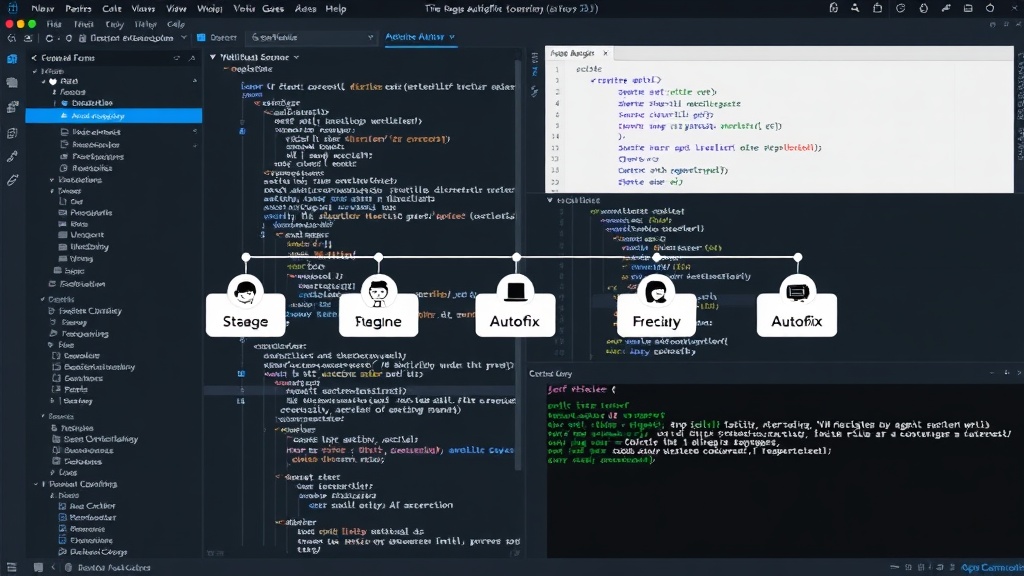
alert -> candidate -> build -> tests -> security oracle
      -> human review -> merge -> post-merge observation
This framework highlights critical stages beyond mere patch generation, including building the fix, running tests against it, validating it through a security oracle, requiring human review, merging the change, and finally, observing its behavior in production. This multi-stage evaluation is crucial for understanding the true reliability and safety of automated fixes. The preview is an evaluation proposal, not a definitive benchmark of GitHub's current implementation.
Choosing a Bounded Canary for Deployment
The initial rollout strategy for agentic autofix involves deploying it within a "bounded canary." This means starting with a carefully selected set of repositories that meet specific criteria. These repositories must have active owners who can provide feedback and oversight. They also need deterministic builds, meaning the build process is consistent and predictable. Isolated, relevant tests are essential to verify the generated patches without impacting other parts of the system. Furthermore, the release process must be reversible, allowing for quick rollback if issues arise. Crucially, candidate patches should not be automatically deployed to production. This controlled approach ensures that any potential problems are contained and manageable, providing a safe environment to gather data and refine the autofix system.
Failure Classes and Reliability Gates
A key component of GitHub's proposed evaluation is the concept of "failure classes." Instead of a binary pass/fail, this approach categorizes the types of failures that can occur during the autofix process. These classes could include issues like the generated patch failing to build, failing automated tests, not truly fixing the vulnerability, or introducing new security risks. By understanding the specific nature of failures, developers can better diagnose problems and improve the autofix algorithms.
Complementing failure classes are "reliability gates." These are checkpoints within the autofix pipeline that a candidate fix must pass before proceeding. For instance, a build gate ensures the code compiles, a test gate verifies it passes unit tests, and a security oracle gate confirms the vulnerability is addressed. If a candidate fix fails to pass a gate, it is discarded, and the system learns from the failure. These gates act as quality control mechanisms, preventing flawed patches from reaching later stages of the pipeline or production.
Beyond Patch Generation: The Full Lifecycle
The evaluation proposal explicitly pushes back against the simplistic metric of "percentage of alerts with a generated patch." This metric is insufficient because a generated patch is not necessarily a good or safe patch. The true value lies in the entire lifecycle of the fix. A patch that fails to build is useless. A patch that breaks existing functionality, even if it addresses the original alert, is detrimental. A patch that bypasses security testing or human review could introduce worse problems than it solves. Therefore, the proposed pipeline, extending from the initial alert to post-merge observation, provides a more holistic view of the autofix system's performance and reliability.
This comprehensive approach considers the following stages:
- Alert: The initial security vulnerability detected.
- Candidate: The initial proposed patch generated by the agent.
- Build: The process of compiling the code with the candidate patch.
- Tests: Running automated tests (unit, integration, etc.) to ensure functionality.
- Security Oracle: An automated system to verify the original vulnerability is fixed and no new ones are introduced.
- Human Review: A mandatory step for developers to inspect and approve the patch.
- Merge: Integrating the approved patch into the codebase.
- Post-Merge Observation: Monitoring the application in production for any adverse effects.
Implications for Developers and Security Teams
For developers, agentic autofix promises to reduce the manual effort involved in addressing routine security alerts. However, it also necessitates a deeper understanding of the testing and review processes involved. Developers will need to ensure their CI/CD pipelines are robust enough to handle automated patch testing and that their teams have clear protocols for reviewing AI-generated code.
Security teams will benefit from faster remediation of known vulnerabilities. The emphasis on failure classes and reliability gates suggests a more sophisticated approach to security automation, moving towards proactive risk reduction rather than just reactive patching. The success of this feature will depend on its ability to consistently generate correct, safe, and well-tested fixes, integrated seamlessly into existing development workflows.
The Road Ahead
GitHub's agentic autofix is entering public preview as a tool with significant potential. The detailed evaluation framework, focusing on the entire lifecycle of a fix and incorporating failure classes and reliability gates, indicates a thoughtful approach to introducing AI into the critical domain of code security. While the technology is promising, its real-world effectiveness will be determined by how well it navigates each stage of the proposed pipeline and the feedback gathered from active users during this preview period.