Preparing for the GH-600: A Developer's Approach to Agentic AI Certification
The GH-600, or GitHub Certified: Agentic AI Developer, emerged as one of the first certifications targeting AI agents within the software development lifecycle. For many developers, particularly those looking to validate their skills in this rapidly evolving space, the prospect of certification is appealing. However, as is often the case with new technical certifications, the official learning materials can fall short of providing comprehensive, practical knowledge. This was the experience of one developer who, finding the Microsoft Learn modules for GH-600 to be superficial, took a hands-on approach: creating their own detailed study notes in Spanish.
The core issue identified was that the official resources covered only an estimated 35-45% of the actual exam content. This gap necessitates a deeper dive for anyone serious about passing the GH-600. The developer's strategy involved meticulously dissecting the official syllabus, translating it into actionable study guides, and supplementing these with practical labs. These notes, compiled in Spanish and organized in a notebook format, aimed to cover all six domains of the GH-600 exam comprehensively. The process itself became a learning mechanism, forcing a deeper understanding of each topic and its practical implications.
Domain 1: Architecture and SDLC Integration
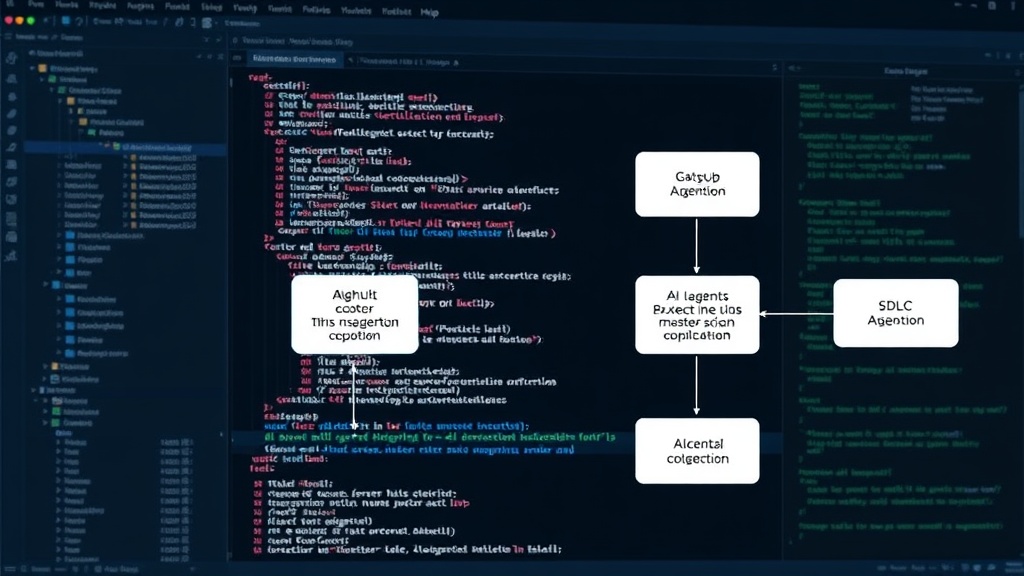
The first domain, Architecture and the Software Development Lifecycle (SDLC), focuses on understanding what an AI agent is and how it integrates into existing development workflows. This involves defining the role of an agent, its capabilities, and its placement within the SDLC. Key considerations include identifying opportunities for agent-based automation, understanding the potential benefits such as increased efficiency and reduced human error, and recognizing the challenges associated with integrating AI agents into established processes. This domain likely covers concepts like agent autonomy, task delegation, decision-making processes, and the overall system architecture required to support agentic development.
Domain 2: Agent Design and Development
Domain 2 delves into the practical aspects of designing and building AI agents. This includes understanding the fundamental components of an agent, such as its perception, reasoning, and action capabilities. Developers are expected to learn about different agent architectures, including reactive agents, deliberative agents, and hybrid models. The process of defining agent goals, constraints, and environments is crucial. Furthermore, this domain likely covers the selection of appropriate AI models and algorithms, the implementation of agent logic, and the tools and frameworks available for agent development. Emphasis would be placed on creating agents that are robust, efficient, and capable of performing complex tasks autonomously.
Domain 3: Tooling and Infrastructure for AI Agents
The third domain addresses the essential tooling and infrastructure required to support the development, deployment, and management of AI agents. This encompasses a broad range of technologies, from development environments and version control systems to cloud platforms and containerization technologies. For AI agents, specialized tools for data management, model training, evaluation, and monitoring are critical. Understanding how to set up and manage the necessary infrastructure, whether on-premises or in the cloud, is paramount. This includes considerations for scalability, security, and cost-effectiveness. The domain likely explores CI/CD pipelines tailored for AI agent development, enabling continuous integration and deployment of agent updates and improvements.
Domain 4: Agent Interaction and Collaboration
Domain 4 shifts focus to how AI agents interact with each other and with human developers. This is a critical aspect of agentic AI, as modern software development often involves collaboration between multiple agents and human team members. Concepts such as multi-agent systems, communication protocols between agents, and conflict resolution mechanisms are likely covered. Understanding how agents can coordinate their efforts to achieve shared goals, delegate tasks, and provide feedback is essential. This domain also explores the user interfaces and interaction paradigms that allow developers to effectively manage, guide, and collaborate with AI agents, ensuring a synergistic relationship rather than a purely automated one.
Domain 5: Evaluation and Monitoring of AI Agents
The fifth domain is dedicated to the crucial processes of evaluating and monitoring AI agents. Once an agent is developed and deployed, its performance must be continuously assessed and optimized. This domain covers various metrics and methodologies for evaluating agent effectiveness, including task completion rates, efficiency, accuracy, and robustness. It also addresses the importance of monitoring agent behavior in real-world scenarios to detect anomalies, identify potential issues, and gather data for further improvement. Techniques for performance tuning, debugging, and ensuring the reliability of AI agents are key components. This proactive approach to evaluation and monitoring is vital for maintaining the value and integrity of agentic AI systems.
Domain 6: Responsible AI and Security Considerations
The final domain, and arguably one of the most critical, addresses Responsible AI and security considerations. As AI agents become more integrated into software development, ensuring their ethical use and security is paramount. This domain covers principles of fairness, transparency, accountability, and privacy in AI systems. Developers must understand potential biases in AI models and learn how to mitigate them. Security aspects include protecting agent code and data, preventing unauthorized access, and securing the communication channels between agents and systems. The implications of AI-driven development for security vulnerabilities, intellectual property, and compliance with regulations are also likely explored. Building trust in AI agents requires a strong foundation in responsible development practices and robust security measures.
The developer's initiative in creating these detailed notes in Spanish underscores a common challenge in the tech certification landscape: the disparity between official curriculum and practical, exam-relevant knowledge. By focusing on each domain with a critical eye and a commitment to hands-on learning, these notes offer a valuable resource for any developer preparing for the GH-600, providing a more thorough understanding than the standard official materials alone.