The Evasion Tactic
Security researchers at ActiveState have identified a sophisticated attack pattern targeting GitHub Actions workflows that circumvents many existing CI/CD security scanning tools. This pattern exploits the way GitHub Actions handles dependencies and workflow execution, allowing malicious code to be injected and executed without triggering alerts from standard vulnerability scanners.
The core of the evasion lies in how GitHub Actions processes external dependencies, particularly those fetched from untrusted or compromised sources. Traditional scanners often focus on known vulnerabilities within fetched code or dependencies. However, this new attack vector leverages the dynamic nature of workflow execution and the trust placed in the Actions runner environment itself. Attackers can craft malicious workflows or compromise legitimate ones to introduce subtle backdoors or data exfiltration mechanisms that only activate under specific, often non-obvious, conditions.
Passing a security scan on a CI pipeline does not, therefore, guarantee the pipeline's integrity. This is because the scanners are looking for known bads, while this attack introduces a novel way to be bad. It’s akin to a security guard checking for known weapons at a checkpoint but missing a cleverly concealed poison capsule that only activates if ingested under specific circumstances.
How the Attack Chain Works
The attack chain typically begins with the compromise of a repository or a legitimate GitHub Action. An attacker might inject malicious code into a workflow file (e.g., a YAML file) or, more insidiously, into a dependency that the workflow pulls in. The key is that this malicious code is designed to be dormant or appear benign during the static analysis phase of a CI scan.
For instance, an attacker could modify a dependency's source code in a way that isn't immediately obvious to a static analyzer. This modified dependency might include a script that, when executed by the Actions runner during a build or deployment process, fetches and runs additional malicious payloads from a command-and-control server. The payload could steal secrets, inject malicious code into the built artifact, or pivot to other systems.
The vulnerability is exacerbated by the fact that many organizations rely on a vast array of third-party GitHub Actions and dependencies. Each of these represents a potential entry point. If an attacker can compromise a popular, widely used Action or a critical dependency, they can gain access to the CI/CD pipelines of thousands of organizations simultaneously.
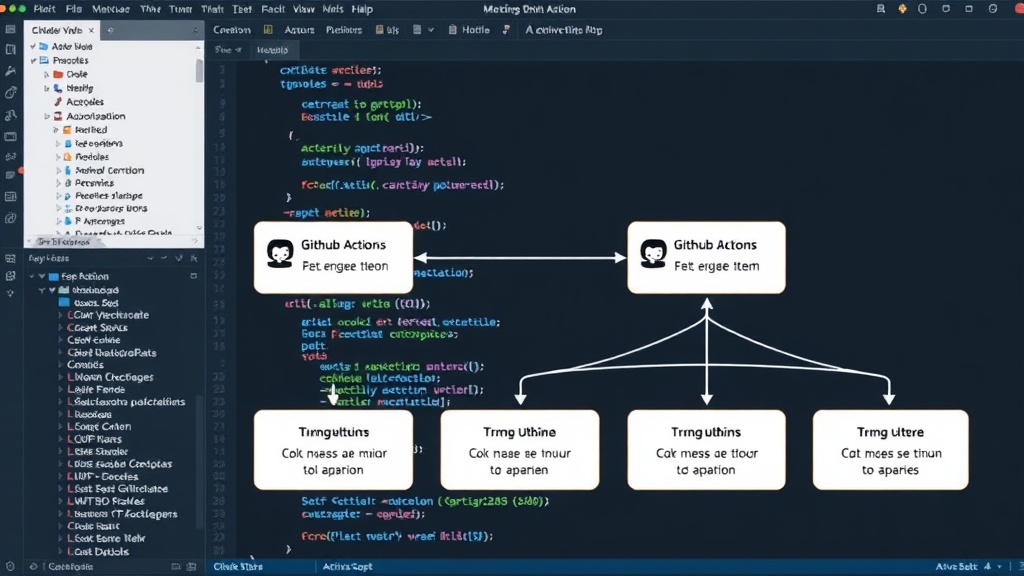
The dynamic execution environment of CI/CD pipelines means that code is not just scanned but also run. Attackers exploit this runtime aspect. A scanner might check a script for known malicious patterns, but if the script's true intent is only revealed through a complex series of API calls or conditional logic that is triggered during execution, the scanner will miss it. The execution context, including environment variables and runner configurations, can also be manipulated to activate malicious code only under specific conditions, further evading detection.
Why Current Scanners Fail
Traditional CI security scanners primarily operate using static analysis. They examine code and dependency files for known vulnerabilities (CVEs), insecure configurations, or suspicious patterns. While effective against many common threats, this approach has inherent limitations when faced with sophisticated, context-aware attacks.
The identified GitHub Actions attack pattern thrives on several factors that static analysis struggles with:
- Dynamic Code Execution: Malicious logic is embedded in code that is only revealed or activated during runtime.
- Dependency Chaining: The attack might involve a chain of dependencies, where each link appears innocuous, but their combined execution leads to a compromise.
- Contextual Triggers: Malicious code might only execute based on specific environment variables, build parameters, or even the identity of the user triggering the workflow, conditions often not evaluated by static scanners.
- Supply Chain Compromise: Attackers may compromise legitimate open-source projects or GitHub Actions themselves, making the malicious code appear to come from a trusted source.
Consider a scenario where a workflow downloads a script from an attacker-controlled URL, but the URL is dynamically generated based on the current date. A static scanner would see a URL fetch command, but it wouldn't know if that specific URL at runtime would lead to malicious content. The scanner lacks the foresight to predict runtime behavior accurately. This is less like a locked door and more like a trapdoor that only opens when a specific, non-obvious weight is applied.
Mitigation and Governance
ActiveState emphasizes that robust CI/CD security requires a multi-layered approach that goes beyond traditional scanning. Organizations need to implement stronger governance over their workflows and dependencies.
Key recommendations include:
- Dependency Pinning and Verification: Strictly pin all dependencies to specific versions and verify their integrity using checksums or digital signatures. Regularly audit and update dependencies, but do so with careful review.
- Least Privilege Principle: Ensure that GitHub Actions workflows and the service accounts they use operate with the minimum necessary permissions. Revoke unnecessary access tokens and secrets.
- Runtime Monitoring: Implement runtime security monitoring for CI/CD jobs. This can involve observing network traffic, process execution, and file system activity for anomalous behavior that static analysis would miss. Tools that offer behavioral analysis are critical here.
- Workflow Validation and Auditing: Regularly audit workflow files for suspicious changes or patterns. Implement mandatory code reviews for all changes to workflow definitions.
- Source Trust and Verification: Vet all third-party GitHub Actions and dependencies thoroughly. Consider using a curated list of trusted actions and dependencies, and explore tools that can help manage and secure the software supply chain.
- Policy Enforcement: Utilize GitHub's advanced security features and policies to enforce rules around workflow permissions, dependency usage, and code scanning.
What remains to be seen is how quickly CI security tool vendors can adapt their scanning engines to detect these dynamic and context-aware attack vectors. The arms race between attackers and defenders in the CI/CD space is escalating, demanding continuous innovation in security tooling.
The Broader Impact
This attack pattern highlights a significant blind spot in the current security posture of many organizations. CI/CD pipelines are increasingly becoming the central nervous system for software development and deployment, handling sensitive code, credentials, and deployment targets. A compromise here can have cascading effects, leading to software supply chain attacks, data breaches, and widespread system compromise.
For developers, it means that simply passing a security scan is no longer sufficient. They must be more vigilant about the dependencies they pull in and the security of their workflow configurations. For security professionals, it necessitates a shift from purely static analysis to a more dynamic, behavior-based approach to monitoring and securing CI/CD environments. Founders and executives must understand that the security of their development pipeline is as critical as the security of their production systems, and invest accordingly in tools and processes that provide deeper visibility and control.