The Portfolio Project and the 'Wow Effect'
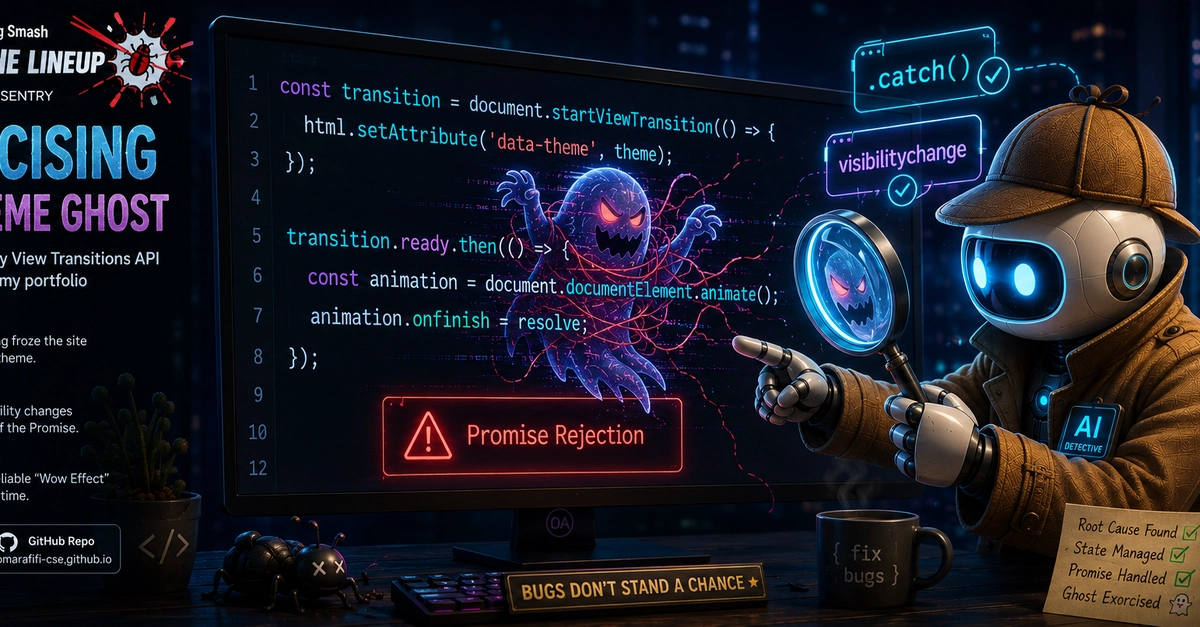
Omar Afifi, a developer, embarked on a project to enhance his personal portfolio website. The goal was to integrate a visually striking feature: a 1.7-second animation dubbed the 'Theme Showcase.' Upon a user's initial visit to the homepage, this animation would sweep across the screen, briefly transitioning the site to one of Afifi's custom showcase themes, such as 'Obsidian' or 'Midnight.' Following this brief display, the site would gracefully revert to the user's preferred default theme. This carefully orchestrated 'Wow Effect' was designed to highlight the website's dynamic color system and leave a memorable impression.
Afifi leveraged the View Transitions API, a relatively new web API that allows for smooth, animated transitions between different DOM states or pages. This API is designed to simplify the creation of sophisticated animations that were previously complex to implement, often requiring extensive JavaScript or CSS workarounds. The 'Theme Showcase' was intended to be a prime example of its elegant application, adding a layer of polish and interactivity to the user experience.
The Subtle Bug Emerges
Shortly after deploying the new feature, Afifi encountered a perplexing issue. The 'Theme Showcase' animation, intended to be a brief, eye-catching spectacle, began to exhibit erratic behavior. Instead of the smooth transition and return to the default theme, the animation would sometimes persist, leaving the site stuck in one of the showcase themes. This was a critical bug, as it disrupted the intended user experience and compromised the site's aesthetic consistency. The animation was meant to be fleeting, a momentary flourish, but it was becoming a permanent fixture for some users.
The problem was not consistently reproducible. It would occur intermittently, making it a classic 'ghost' bug – present but elusive. Afifi began the arduous process of debugging, which quickly proved more challenging than anticipated. Standard debugging techniques seemed to offer no clear path forward. The View Transitions API, while powerful, operates at a level that can obscure the underlying DOM manipulations, making it difficult to pinpoint the exact moment where the transition failed to reset correctly.
Defying Conventional Debugging
Afifi's initial attempts to resolve the bug involved scrutinizing the JavaScript code responsible for initiating and managing the View Transitions API. He checked for common pitfalls: ensuring the `document.startViewTransition()` was correctly called and that the subsequent DOM updates were properly handled. He also examined CSS, looking for any lingering styles or animations that might be preventing the page from reverting to its default state. However, the bug persisted, showing no clear pattern tied to specific user actions or browser conditions.
The intermittent nature of the bug meant that simple console logging or stepping through the code in the browser's developer tools often yielded no useful information. The problematic state would occur, but the logs would show the code executing as expected. It was as if the browser was behaving in an unforeseen manner, or a subtle race condition was at play that defied straightforward analysis. The API was supposed to simplify animation, but in this case, it was acting as a black box, hiding the source of the malfunction.

The AI Intervention
Frustrated and unable to find a solution through traditional means, Afifi turned to artificial intelligence for assistance. He fed the problem description, along with relevant code snippets and debugging logs, into Google AI. The hope was that the AI could identify patterns or suggest solutions that a human might overlook, especially given the API's complexity and the bug's elusive nature. AI has become an increasingly valuable tool for developers, capable of analyzing vast amounts of code and identifying potential issues based on its training data.
However, even the AI struggled to pinpoint the root cause. While it could offer general advice on View Transitions API usage and common debugging strategies, it could not provide a definitive answer to this specific, bizarre problem. This highlights a current limitation in AI's debugging capabilities: while it can assist with known issues and common patterns, it is not yet a silver bullet for highly specific, intermittent, or novel bugs that may arise from the interaction of complex web APIs and specific application logic.
The Unexpected Culprit: CSS `::view-transition-old()`
The breakthrough came not from AI, but from a deep dive into the View Transitions API's underlying CSS mechanisms. Afifi discovered that the issue stemmed from a subtle interaction with the `::view-transition-old()` pseudo-element. When the transition concluded and the site was supposed to revert to its default state, the `::view-transition-old()` pseudo-element, which represents the *old* DOM state before the transition, was not being properly removed or reset in certain scenarios.
This old state, containing elements and styles from the showcase theme, was inadvertently persisting. It was like a phantom limb; the transition had ended, but a part of the previous state was still attached and interfering with the new, intended state. This rogue element was causing the showcase theme styles to remain visible, or to reapply themselves unexpectedly, thereby breaking the smooth return to the default theme. The solution involved explicitly ensuring that the `::view-transition-old()` pseudo-element was correctly handled and removed after the transition completed, preventing it from interfering with subsequent DOM renders.
The fix involved a specific CSS adjustment to manage the lifecycle of these pseudo-elements. Afifi implemented a more robust handling of the transition's end state, ensuring that all temporary elements and styles associated with the transition were properly cleaned up. This required a nuanced understanding of how the View Transitions API interacts with CSS, particularly concerning the pseudo-elements it generates to manage animations.
Lessons Learned: The Nuances of Modern Web APIs
This debugging saga underscores several critical points for modern web development. Firstly, even with powerful new APIs like View Transitions, understanding the underlying browser mechanisms remains crucial. The API abstracts complexity, but it doesn't eliminate it entirely. Developers must still be prepared to dive deep into CSS and JavaScript interactions when issues arise.
Secondly, the experience highlights the current limitations of AI in complex debugging scenarios. While AI tools are valuable for code generation, explanation, and identifying common errors, they are not yet capable of fully replicating the intuition and deep contextual understanding of an experienced human developer when faced with novel or highly specific bugs. The 'ghost' in the View Transitions API was a problem that required human insight and persistent investigation.
Finally, the resolution serves as a reminder that the web platform is constantly evolving. New APIs bring new possibilities but also new complexities and potential pitfalls. Developers must remain adaptable, willing to explore the edges of these new technologies and share their findings. Afifi's detailed account of his debugging journey provides invaluable insight for others who may encounter similar issues as the View Transitions API gains wider adoption.