
The Silent Killer: How Copy-Paste Breaks Code
Most developers, myself included, have a blind spot. We trust our tools implicitly. When we copy text from one place and paste it into another, we assume it arrives intact. This is a dangerous assumption. A subtle, pervasive bug, dubbed "Ghost Cut" by its discoverer, Ishmael, has been lurking in plain sight within many popular text editors and IDEs for years. It doesn't manifest as a crash or an obvious error message. Instead, it silently corrupts code, introducing logical flaws that can be maddeningly difficult to track down.
At its core, the problem lies in how some editors handle the clipboard when a selection is made. Instead of simply copying the selected text, certain editors, under specific conditions, can also modify the original text in unexpected ways. This isn't a deliberate feature; it's a bug, a side effect of complex text manipulation logic interacting with the operating system’s clipboard API. The result is that the text you intended to paste might be correct, but the text you left behind in the source is subtly altered, often by removing characters or lines that were part of the selection but not the intended copy.
Think of it less like a faulty copy machine and more like a forgetful assistant. You ask them to take a specific stack of papers, but they accidentally shred a few pages from the original pile while doing so, pages you still needed. The assistant hands you the correct stack, but your original source is now incomplete and subtly wrong.
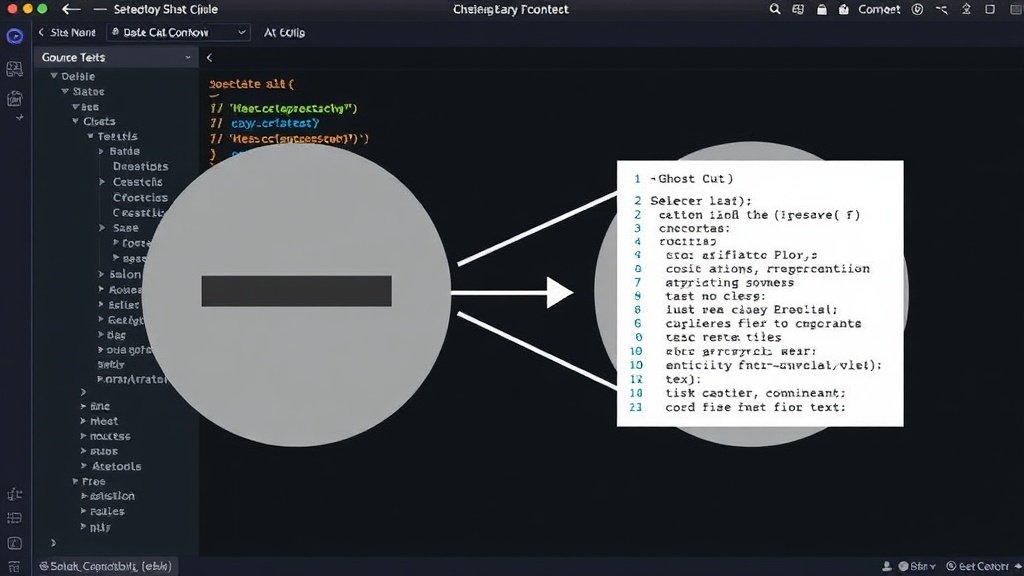
Unpacking the Mechanism of Ghost Cut
The bug typically surfaces when a user selects a block of text and then, without deselecting, immediately performs a copy operation. In a correctly functioning editor, this should simply place the selected content onto the clipboard. However, in editors affected by Ghost Cut, this sequence can trigger an erroneous internal state. The editor might interpret the selection and the subsequent copy command as a combined cut-and-paste operation *within the same buffer*. This leads to the selected text being removed from its original location, even though the user only intended to copy.
The severity of this bug is amplified by its stealth. There's no visible indication that anything has gone wrong. The pasted text appears fine, and the original text *looks* fine at first glance. The corruption is often a few characters or an entire line that was part of the selection but wasn't the primary target of the copy. This can lead to syntax errors, incorrect variable assignments, or entirely broken logic that only becomes apparent much later, during compilation, runtime, or through painstaking manual code review. Debugging such issues can involve hours of staring at seemingly correct code, trying to find the minuscule, yet critical, deviation.
Ishmael's research highlights that this isn't a new phenomenon. The bug has been observed in various forms across different operating systems and editor implementations over the years. The core issue often stems from how text editing frameworks interact with the system clipboard, particularly concerning the handling of selections and the immediate triggering of copy events.
Which Editors Are Affected?
The exact list of affected editors is fluid and depends on specific versions and implementations. However, Ishmael's investigation points to common culprits. Tools like the terminal-based editor `nano` have been known to exhibit this behavior. More concerningly, the underlying text handling mechanisms in some graphical editors and IDEs can also be susceptible, especially when they leverage system-level clipboard integrations or custom text buffer management that mirrors the buggy behavior.
The challenge in pinpointing affected software is that it often depends on a specific sequence of user actions. A developer who always deselects before copying might never encounter the bug. Someone who frequently uses keyboard shortcuts for copy (`Ctrl+C` or `Cmd+C`) immediately after selecting text, without an intervening click or keypress, is more likely to hit the problematic edge case. This variability makes it difficult for maintainers to reliably reproduce and fix the issue, and for users to identify if their own tools are compromised.
The implications for developers are significant. Imagine spending an entire afternoon debugging a production issue, only to discover it was caused by a single misplaced character that was silently deleted when you copied a log line from your terminal. The time lost, the stress incurred, and the potential impact on deadlines are substantial. This bug erodes the fundamental trust we place in our development environments.
Mitigation and the Path Forward
For now, awareness is the primary defense. Developers should be mindful of the copy-paste sequence. A simple, reliable workaround is to always deselect text *before* copying. This means clicking away from the selected text, or pressing an arrow key, to ensure the selection is cleared before initiating the copy. This extra step, while seemingly trivial, can prevent the editor from entering the erroneous state that triggers Ghost Cut.
For users of affected terminal editors like `nano`, checking for updated versions or exploring alternative editors might be necessary. For graphical IDEs, the situation is more complex. Many IDEs have sophisticated internal clipboard management systems that might bypass or correctly handle these edge cases. However, if you encounter inexplicable bugs that seem to appear after copy-pasting, this is a prime suspect.
The broader question that remains is how deeply embedded these low-level text handling bugs are across the software ecosystem. The operating system's clipboard is a fundamental inter-process communication mechanism. When it behaves unexpectedly, the ripple effects can be widespread. It also highlights a vulnerability in how we build and trust our development tools. We need more robust testing and validation of these fundamental operations, not just at the application level, but also in the underlying libraries and OS integrations that power them.
What nobody has adequately addressed yet is the long-term impact of these silent errors on code quality and developer productivity across the industry. If even a small percentage of codebases are silently corrupted by this bug, the cumulative technical debt could be enormous. It’s a stark reminder that even the most basic operations we perform daily can hide profound flaws.