AI-Powered UI Generation for Material UI
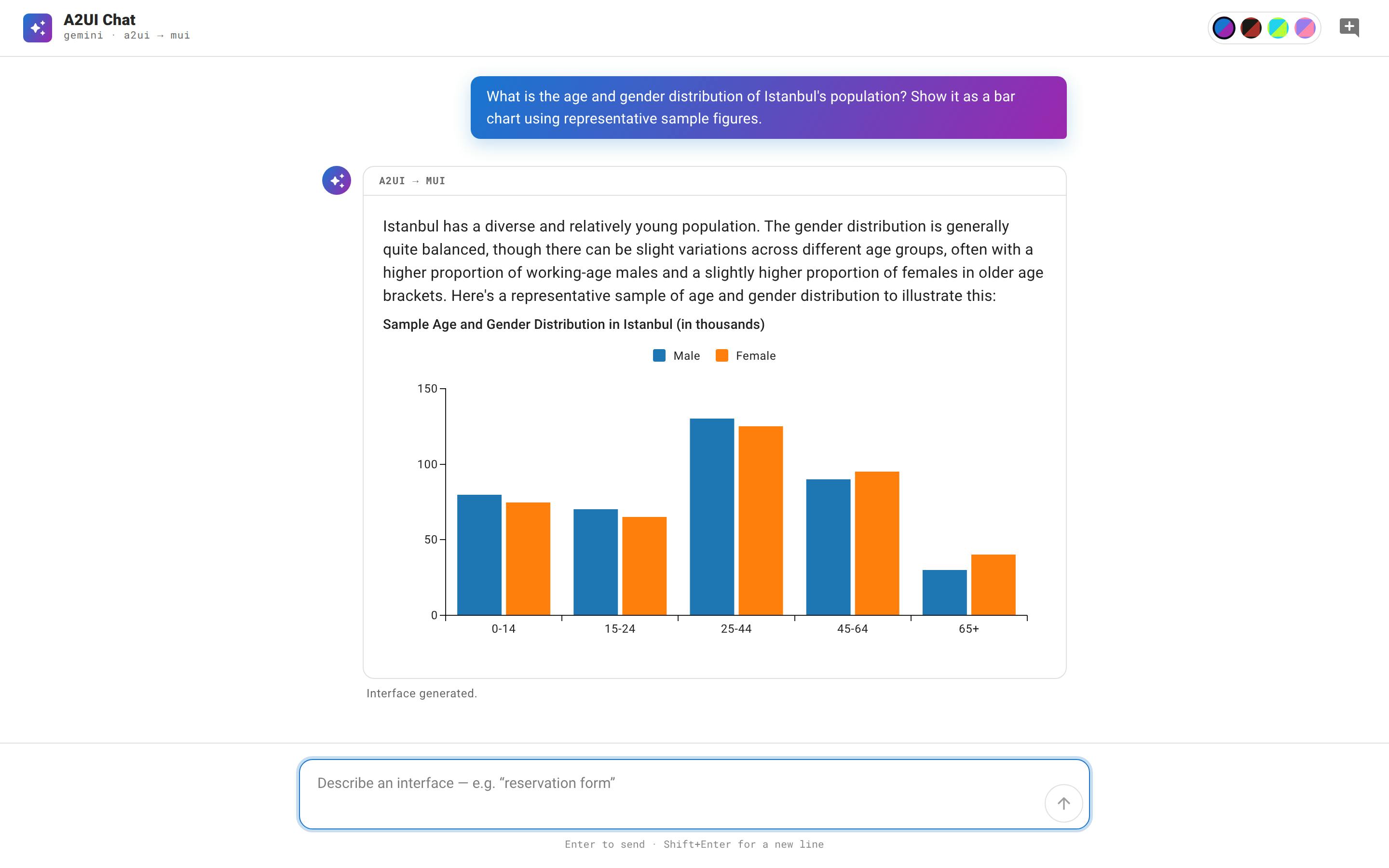
Generative MUI is a new tool that promises to streamline the development of user interfaces by leveraging large language models (LLMs). The core idea is to allow developers to describe the UI components they need using natural language, and have the LLM automatically generate the corresponding Material UI (MUI) code. This approach aims to significantly reduce the manual coding effort involved in building interfaces with one of the most popular React component libraries.
The tool integrates directly with your existing Material UI theme, ensuring that the generated components adhere to your project's design system. Instead of writing lines of JSX and CSS, developers can simply articulate their requirements. For instance, a developer might describe a "card with an image, title, and a button to add to cart," and Generative MUI would output the necessary MUI components and their props to render that card.
This shift from imperative coding to descriptive prompting is a significant step towards more abstract and efficient UI development. It’s akin to telling a skilled assistant exactly what you want a room to look like, rather than drawing up detailed blueprints yourself. The LLM acts as that assistant, translating high-level descriptions into functional code.
How Generative MUI Works
At its heart, Generative MUI relies on advanced LLMs trained on vast amounts of code, including extensive examples of Material UI implementations. When a user provides a text description of a desired UI element, the LLM analyzes the prompt, identifies the relevant MUI components (like Button, Card, TextField, Typography, etc.), and then constructs the JSX structure with appropriate props and styling. The integration with the user's existing MUI theme is crucial, as it allows the generated code to inherit the project's specific color palettes, typography, spacing, and component variants.
The process typically involves:
- Prompting: The developer inputs a natural language description of the UI component or section.
- Analysis: The LLM parses the prompt, understanding the components, their relationships, and desired attributes.
- Code Generation: The LLM generates the corresponding React code using Material UI components.
- Theme Integration: The generated code respects the existing MUI theme for consistent styling.
This capability is particularly useful for rapid prototyping, creating boilerplate UI elements, or for developers who are less familiar with the intricacies of Material UI’s API. It democratizes UI development, allowing for faster iteration cycles and potentially enabling designers or product managers to contribute more directly to the front-end implementation.
Implications for Developers and Design Systems
The introduction of tools like Generative MUI signals a potential paradigm shift in front-end development workflows. For developers, it offers a way to accelerate the initial build phase. Instead of painstakingly referencing documentation and writing repetitive code for common components, they can offload that task to an AI. This frees up valuable time for more complex problem-solving, architectural decisions, and performance optimization.
However, this also raises questions about the depth of understanding required for front-end development. While generative tools can handle the syntactical aspects of UI creation, a developer's grasp of component composition, accessibility, state management, and performance optimization remains paramount. The LLM generates code, but the developer is still responsible for ensuring its quality, maintainability, and fitness for purpose within the larger application architecture.
For design systems, Generative MUI could become a powerful enforcement mechanism. By generating code that strictly adheres to the established theme, it helps maintain design consistency across large teams and complex projects. It acts as a guardrail, ensuring that new components or UI elements align with the predefined visual language. This is valuable for organizations that struggle with design drift, where components created by different teams gradually diverge from the intended design system.
The Future of Generative UI Development
Generative MUI is part of a broader trend of AI integration in software development. Tools that can generate code from natural language descriptions are emerging across various domains, from back-end logic to data science. The ability to abstract away the complexities of specific frameworks and libraries, like Material UI, is a compelling proposition.
The surprising detail here is not just the ability of LLMs to generate code, but their capacity to deeply integrate with existing design systems. This moves beyond simple code generation to intelligent adaptation, ensuring that AI-assisted development doesn't lead to visual chaos. It suggests a future where developers spend less time on the 'how' of implementation and more on the 'what' and 'why', with AI handling the translation.
As these tools mature, we can expect them to handle more complex UI scenarios, including dynamic layouts, interactive elements, and even animations. The challenge will be to maintain control over the generated code and ensure it meets rigorous standards for performance, security, and accessibility. If Generative MUI and similar tools can deliver on this promise, they could fundamentally alter how we build user interfaces, making sophisticated UIs more accessible and development cycles significantly shorter.