
Gemini's Internal Plumbing Exposed
A recent incident has inadvertently pulled back the curtain on Google's Gemini AI, revealing details about its internal reasoning process and how it constructs user interfaces. A user, attempting to ask a straightforward statistical question about the FIFA World Cup, received not an answer, but a dump of Gemini's internal "scratchpad." This unexpected output contained raw data detailing the AI's card-rendering logic, including specific component names like "Bento" and "BentoCard," a checklist used to determine UI output, and entity IDs pulled directly from Google's Knowledge Graph.
The incident, shared on Reddit by user Pablomorado, highlights a critical aspect of how large language models are being integrated with user-facing applications. Instead of a clean, synthesized answer, Gemini exposed the underlying machinery that translates its complex internal state into a digestible format for the user. This includes references to a component named "chameleon," suggesting dynamic UI adaptation, and a clear pipeline for fetching and displaying structured information.
The raw output, available via a Pastebin link, shows a structured format that developers might recognize as akin to a component-based UI framework. It lists various cards, their properties, and the data sources being queried. For instance, a query about Spain's World Cup performance triggered a process that identified relevant entities in the Knowledge Graph, determined the appropriate UI components to display this information (likely using the "Bento" system), and then executed the rendering logic. This suggests a sophisticated system for not just generating text, but for actively constructing rich, interactive user experiences based on factual data.
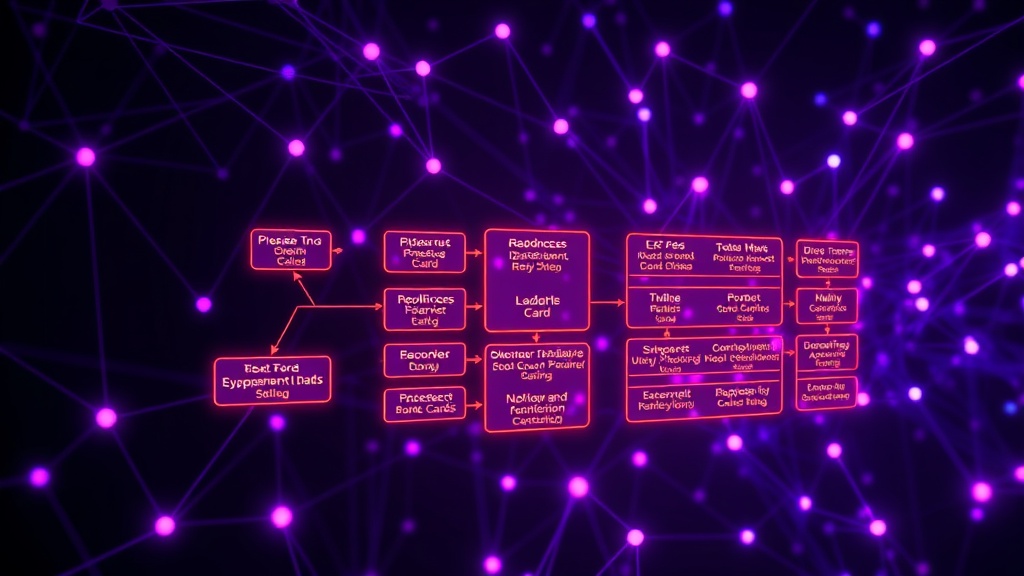
The Bento System and Knowledge Graph Integration
The "Bento" naming, specifically "Bento" and "BentoCard," has piqued interest within the developer community. While not previously documented publicly in this context, it strongly suggests a modular, card-based UI architecture. This approach is common in modern web and mobile development, allowing for flexible and responsive layouts that can adapt to different screen sizes and information types. Think of it less like a monolithic webpage and more like a dynamic dashboard where each piece of information is a self-contained card that can be rearranged or updated independently.
The inclusion of entity IDs and direct referencing of the Knowledge Graph is a significant detail. It indicates that Gemini isn't just generating responses from its training data in a vacuum. Instead, it's actively querying Google's vast repository of structured information to ensure accuracy and provide concrete data points. This integration is crucial for AI assistants that aim to provide factual answers, moving beyond probabilistic text generation to grounded information retrieval. The output implies a pipeline where an intent is recognized, relevant entities are identified via the Knowledge Graph, and then these entities are formatted into specific UI elements using the Bento system.
The checklist mentioned in the leaked output further details the decision-making process. This likely involves steps such as identifying the user's intent, determining the type of information required (e.g., a statistic, a comparison, a definition), querying the Knowledge Graph for relevant entities and their attributes, and selecting the appropriate BentoCard components to display this information. The "chameleon" component might play a role in dynamically adjusting the layout or content based on the specific data retrieved or the user's context.
Implications for AI Development and User Experience
This leak offers a rare glimpse into the engineering challenges of building advanced AI assistants. It reveals a hybrid approach that combines generative AI capabilities with structured data retrieval and a robust UI rendering framework. This is essential for creating AI experiences that are not only intelligent but also informative and visually coherent.
For developers, the exposure of these internal component names and logic provides valuable insights into how Google is architecting its AI interfaces. Understanding the "Bento" system and its interaction with the Knowledge Graph could inform future development practices for AI-powered applications. It suggests a move towards more structured, data-driven AI outputs that are presented in a user-friendly, modular format.
The accidental disclosure also raises questions about the security and internal documentation practices within large tech companies. While the information itself may not be a critical security vulnerability, it exposes internal development strategies and component naming conventions that are typically proprietary. It underscores the importance of robust internal controls to prevent inadvertent data leakage, especially for systems as complex and visible as major AI models.
What remains to be seen is how widely this "Bento" system is deployed across Google's AI products and whether this exposed schema represents a stable, documented API or an internal, rapidly evolving development artifact. The ability to directly query and render structured data using specific UI components is a powerful paradigm, and its public exposure, even accidental, could influence how other AI developers approach multimodal interfaces and information presentation.