Gemini Agentic Video: Unpacking the Prerequisites and a LINE Bot Integration
Integrating advanced AI capabilities like Gemini's agentic video processing into existing applications presents a unique set of challenges. Beyond the readily apparent features, several less obvious prerequisites are crucial for successful implementation. This article explores these hidden requirements and details a practical integration process using a personal LINE Bot.
The Existing LINE Bot Infrastructure
My daily LINE Bot, built using the linebot-helper-python library, serves as the foundation for this exploration. It’s designed to process URLs, providing summaries and social media copy for four platforms, and offers video summaries for YouTube links. The bot also manages bookmarks, location queries, and voice assistant functionalities. It operates on Cloud Run and leverages Google Cloud's Vertex AI for its underlying AI processing. This robust, existing infrastructure provides a solid testing ground for new AI features.
Understanding Gemini's Agentic Video Prerequisites
While the exact technical specifications for Gemini's agentic video capabilities are still emerging, several critical prerequisites can be inferred from current AI development trends and the nature of agentic systems. These aren't just about having the latest hardware; they involve a deeper understanding of data, model interaction, and system design.
1. High-Throughput, Low-Latency Data Pipelines
Agentic systems, especially those processing video, require the ability to ingest, process, and act upon data streams with minimal delay. For video, this means handling large file sizes and complex temporal data. The pipeline must be optimized for both throughput (volume of data processed per unit time) and latency (time taken from data input to action output). This involves efficient data serialization, asynchronous processing, and potentially edge computing for initial stages of analysis. Think of it less like sending an email and more like a high-speed conveyor belt in a factory, where every second counts and the materials are constantly moving.
2. Sophisticated State Management and Memory
Agentic behavior implies a degree of autonomy and the ability to maintain context over extended interactions. For video analysis, this translates to needing robust mechanisms for managing temporal states and long-term memory. The agent must remember previous frames, identify objects and actions across scenes, and correlate them with external information or user prompts. This is far more complex than simple frame-by-frame processing; it requires a system that can build and recall a coherent narrative from visual input. Without effective state management, the agent would be like a person with severe short-term memory loss, unable to connect one scene to the next.
3. Fine-Grained Control and Tool Integration
Agentic systems are designed to use tools to achieve their goals. For Gemini's video capabilities, this could mean integrating with video editing software, object recognition APIs, or even generative AI models for creating summaries or new content based on the video. The prerequisites here involve developing flexible APIs that allow the agent to call these tools with precise parameters and receive structured feedback. The system needs to understand not just what to do, but precisely how to instruct other systems to do it, and how to interpret their results. This requires a well-defined interface layer that bridges the agent's intentions with the capabilities of external tools.
4. Robust Evaluation and Safety Frameworks
As AI agents become more autonomous, especially when processing potentially sensitive content like videos, rigorous evaluation and safety protocols are paramount. This includes developing metrics to assess the agent's performance, accuracy, and adherence to ethical guidelines. It also means implementing safeguards against generating harmful content, misinterpreting visual cues, or exhibiting biased behavior. The development process must incorporate adversarial testing and continuous monitoring to ensure the agent operates reliably and responsibly. This is akin to building a self-driving car; it needs not only to navigate effectively but also to have multiple fail-safes and a clear understanding of traffic laws and ethical driving practices.
LINE Bot Integration Process
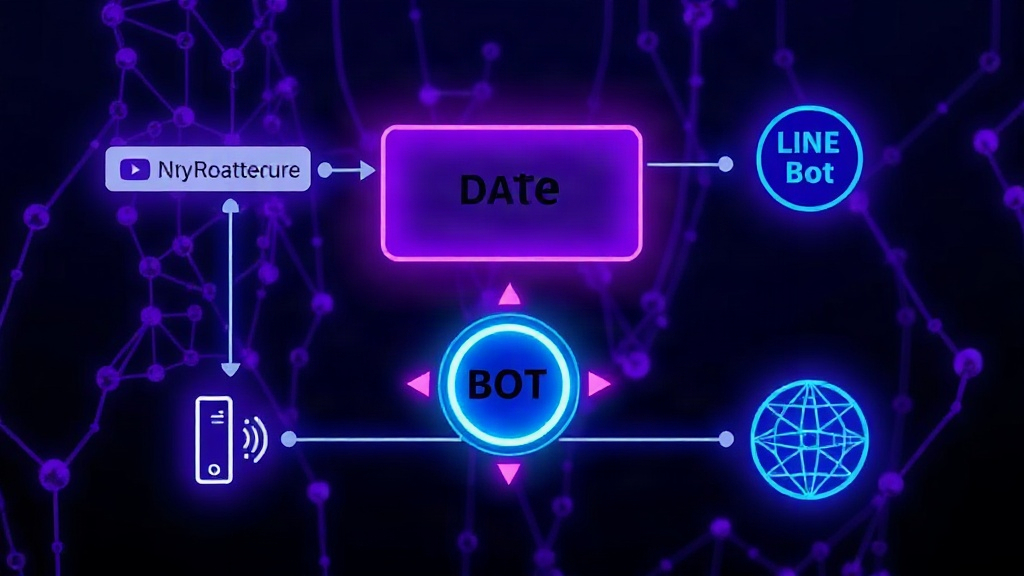
Integrating Gemini's agentic video capabilities into the existing LINE Bot requires a staged approach, focusing on augmenting current functionalities rather than a complete overhaul. The process involves several key steps:
Step 1: Defining the Use Case and Scope
The initial step was to identify a specific use case that leverages agentic video processing. For this integration, the focus was on enhancing the YouTube video summarization feature. Instead of a static summary, the goal was to enable the bot to understand the video's content more deeply, identify key moments, and provide contextually relevant summaries, potentially including visual descriptions or action sequences.
Step 2: API Selection and Initial Connection
The next phase involved selecting the appropriate Gemini API endpoints for video analysis. Given the focus on agentic capabilities, this likely means utilizing models that support multi-modal reasoning and can maintain state. The initial connection involved setting up authentication and testing basic video input and output with sample data. This is where the low-latency data pipelines become critical; even for testing, slow processing would hinder rapid iteration.
Step 3: Implementing State Management for Video Context
To provide richer summaries, the bot needs to understand the video's progression. This involved developing a state management layer that tracks the agent's progress through the video, stores key visual information, and allows for contextual queries. For instance, if the bot identifies a character early on, it should be able to refer back to that character later in the summary without re-analyzing the entire video from scratch. This is where the memory aspect of agentic systems comes into play.
Step 4: Integrating Tool Use for Enhanced Summaries
The agentic nature allows for the integration of tools. In this case, the tools could include:
- Object Recognition API: To identify key objects, people, or scenes.
- Action Recognition API: To describe dynamic events within the video.
- Natural Language Generation (NLG) Model: To craft coherent, context-aware summaries based on the extracted information.
The LINE Bot's existing Python framework was adapted to call these tools via APIs, passing relevant video segments or extracted data and synthesizing the results into a user-friendly summary.
Step 5: Testing, Evaluation, and Refinement
The final, and ongoing, step is rigorous testing. This involves feeding the bot a diverse range of YouTube videos and evaluating the quality, accuracy, and relevance of the generated summaries. Metrics for success include factual correctness, coherence, and the ability of the summary to capture the video's essence. Safety checks were also implemented to ensure the agent does not generate inappropriate content or misinterpret sensitive visual information. This iterative process of testing, evaluating, and refining is crucial for building a reliable agentic system.
The Unanswered Question: Scalability and Cost
While the technical prerequisites are substantial, what remains largely unaddressed is the practical scalability and associated cost of running such sophisticated agentic video processing on a per-user or per-request basis. For a personal bot, the costs might be manageable, but for a widely adopted service, the computational and storage demands could become prohibitive. How will developers balance the desire for advanced AI features with the economic realities of deployment?
Conclusion
Implementing Gemini's agentic video capabilities goes beyond simply calling an API. It requires a foundational understanding of data pipelines, state management, tool integration, and safety frameworks. By breaking down these prerequisites and following a structured integration process, developers can begin to harness the power of these advanced AI systems. The successful integration into a personal LINE Bot demonstrates the potential, while also highlighting the critical questions of scalability and cost that lie ahead for widespread adoption.