
AI Tackles Physics Problems: A New Frontier
The relentless march of artificial intelligence has reached the hallowed halls of physics. Recent research, detailed in a pre-print study, explores the capabilities of so-called "frontier models" – the latest, most powerful large language models (LLMs) – in tackling complex physics problems. The findings are a mixed bag: these models demonstrate a remarkable ability to recall and apply known physical laws and solve intricate mathematical challenges, but they falter when it comes to true conceptual understanding and the nuanced art of experimental design.
Traditionally, physics problem-solving requires not just rote memorization of formulas but a deep, intuitive grasp of underlying principles. It involves building mental models, hypothesizing, and designing experiments to test those hypotheses. This new wave of AI, however, operates differently. It excels at pattern recognition and information synthesis from vast datasets, which, it turns out, includes a significant corpus of physics knowledge. When presented with well-defined problems, akin to those found in textbooks or standardized tests, these frontier models can often produce correct solutions with impressive speed and accuracy. They can perform complex calculations, derive equations, and even generate plausible explanations for observed phenomena, provided the necessary information is implicitly or explicitly available in their training data.
The surprising detail here is not the accuracy on standard problems, but the breadth of physics domains these models can engage with. From classical mechanics and electromagnetism to quantum mechanics and statistical physics, the models show a generalized capability. This suggests that the underlying architecture of these LLMs, trained on diverse text and code, has inadvertently captured a significant amount of scientific reasoning structure. It's as if the AI has read every physics textbook ever written and can instantly recall the relevant chapter and page for any given query.
The Limits of Knowledge Recall
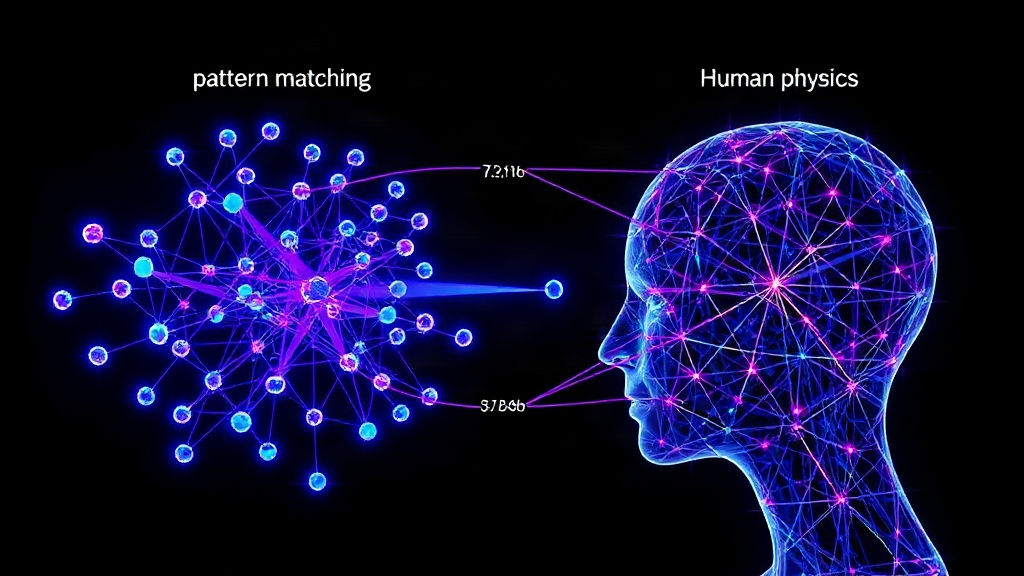
Despite their successes, the research highlights critical limitations. The models often struggle with problems that require genuine causal reasoning or counterfactual thinking – the ability to imagine scenarios that deviate from established norms or data. For instance, when asked to design an experiment to test a novel hypothesis, the AI tends to propose setups that are variations of known experiments or that simply gather more data within existing frameworks, rather than conceiving of truly innovative approaches. This indicates that while the models can *apply* physics knowledge, they don't necessarily *understand* it in the way a human physicist does, nor can they easily engage in the creative process of scientific discovery.
One of the key challenges lies in the models' opacity. It's often difficult to discern *why* a model arrived at a particular solution. Was it a genuine application of principles, or a statistical inference based on similar problems in its training data? This lack of interpretability is a significant hurdle for scientific applications, where understanding the reasoning process is as crucial as the final answer. In physics, the journey of derivation and the rationale behind experimental design are often more valuable than the outcome itself. Without this transparency, trusting the AI's solutions for novel or critical applications becomes problematic.
The research also points to a potential over-reliance on existing data. Frontier models are trained on vast amounts of human-generated text and code. If a particular area of physics is underrepresented in this data, or if a problem requires knowledge beyond what's commonly documented, the AI's performance degrades significantly. This contrasts with human physicists, who can draw on fundamental principles and abstract reasoning to tackle entirely new problems, even those with limited prior literature.
Implications for Scientific Discovery and Education
The implications of these findings are far-reaching. For scientific research, these models could serve as powerful assistants, accelerating the process of literature review, hypothesis generation (within known paradigms), and data analysis. They can quickly sift through massive datasets, identify correlations, and perform complex simulations that would be time-consuming for human researchers. However, they are unlikely to replace the human element of scientific creativity and critical thinking anytime soon. The ability to ask truly novel questions, design groundbreaking experiments, and interpret results in a broader theoretical context remains a uniquely human capability.
In physics education, these tools present both opportunities and challenges. They can be used as sophisticated tutoring systems, providing instant feedback and detailed explanations for solved problems. Students can leverage them to explore different problem-solving approaches and deepen their understanding of complex topics. However, there is a significant risk of students becoming overly reliant on AI for answers, potentially hindering the development of their own problem-solving skills and conceptual grasp. Educators will need to adapt curricula to emphasize critical thinking, experimental design, and the fundamental principles that underpin physics, rather than just the application of formulas.
What nobody has addressed yet is how these models will evolve. Will future iterations bridge the gap between pattern matching and genuine conceptual understanding, or will they remain sophisticated knowledge retrieval and application engines? The path forward will likely involve a symbiotic relationship between human intuition and AI's computational power, pushing the boundaries of physics research and education in ways we are only beginning to imagine.