
Performance is Money, Not Just Metrics
In the world of infoproducts and high-volume e-commerce, front-end performance is not an abstract technical goal. It’s a direct driver of revenue. The common narrative around performance often fixates on metrics like Lighthouse scores, bundle sizes, or perceived load times. However, the real bottom line, particularly for businesses dependent on immediate transactions, is conversion rate. If a meticulously optimized front-end doesn't translate into more sales or completed actions, its perceived value diminishes significantly.
Consider a scenario: an influencer campaign launches, driving a surge of traffic to an infoproduct checkout. The system experiences timeouts and overflows. The immediate question isn't whether the JavaScript bundle is small or if Nuxt is configured optimally. It's whether the payment processing JavaScript, critical for completing the transaction, arrived in time. Did the funnel drop off unnoticed by front-end monitoring, only to be discovered in back-office logs hours later? This is where the true cost of poor performance manifests – lost sales, not just a poor Lighthouse score.
The core principle is stark: front-end performance efforts are only truly validated when they demonstrably increase conversion rates. Metrics like timeout rates, overflow events, and successful transaction completion are far more critical than theoretical benchmarks. Lighthouse scores, while useful for identifying potential issues, do not directly pay the bills.

Micro Frontends and the Illusion of Decoupling
Micro frontends (MFEs) are often touted as a solution for managing complex applications, allowing independent development and deployment of UI components. However, MFEs are not a license to ignore the performance implications across the entire user journey. While they can isolate development, they can also introduce overhead. Each micro frontend might have its own dependencies, leading to duplicated libraries or increased JavaScript payload. The promise of faster development cycles can be undermined if the aggregate performance suffers to the point where it impacts user experience and, consequently, conversions.
The challenge with MFEs lies in maintaining a cohesive and performant user experience across independently developed modules. If one micro frontend, perhaps handling a critical part of the checkout flow, is slow or buggy, it can drag down the entire user journey. Developers must consider the communication overhead between MFEs, the potential for duplicated effort, and, most importantly, the cumulative impact on page load and interaction times. A poorly implemented MFE strategy can lead to a fragmented and slow experience, directly harming conversion metrics.
Strategic Rendering: SSR for the BFF, Lazy Load for the Rest
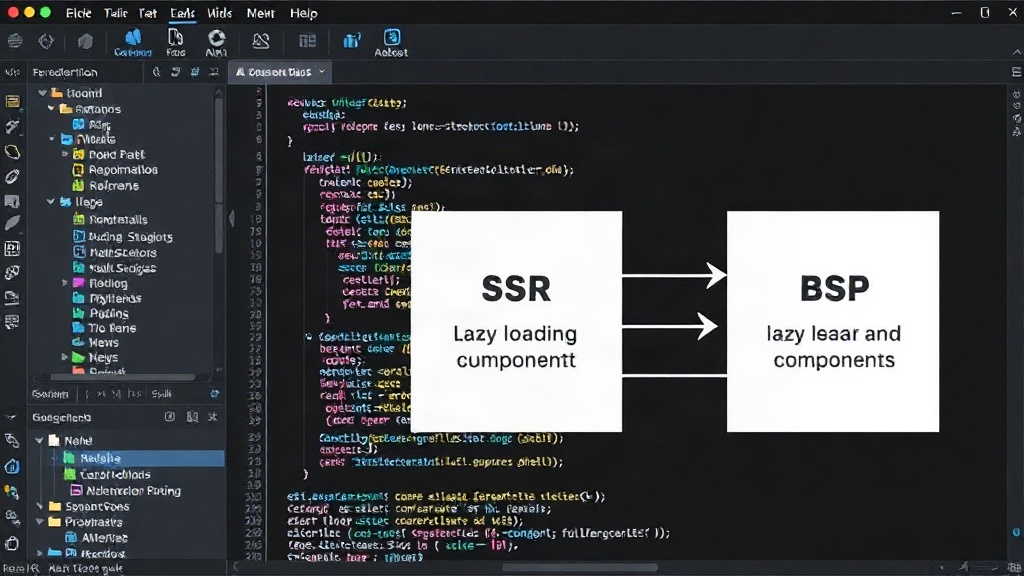
A nuanced approach to rendering is crucial for optimizing performance, especially in high-traffic environments. Server-Side Rendering (SSR) is often best applied strategically. For critical, dynamic parts of an application, like a “Business For Friend” (BFF) layer that handles core business logic and immediate user needs, SSR can ensure content is delivered quickly and is immediately interactive. This is particularly important for pages that need to be SEO-friendly or require fast initial rendering for user engagement.
However, applying SSR universally can be counterproductive. For less critical components, or parts of the UI that are not immediately visible or interactive, employing lazy loading techniques is far more efficient. This means deferring the loading and rendering of non-essential JavaScript and components until they are actually needed by the user. This strategy significantly reduces the initial JavaScript payload, leading to faster initial page loads and improved interactivity. By combining SSR for core functionalities with lazy loading for supplementary features, developers can strike a balance between initial performance and overall application responsiveness, directly benefiting the user journey through the funnel.
The Foundational Layers: CDN, Cache, and Gzip
Before even considering the complexities of JavaScript execution, the fundamental layers of web delivery must be optimized. Content Delivery Networks (CDNs) are essential for serving static assets from edge locations geographically closer to users, drastically reducing latency. Effective caching strategies, both at the CDN level and within the browser, ensure that users don't repeatedly download the same resources. Gzip compression, or its more modern alternatives like Brotli, significantly reduces the size of data transferred over the network.
These are not optional optimizations; they are table stakes for any high-performance front-end. The journey of JavaScript from the server to the user's browser involves multiple hops and potential bottlenecks. Optimizing each step – from efficient server response times and compressed asset delivery via CDN to intelligent browser caching – forms the bedrock upon which more complex performance strategies are built. Neglecting these foundational elements means that even the most sophisticated front-end code will struggle to perform optimally. The efficiency of delivering the JavaScript itself, before it even begins to execute, is paramount.
Beyond the Code: The Four Lenses of Performance
Evaluating front-end performance requires a multi-faceted approach. Developers often focus on technical metrics, but a comprehensive view includes several critical lenses:
- Technical Performance: This is the traditional view – load times, rendering speed, JavaScript execution time, Core Web Vitals, etc. Tools like Lighthouse, WebPageTest, and browser developer tools are key here.
- User Experience Performance: This focuses on how users perceive the speed and responsiveness of the application. Does the UI feel fluid? Are there unexpected delays? This is where user testing and qualitative feedback are invaluable.
- Business Performance: This is the ultimate arbiter. Does the performance impact key business metrics like conversion rates, bounce rates, user engagement, and ultimately, revenue? This lens connects technical efforts directly to business outcomes.
- Operational Performance: This considers the stability and reliability of the application under load. Does it crash? Are there timeouts? Monitoring tools like Sentry are crucial for understanding real-world failures.
Focusing solely on technical performance without considering the business and operational impact is a common pitfall. The goal is not just a fast website, but a website that drives desired business outcomes. If the technical optimizations don't lead to improved conversion rates or a reduction in critical errors, the effort may be misdirected.
The SDK Installation is Not the Finish Line
Implementing third-party SDKs, whether for analytics, performance monitoring, or marketing tools, is often presented as a solution. However, merely installing an SDK does not automatically 'close the case' on performance or its impact. These SDKs themselves can introduce overhead, potentially slowing down the application if not implemented carefully or if they are poorly optimized. Furthermore, the data they provide needs to be interpreted within the broader business context.
A performance monitoring SDK, for instance, is only valuable if its data is used to drive actionable improvements that affect conversion rates or user experience. Simply having the SDK running and collecting data is insufficient. Developers and product managers must actively analyze the data, identify bottlenecks or drop-off points, and implement changes. The SDK is a tool for diagnosis, not a cure. The true value is realized when the insights derived from these tools lead to tangible improvements in the user journey and business results. If an SDK implementation causes a noticeable slowdown or a drop in conversion, it has failed its primary purpose.