The Dawn of Digital Displays: Early Computing and Graphics
The story of how graphics processing units (GPUs) evolved from niche components to the indispensable engines of modern computing begins not with video games, but with early attempts at digital visualization. In 1950, the Whirlwind computer, developed for the U.S. Navy as a flight simulator, represented a monumental leap. This behemoth, powered by thousands of vacuum tubes, could execute approximately 50,000 calculations per second. Its output was displayed on a cathode-ray tube (CRT) monitor, capable of drawing basic points, shapes, and screen coordinates. While Whirlwind was a pioneer in displaying digital information, it was not a direct ancestor of today's GPUs; it was a foundational step in man-machine interfaces.
The evolution continued through the 1960s and 70s. Early computer graphics were rudimentary, often limited to wireframe models and simple vector displays. Sketchpad, developed by Ivan Sutherland in 1963, is often cited as a landmark achievement. It allowed users to directly interact with graphics on a CRT screen using a light pen, demonstrating the potential for interactive design. However, these systems were expensive, complex, and required specialized hardware. The processing power needed to render even basic 2D images was substantial, limiting their application to research institutions and high-end industrial design.
The Arcade Revolution and the Birth of Specialized Hardware
The true catalyst for GPU development arrived with the explosion of the video game industry in the late 1970s and early 1980s. Arcades became the proving ground for increasingly sophisticated visual experiences. Games like Pong (1972) used simple hardware to generate basic moving blocks, but titles like Space Invaders (1978) and Asteroids (1979) introduced more complex sprites and vector graphics, demanding more from the display hardware.
This demand led to the creation of specialized graphics chips. The Atari Video Computer System (later the Atari 2600) in 1977 featured custom chips that handled graphics rendering, a significant departure from earlier systems that relied solely on the main CPU. However, the real breakthrough came with arcade machines. Companies like Atari, Namco, and Taito began developing dedicated graphics processors that could handle sprite manipulation, color palettes, and scrolling backgrounds far more efficiently than a general-purpose CPU. The introduction of 3D graphics in arcades, with games like Battlezone (1980) using vector graphics to simulate a tank combat environment, further pushed the boundaries. These systems were essentially early, single-purpose graphics accelerators, laying the groundwork for what would become the GPU.
From 2D Sprites to 3D Polygons: The Rise of the Graphics Card
The transition from arcades to home computers and consoles in the 1980s and 90s brought graphics processing challenges to a wider audience. Early home computers like the Commodore 64 and ZX Spectrum relied on dedicated graphics chips (like the VIC-II and ULA, respectively) to manage their 2D sprite-based graphics. However, the burgeoning ambition for realistic 3D environments in video games required a paradigm shift.
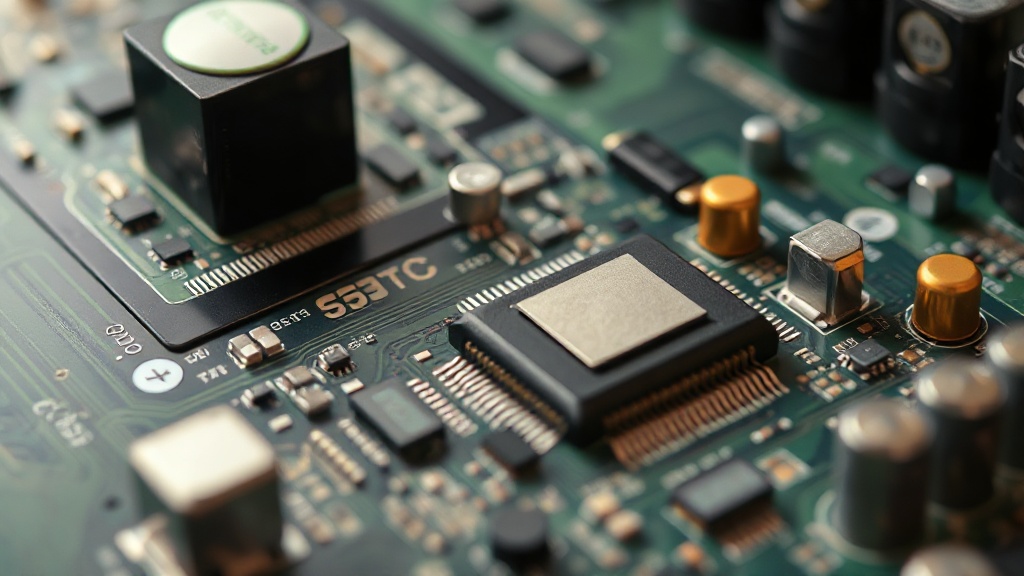
The development of the first true graphics cards, designed to plug into personal computers, marked a pivotal moment. Companies like S3 Graphics, ATI (now AMD), and Nvidia emerged, creating hardware specifically engineered for rendering 3D polygons, textures, and lighting effects. These cards offloaded the intensive graphics calculations from the CPU, allowing for much more complex and fluid visual experiences. Early 3D accelerator cards, like the Nvidia Riva TNT and ATI Rage 128, were game-changers for PC gaming, bringing experiences previously only possible in high-end workstations or arcades to the desktop.
The architecture of these early GPUs was fundamentally different from CPUs. While CPUs are designed for serial processing – executing one instruction after another very quickly – GPUs were built for parallel processing. They contain thousands of smaller, more specialized cores designed to perform the same operation on many different data points simultaneously. This parallel architecture is perfectly suited for the repetitive, data-intensive tasks involved in rendering graphics, such as calculating the color of millions of pixels on a screen, applying textures, and determining how light interacts with 3D models.
The Parallel Processing Powerhouse: GPU Beyond Gaming
The realization that the GPU's parallel processing capabilities could be harnessed for tasks beyond graphics rendering was a profound insight. This shift began in the scientific and high-performance computing (HPC) communities. Researchers found that the thousands of cores in modern GPUs could perform complex mathematical operations – such as matrix multiplications and vector additions – orders of magnitude faster than traditional CPUs when applied to certain problems.
This led to the development of general-purpose computing on graphics processing units (GPGPU). CUDA (Compute Unified Device Architecture), introduced by Nvidia in 2007, was a key enabler, providing a platform for developers to write programs that run on Nvidia GPUs using standard programming languages like C. OpenCL, an open standard, followed, allowing for GPU acceleration across different vendors. Suddenly, the hardware designed for rendering explosions and detailed character models was being used for tasks like weather forecasting, molecular dynamics simulations, financial modeling, and, crucially, training artificial intelligence models.
AI's Indispensable Partner: The GPU in the Machine Learning Era
The rise of deep learning and artificial intelligence in the 2010s coincided perfectly with the maturation of GPU technology. Training complex neural networks involves massive amounts of data and computationally intensive matrix operations. A deep neural network can have millions or even billions of parameters, and the process of adjusting these parameters based on training data requires performing these calculations repeatedly across vast datasets.
CPUs, with their few powerful cores, would take weeks or months to train a state-of-the-art AI model. GPUs, with their thousands of parallel cores, can perform these same calculations in days or even hours. This dramatic reduction in training time made it feasible to develop and iterate on increasingly sophisticated AI models, from image recognition and natural language processing to generative AI like large language models (LLMs).
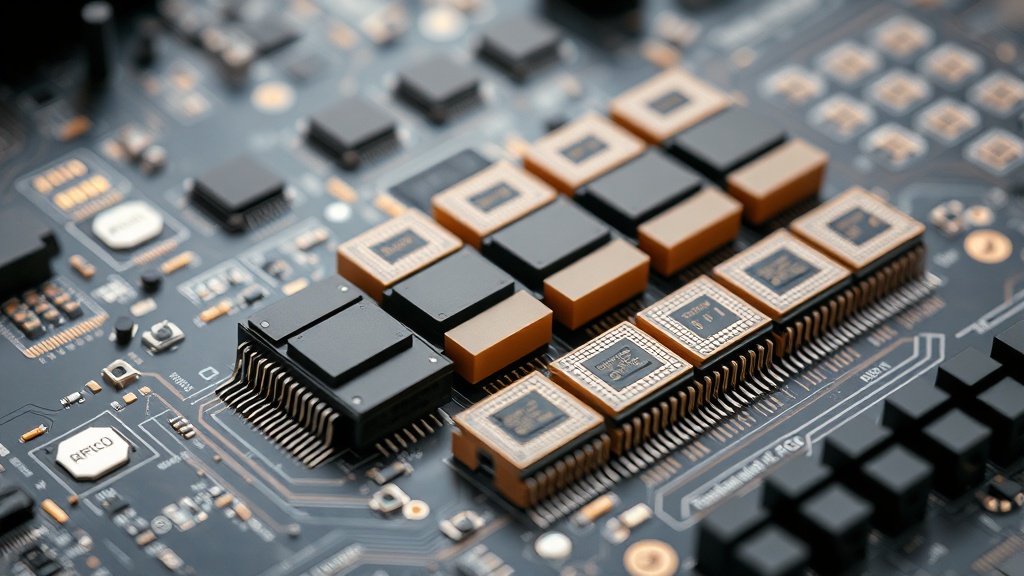
The demand from the AI industry has, in turn, driven further innovation in GPU design. Companies are now producing specialized AI accelerators, often based on GPU architectures, with features optimized for machine learning workloads, such as tensor cores that accelerate matrix multiplication. The interplay between AI research and GPU development has created a virtuous cycle, where advances in one field spur innovation in the other. This symbiotic relationship ensures that GPUs remain at the forefront of computational progress.
The Future: Beyond Graphics, Beyond AI?
The journey of the GPU is far from over. While gaming and AI remain dominant applications, researchers are exploring new frontiers. Applications in scientific visualization, cryptocurrency mining (though its prominence has waned), and even complex data analytics continue to leverage GPU power. The ongoing quest for greater computational efficiency and new architectural innovations promises to keep GPUs central to technological advancement.
What remains to be seen is how specialized AI hardware might eventually challenge the GPU's dominance in machine learning. While GPUs offer unparalleled flexibility and parallel processing power, dedicated AI chips are being designed with even greater efficiency for specific AI tasks. However, the GPU's legacy as a versatile parallel processing engine, born from the desire for more engaging digital worlds, has irrevocably reshaped the landscape of computing, making possible the intelligent systems we interact with today.