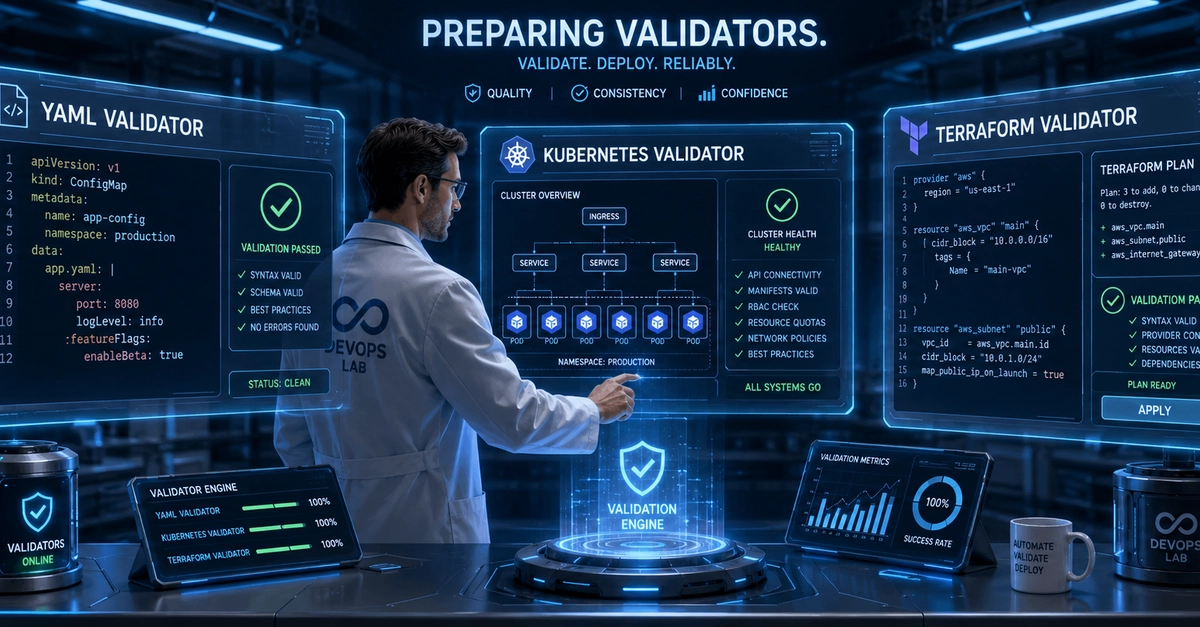
A Privacy-First Approach to DevOps Validation
The familiar ritual for DevOps engineers: a configuration file that looks correct, yet a system rejects it. The quick fix? Paste it into an online validator. But this common practice carries an inherent risk. What if that configuration contains sensitive details like internal hostnames, resource names, or structural secrets? Sending such data to an unknown third-party server is a habit that demands reevaluation.
To address this, a new set of free, browser-based validators has been developed. These tools are designed to run entirely within the user's browser, meaning no configuration files are ever uploaded or sent to any server. This approach directly tackles the privacy and security concerns associated with validating sensitive infrastructure code.
The primary motivation behind this project is to provide a safe, immediate, and reliable way for developers and operators to check their work. Traditional online validators, while convenient, force users to make a trust decision about their data. This new tool eliminates that decision entirely by keeping all processing local.
Core Functionality and Supported Formats
The suite offers validation for the most frequently used formats in the DevOps landscape:
YAML Validation
YAML's strict indentation and structure rules are a common source of errors, especially in Kubernetes and CI/CD pipelines. Cryptic failure messages often stem from simple syntax or indentation mistakes. This validator specifically targets these issues, ensuring that the basic structure of YAML files is sound before they are deployed or processed by other tools. It goes beyond simple syntax checking to catch common structural pitfalls that trip up even experienced engineers.
Kubernetes Manifest Validation
Beyond merely validating that a file is syntactically correct YAML, the Kubernetes validator offers schema-aware checks. This means it understands the expected structure and fields for various Kubernetes API versions and resource types. It can flag incorrect field names, missing required fields, or values that do not conform to the schema for a given Kubernetes object. This level of validation helps catch errors that would otherwise only be discovered during the `kubectl apply` phase, saving significant debugging time.
Terraform Validation
Terraform configurations, written in HashiCorp Configuration Language (HCL), also require rigorous checking. The Terraform validator ensures that the code adheres to HCL syntax and common best practices. It can identify potential issues with resource declarations, variable usage, and module calls. While it doesn't perform a full `terraform plan` or `validate` operation (which requires the Terraform CLI and provider configurations), it provides a crucial first layer of checks for syntax and basic structural integrity directly in the browser.
The Technical Underpinnings
The power of these validators lies in their client-side execution. For YAML, standard JavaScript libraries are employed to parse and validate the structure. For Kubernetes, the process involves leveraging JSON schema validation against known Kubernetes API schemas. This requires fetching or embedding the relevant schema definitions, which are then used by the JavaScript validator to check the user's manifest against the expected structure. Similarly, Terraform HCL validation is achieved through JavaScript parsers and linters specifically designed for HCL. The key is that all this parsing and validation logic runs within the browser's JavaScript engine, never transmitting the user's input data.
The decision to make these tools browser-based was driven by a desire to offer a secure and immediate feedback loop. Developers can paste code snippets, entire files, or even configuration templates directly into the validator interface and receive instant feedback. There's no need to sign up for an account, install any software, or worry about data residency or confidentiality. This makes them ideal for quick checks during development, pair programming sessions, or when reviewing code in a sensitive environment.
Why This Matters for Developers and Teams
The implications of having such tools readily available are significant. Firstly, it drastically reduces the risk of accidentally exposing sensitive configuration details. This is particularly important in regulated industries or for organizations with strict data security policies. Secondly, it speeds up the development feedback loop. Developers can catch basic errors much earlier in the workflow, preventing them from reaching CI/CD pipelines or production environments.
The lack of signup and upload requirements also lowers the barrier to entry. Anyone can access these validators from any machine with a web browser. This democratizes access to essential validation capabilities, empowering individual developers and smaller teams who might not have extensive tooling setups. The project champions a philosophy where essential developer tools should be accessible, secure, and free to use without compromising privacy.
What remains to be seen is how these browser-based validators will evolve. Will they incorporate more advanced checks, such as detecting deprecated Kubernetes API versions or identifying common Terraform security anti-patterns? The current implementation provides a solid foundation, but the potential for expanding the scope of checks is considerable. As these tools gain traction, expect them to become an indispensable part of many developers' daily workflows.
Future Considerations and Expansion
While the current offering provides essential validation capabilities, there's ample room for growth. Future iterations could include:
- More advanced Kubernetes checks: Detecting deprecated API versions, flagging potential security misconfigurations (e.g., overly permissive RBAC rules), and suggesting best practices for resource utilization.
- Deeper Terraform analysis: Incorporating checks for common security vulnerabilities in Terraform code, identifying resource drift potential, and offering warnings about inefficient provider usage.
- Support for other formats: Expanding to include Dockerfiles, GitHub Actions workflows, or other common configuration languages used in cloud-native development.
- Integration with IDEs: While the current form is browser-based, the underlying logic could potentially be adapted for VS Code extensions or other IDE plugins, offering inline validation directly within the developer's editor.
The success of this project hinges on its adoption and the community's feedback. By providing a secure, free, and accessible alternative to existing online validation services, it fills a critical gap for many DevOps professionals. The commitment to keeping everything client-side ensures that privacy remains paramount, a crucial consideration in today's security-conscious landscape.