
The Attack Chain Unpacked
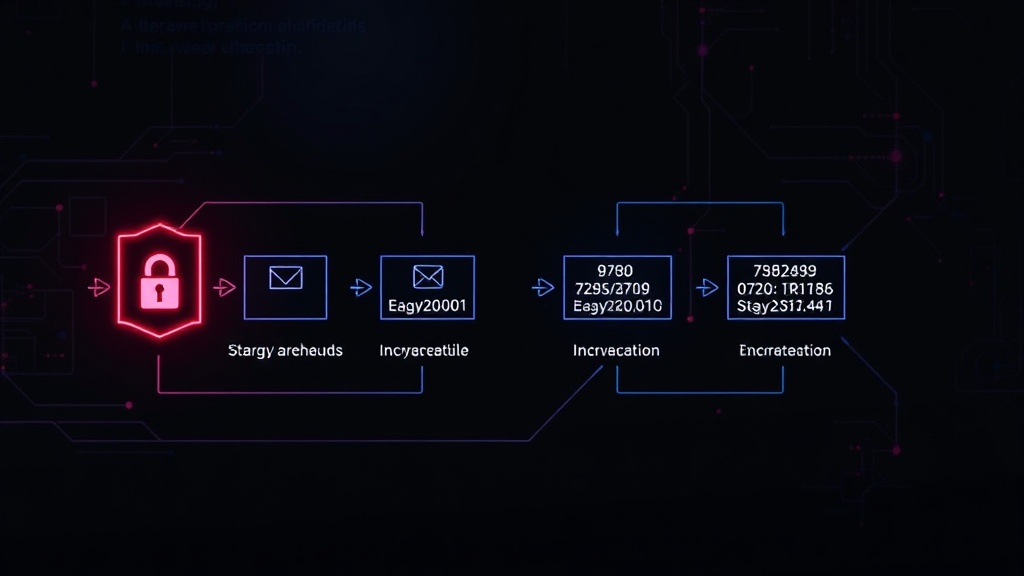
A sophisticated malware campaign leverages a four-stage process, embedding malicious payloads within seemingly innocuous bitmap images. This technique, known as steganography, allows threat actors to conceal their true intentions by hiding data within the visual information of a file. The ultimate goal of this particular dropper is to deploy AsyncRAT, a potent open-source Remote Access Trojan, granting attackers significant control over compromised systems.
The dropper begins with an initial stage that is often delivered via a phishing email or a malicious download. This first stage is designed to be lightweight and evasive, setting the groundwork for subsequent, more damaging payloads. It typically involves a small executable that, upon execution, unpacks and runs the next stage of the malware.
The second stage introduces the steganography element. Here, the malware extracts embedded data from a bitmap image. This image is not just a random file; it's carefully crafted to contain the next part of the payload within its pixel data. The attacker manipulates the least significant bits (LSBs) of the image pixels to encode the hidden data. This method is effective because these LSB changes are visually imperceptible to the human eye, making the image appear normal.
Stage Three: Decryption and Execution
Once the steganographically hidden data is extracted from the bitmap, it forms the third stage of the malware. This stage is typically a more complex piece of code, often an obfuscated executable or script. Its primary function is to decrypt and deobfuscate the final payload. The attackers employ various obfuscation techniques to hinder static analysis and make it difficult for security researchers to understand the malware's true nature. This decryption process is critical, as the raw data extracted from the image is usually not directly executable.
The third stage acts as a loader and decryptor. It takes the extracted, often encrypted, data and performs the necessary operations to reveal the final payload. This might involve XOR operations, base64 decoding, or more complex custom decryption algorithms. The complexity of this stage is a testament to the attacker's effort to bypass detection mechanisms that might flag more straightforward malicious executables.
Stage Four: AsyncRAT Deployment
The culmination of this multi-stage attack is the deployment of AsyncRAT. The final stage, once decrypted and unpacked by the third stage, is the AsyncRAT implant itself. AsyncRAT is a powerful RAT that offers a wide range of functionalities, including remote desktop control, file system access, keylogging, process management, and webcam access. Its open-source nature means attackers can easily customize and deploy it, often with minimal modification.
Upon successful deployment, AsyncRAT establishes a command-and-control (C2) channel back to the attacker. This connection allows the attacker to issue commands remotely, exfiltrate sensitive data, monitor the victim's activity, and even deploy further malware. The use of steganography in the initial stages provides a significant advantage to the attackers by allowing them to bypass initial security checks and deliver their malicious payload undetected.
Steganography as an Evasion Tactic
The choice of bitmap steganography is a deliberate security evasion tactic. Bitmap files (.bmp) are uncompressed, making them ideal for embedding data without significant file size increases that might trigger suspicion. Attackers can insert their malicious code into the pixel data, often in areas of the image that are less likely to be scrutinized. This method is effective against signature-based detection systems that primarily look for known malicious file headers or patterns within executables. By disguising the payload as part of an image, the malware can slip past traditional security filters.
The four-stage architecture is also crucial for evasion. Each stage is less suspicious than the one it delivers. The initial executable might be clean, the bitmap image appears normal, and only after several layers of unpacking and decryption does the full functionality of AsyncRAT emerge. This layered approach forces security analysts to perform extensive reverse engineering to uncover the entire attack chain, a process that is time-consuming and resource-intensive.
The Threat of AsyncRAT
AsyncRAT itself poses a significant threat due to its versatility and the ease with which it can be deployed. Originally developed for legitimate remote administration purposes, it has been widely adopted by malicious actors. Its features allow for comprehensive system compromise, turning a victim's machine into a remotely controlled zombie. The implications for individuals and organizations are severe, ranging from data theft and financial fraud to espionage and further network infiltration.
The persistence of such multi-stage, steganography-based droppers highlights the evolving tactics of cybercriminals. They are continuously finding novel ways to disguise their malicious activities, making detection and prevention an ongoing challenge for security professionals. Understanding these complex attack vectors is crucial for developing more robust defense strategies.