
The Agent Trilemma: Copilot Studio, In-Process, or Foundry Hosted?
In the evolving landscape of AI agent development within the Microsoft ecosystem, teams face a critical decision point: how to build and deploy their agents. As of mid-2026, three primary architectural paths are officially supported, each with distinct implications for development, runtime, and scalability. These paths are Microsoft Copilot Studio agents, in-process hosted agents, and Foundry hosted agents. While all three ultimately converge into a tenant-wide agent inventory, the initial choice profoundly impacts the project's lifecycle and future flexibility. Picking the wrong path can lead to costly rebuilds as projects outgrow their initial architecture.
The selection criteria should not be based on perceived power alone. Instead, the decision framework must center on the agent's intended service model, who will own and manage the runtime environment, and the degree of pro-code control required over orchestration and protocol handling. This guide, informed by Microsoft Learn documentation and current industry understanding, provides the necessary context for making an informed architectural choice.
It's important to note that two of these three paths are currently in public preview. Therefore, this guidance focuses on architectural fit and strategic direction, rather than serving as a definitive production-reliability scorecard.
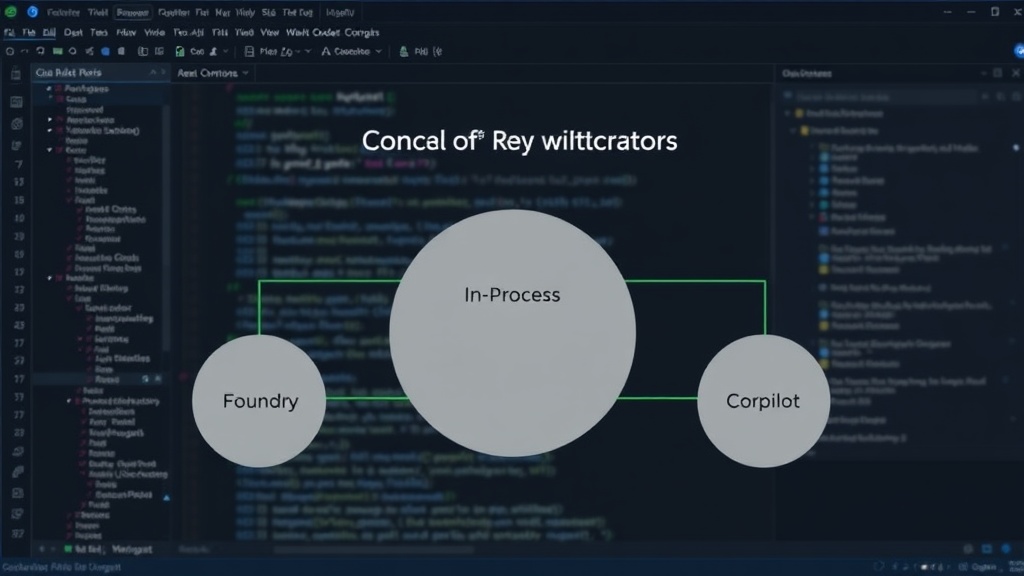
Microsoft Copilot Studio Agents: Low-Code, High Abstraction
Copilot Studio agents represent the most abstracted, low-code approach. This path is ideal for business analysts, citizen developers, or teams prioritizing rapid prototyping and ease of use. The service model here is heavily managed by Microsoft, abstracting away most of the underlying infrastructure and orchestration complexities. Development primarily occurs within the visual Copilot Studio interface, allowing for the creation of conversational flows, topic management, and integration with pre-built connectors.
The runtime is entirely managed by Microsoft. This means no infrastructure to provision, patch, or scale. Microsoft handles the operational burden, allowing teams to focus solely on agent logic and user experience. Orchestration is largely declarative, defined by the visual designer. Pro-code control over orchestration and protocols is minimal. While extensibility exists through Power Automate flows and custom APIs, the core agent logic and its execution environment are not directly accessible or controllable in a deep, programmatic sense.
This path is best suited for scenarios where:
- The primary builders are not deeply technical developers.
- Time-to-market for relatively standard conversational AI use cases is paramount.
- Complex, custom protocol handling or fine-grained runtime control is not a requirement.
- The project can operate within the constraints and capabilities of the Copilot Studio platform.
The main drawback is the potential for hitting platform limits or needing to re-architect if the agent's complexity or performance requirements exceed Copilot Studio's capabilities. The abstraction that makes it easy to start can become a constraint later.
In-Process Hosted Agents: Developer Control, Managed Runtime
The in-process hosted agent model offers a middle ground, striking a balance between developer control and managed services. This path is designed for professional developers who need more flexibility and deeper integration capabilities than Copilot Studio provides, but who still want to offload significant infrastructure management.
In this model, developers write their agent logic using pro-code languages (e.g., C#, Python) and package it as a container. This container is then deployed into a managed runtime environment provided by Microsoft, likely within Azure. The service model is one of a managed container execution. Developers define the agent's core logic and any custom protocols or orchestration steps within their code. Microsoft's platform manages the container orchestration, scaling, and availability of the runtime itself.
This approach provides significant pro-code control over the agent's behavior, including custom orchestration logic and the ability to implement specific communication protocols. Developers have direct access to their code and can leverage the full power of their chosen programming language and libraries. The runtime, while managed by Microsoft, is dedicated to their containerized agent, offering more predictable performance characteristics than a fully shared, abstracted service.
This path is ideal for:
- Professional development teams comfortable with containerization and cloud deployment.
- Agents requiring custom business logic, complex decision trees, or specific integration patterns not readily available in Copilot Studio.
- Scenarios where fine-grained control over the agent's execution flow and protocol handling is necessary.
- Projects that anticipate growth beyond low-code platforms but do not require full infrastructure ownership.
The trade-off here is increased development complexity compared to Copilot Studio, and a reliance on Microsoft's managed runtime capabilities. While infrastructure is managed, the developer is responsible for the container's internal logic and dependencies.
Foundry Hosted Agents: Maximum Control, Full Responsibility
Foundry hosted agents represent the most flexible and powerful option, offering complete control over the entire stack. This path is for teams that require the highest degree of customization, performance optimization, and independent management of their agent's runtime environment. It's essentially bringing your own execution infrastructure to the Microsoft agent inventory.
The service model here is one of bare-metal or highly customizable VM-based hosting. Developers package their agent logic, including all orchestration and protocol handling, into a container. This container is then deployed onto infrastructure that the development team fully manages, whether it's dedicated Azure VMs, on-premises servers, or even other cloud providers. Microsoft's role is primarily to integrate these independently hosted agents into the central inventory and ensure they can communicate with other Microsoft services.
This model grants absolute pro-code control. Developers can dictate the operating system, libraries, network configurations, and even custom hardware acceleration if needed. They are responsible for scaling, security, patching, and maintaining the entire runtime environment. This is akin to running a traditional application, but with the agent logic exposed to the broader Microsoft ecosystem.
This path is the best fit for:
- Teams with deep DevOps expertise and a requirement for full infrastructure ownership.
- Agents with extreme performance, low-latency, or specialized hardware requirements.
- Organizations with strict compliance or security mandates that necessitate complete control over the execution environment.
- Scenarios involving proprietary protocols or complex, multi-stage orchestration that cannot be adequately expressed in other models.
The significant downside is the substantial operational overhead. The development team bears the full burden of managing and securing the runtime, which can be resource-intensive and divert focus from core agent development. This is not a path for the faint of heart or for teams without dedicated infrastructure management capabilities.
Making the Decision: Service Model, Runtime, and Control
The core of the decision lies in aligning the agent's requirements with the capabilities and responsibilities of each path. Consider these questions:
- Who is building this agent? If it's business users or citizen developers, Copilot Studio is the clear starting point. If it's professional developers, in-process or Foundry become viable.
- Who owns the runtime? Do you want Microsoft to manage it completely (Copilot Studio), manage the container platform (In-Process), or manage everything from the OS up (Foundry)?
- How much pro-code control do you need? Copilot Studio offers minimal control. In-Process offers significant control over agent logic and orchestration. Foundry offers absolute control over everything.
- What are the performance and integration needs? Standard integrations and moderate performance can be handled by Copilot Studio. Complex integrations, custom protocols, and high-performance demands push towards In-Process or Foundry.
The surprising detail here is not the existence of three paths, but the explicit acknowledgement by Microsoft that teams will need to make distinct architectural choices based on operational models, not just feature sets. This reflects a maturation of their AI platform, recognizing that different use cases and team capabilities require tailored deployment strategies. For instance, a customer service bot might start in Copilot Studio for speed, while a fraud detection agent requiring real-time analysis of sensitive data might necessitate Foundry for its control guarantees.
If you run a team that relies on building AI agents within the Microsoft ecosystem, understanding these distinctions is crucial. The wrong choice today locks you into potential rebuilds tomorrow. Evaluate your team's skills, your project's long-term vision, and your operational capacity before committing to a path.