The Illusion of Knowledge
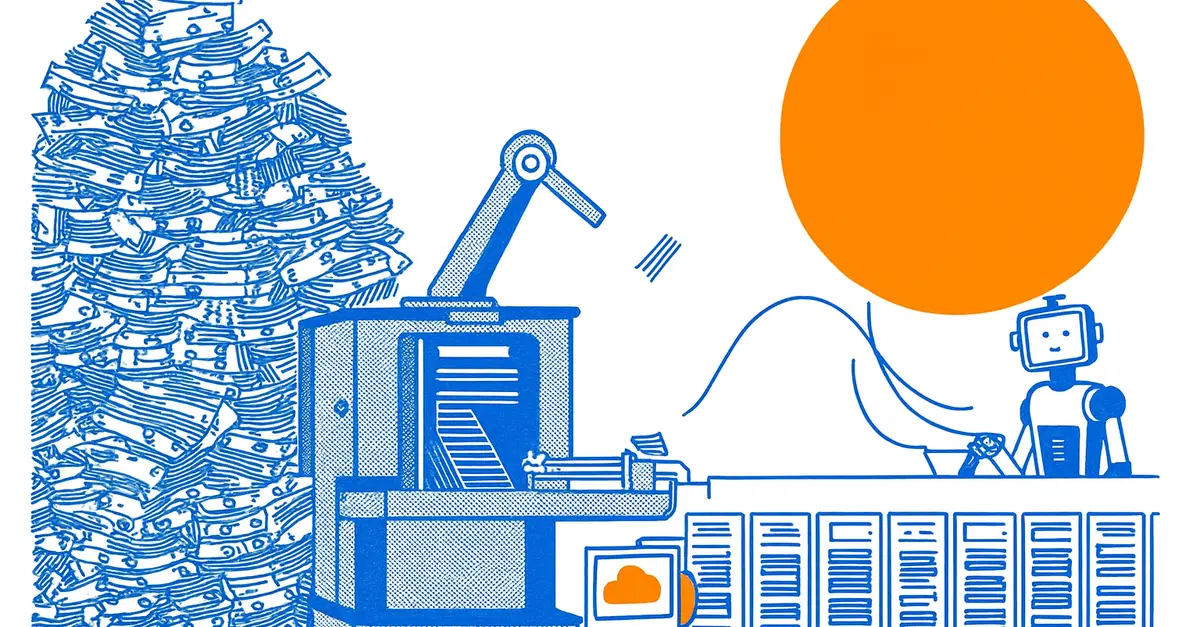
The prevailing wisdom for equipping AI agents with organizational knowledge is simple: point them at your documentation. The process, often referred to as Retrieval-Augmented Generation (RAG), involves chunking documents, embedding them into a vector space, and using a retriever to find relevant pieces for the agent to reference when answering queries. This sounds straightforward, and for basic questions, it can appear to work. You might ask an AI about system configurations or operational procedures, and it will return a coherent, fluent paragraph. The problem arises when you need to verify that answer. Where did that information come from? Is it from the current, authoritative runbook, or a design document abandoned years ago? Was the retry count cited from the live system’s configuration, or a stale README file that happened to score highly in the retrieval process?
This disconnect between the AI’s confident output and the user’s inability to trace its source is a fundamental flaw in the “docs folder as knowledge base” approach. Without a clear provenance for each piece of information, the AI’s answers become untrustworthy. This isn’t a minor inconvenience; it’s a critical failure for any application where accuracy and accountability matter, which is virtually all business-critical operations. The agent becomes a fluent spinner of plausible-sounding but potentially incorrect information, a sophisticated hallucination engine rather than a reliable assistant.
The core issue is that RAG, as commonly implemented with a simple document folder, treats all data equally. It doesn’t inherently distinguish between a draft document, a deprecated specification, or a fully approved, production-ready guide. The retrieval mechanism selects chunks based on semantic similarity to the query, not necessarily on their recency, authority, or relevance to the *current* state of affairs. This is akin to asking a human expert for advice and receiving an answer based on outdated textbooks or forgotten personal notes, without any indication of the source’s reliability.
Consider the implications for operational teams. If an AI provides incorrect information about a critical system’s failover procedure, it could lead to prolonged downtime or even data loss. For development teams, incorrect API specifications or deprecated library usage could introduce bugs and security vulnerabilities. In a legal or compliance context, relying on unverified information could have severe repercussions.
Beyond Simple Retrieval: The Need for Provenance and Context
What’s missing is a robust system for managing the lifecycle and provenance of information. A true knowledge base for AI agents needs more than just searchable text. It requires metadata that specifies the document’s origin, author, version, status (e.g., draft, approved, deprecated), and last updated date. This metadata is crucial for the retrieval process to not only find relevant information but also to prioritize and filter it based on context and authority.
This is where tools designed specifically for managing AI knowledge come into play. Instead of a flat folder of Markdown files, a more sophisticated approach involves a structured corpus. This corpus would not only store the content but also its associated metadata. When a query is made, the retriever would use this metadata in conjunction with semantic similarity to find the most appropriate and authoritative information. For example, if an agent needs to know the current retry count for a service, it should ideally query for documents marked as “production configuration” or “current operational runbook” with a recent update timestamp, rather than a generic design document from two years ago.
This richer data model allows for more nuanced retrieval. An agent could be instructed to explicitly avoid information from deprecated documents, or to flag answers that rely on older data, prompting the user to verify. This moves beyond simply retrieving text to retrieving *verified knowledge*. The agent’s responses would then include citations, not just to the document, but to specific sections or versions, allowing users to easily cross-reference and build trust in the AI’s output. Think of it less like a search engine and more like a meticulously organized library where every book has its publication date, author credentials, and a clear 'in-print' status readily available.
The "So What?" Perspective
Developers need to move beyond treating documentation folders as knowledge bases. Implement metadata-rich corpora for AI agents to ensure answers are sourced from authoritative, current documents. Prioritize tools that support provenance tracking and version control for ingested knowledge to prevent agents from relying on stale or incorrect information, thereby reducing bugs and operational errors.
Security professionals must recognize that AI agents trained on unverified documentation pose a risk. Incorrect information about system configurations, access controls, or incident response procedures can lead to vulnerabilities. Implementing knowledge bases with strict metadata and version control is crucial to ensure agents provide accurate security guidance and do not inadvertently expose system weaknesses.
Founders should understand that a simple RAG setup over documentation is insufficient for reliable AI assistants. This approach is a brittle foundation that can undermine user trust and operational efficiency. Investing in or building knowledge management systems that provide robust metadata, versioning, and provenance tracking will be critical for developing truly dependable AI-powered internal tools and customer-facing applications.
Content creators and technical writers need to consider how their documentation is ingested by AI. Simply writing accurate docs isn't enough; ensuring those docs are properly tagged with metadata (version, status, author) is vital for AI systems to differentiate between current and outdated information. This allows AI to become a more reliable assistant for users seeking information from your content.
Data scientists and ML engineers building RAG systems must incorporate metadata and provenance into their retrieval strategies. Relying solely on vector similarity is inadequate for enterprise knowledge. Explore techniques that allow for filtering and ranking based on document attributes like recency, authority, and lifecycle status to improve the factual accuracy and trustworthiness of generated responses.
Sources synthesised
- 12% Match