
Arrest Details and Alleged Offense
Emani Rey Justavino, a resident of Jacksonville, Florida, faces serious charges following his arrest for allegedly manufacturing and distributing illegal firearm conversion devices. According to reports, Justavino was apprehended after selling over 50 of these devices, commonly known as 'Glock switches,' to an undercover agent from the Bureau of Alcohol, Tobacco, Firearms and Explosives (ATF). These switches are designed to convert standard semi-automatic pistols into fully automatic weapons, capable of firing multiple rounds with a single trigger pull.
The suspect reportedly claimed to have produced the entire batch of 50+ devices overnight, highlighting the speed and accessibility of 3D printing technology for creating such items. He also offered the devices to the undercover agent at a discounted price, underscoring a potentially opportunistic criminal enterprise. The investigation leading to his arrest underscores the growing concern among law enforcement agencies regarding the proliferation of easily accessible, untraceable firearm modifications.
Understanding 'Glock Switches' and 3D Printing's Role
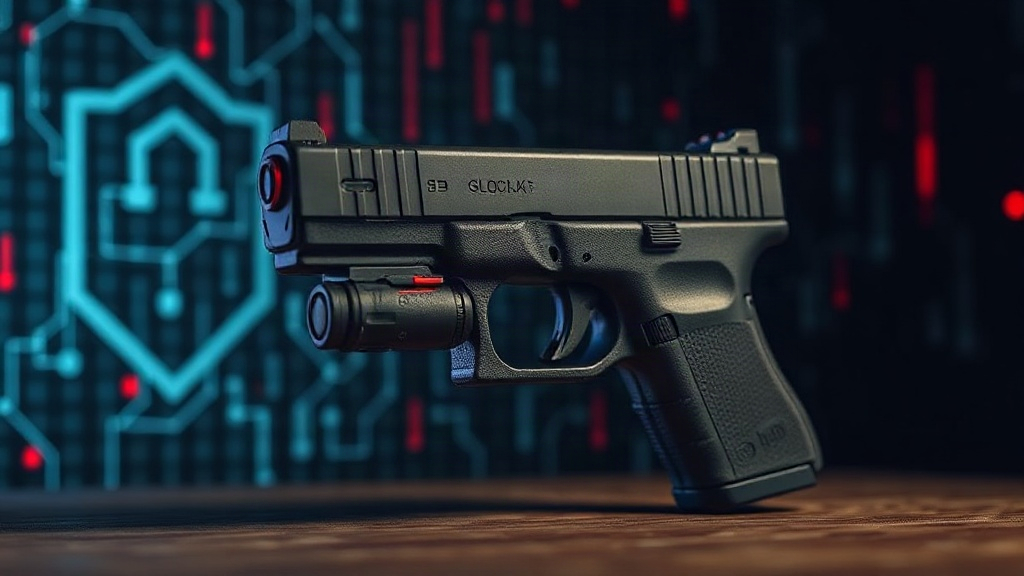
A 'Glock switch,' in this context, is a small component that, when attached to a Glock pistol (or compatible firearm), alters its firing mechanism. Typically, a semi-automatic firearm fires one round each time the trigger is pulled and released. By modifying the internal workings, often with a simple, 3D-printed part, the firearm can be made to fire continuously as long as the trigger is held down, effectively turning it into a machine gun. This capability is heavily regulated under federal law, with automatic weapons requiring extensive registration and licensing, which these homemade devices bypass entirely.
The ease with which such devices can be fabricated using readily available 3D printers and digital design files presents a significant challenge for law enforcement. The ability to print these components overnight, as Justavino allegedly did, means that a large quantity of illegal conversion devices can be produced quickly and with minimal overhead. This rapid production cycle outpaces traditional manufacturing and distribution methods, making it difficult for authorities to track and intercept the flow of these items.
Legal Ramifications and Law Enforcement Concerns
Possession and distribution of automatic weapon conversion devices are felonies under federal law. The National Firearms Act (NFA) of 1934 and subsequent legislation like the Firearm Owners' Protection Act (FOPA) of 1986 strictly regulate machine guns. Any device that converts a semi-automatic firearm into a machine gun is considered a machine gun itself and is subject to these stringent regulations. Selling or possessing such devices without proper registration and licensing carries severe penalties, including lengthy prison sentences and substantial fines.
Law enforcement agencies are increasingly concerned about the use of 3D-printed firearm components and conversion devices. These items are often untraceable, as they do not contain serial numbers typically found on commercially manufactured firearms or parts. This lack of traceability makes it difficult for investigators to link a recovered weapon or device back to its owner or manufacturer. Furthermore, the low cost of production—reportedly as low as $50 per switch in this case—makes them attractive to individuals involved in criminal activities, including street gangs and other organized crime groups.
Broader Implications for 3D Printing and Gun Control
This incident is another data point in the ongoing debate surrounding the regulation of 3D printing technology and its intersection with gun control. While 3D printing offers immense potential for innovation in various industries, its capability to produce unregulated firearms and firearm components poses a clear public safety risk. The digital nature of the designs means they can be shared globally with relative ease, bypassing physical border controls. Efforts to regulate the creation and distribution of these digital blueprints are complex, involving questions of free speech, intellectual property, and the practicalities of enforcement in a decentralized digital space.
The case of Emani Rey Justavino highlights the critical need for continued vigilance and adaptive strategies from law enforcement. It also raises questions about the responsibility of 3D printer manufacturers and software developers in preventing the misuse of their technologies. As the technology becomes more accessible and sophisticated, the challenge of preventing the illicit manufacturing of firearms and conversion devices will likely intensify, requiring a multi-faceted approach involving technological solutions, legislative action, and robust investigative efforts.
The ATF and other agencies are actively working to combat this threat, but the decentralized and rapidly evolving nature of 3D-printed firearm technology means that new challenges will continue to emerge. The arrest serves as a stark reminder that the line between digital design and physical weapon manufacturing has become increasingly blurred, with significant implications for public safety and the future of gun regulation.