The Payoff: Isomorphic Hydration in Fitz
Fitz, the full-stack web framework, delivers on a critical promise: isomorphic hydration. This isn't just another server-side rendering (SSR) technique. It's a fundamental shift in how client and server UIs synchronize, aiming to eliminate the common pitfalls of traditional hydration. The core idea is simple yet powerful: mark a component for hydration, and the same .fitzv component file serves two distinct purposes. First, it renders to static HTML on the server, ensuring a fast initial page load, search engine crawlability, and a functional experience even if JavaScript fails to load. Second, upon client-side boot-up, the WebAssembly (WASM) runtime doesn't discard this server-rendered DOM. Instead, it intelligently adopts it. It restores the component's state, which is embedded within a <script> tag, walks the existing DOM nodes, and wires up event listeners. This process bypasses the need for a full client-side re-render, sidestepping the dreaded "re-render flash," loss of DOM identity, and the entire class of "hydration mismatch" bugs.
This payoff is the culmination of the previous parts in the FitzLiveViews series. Part 7 established the full-stack loop, enabling .fitzv components to call server functions via @rpc with end-to-end typing. This part tackles the complex challenge of SSR hydration: the server renders the component, and then the WASM runtime seamlessly takes over the existing DOM. This approach is designed to feel like a single, unified rendering process, rather than two separate ones stitched together.
How It Works: Server Paint, WASM Adoption
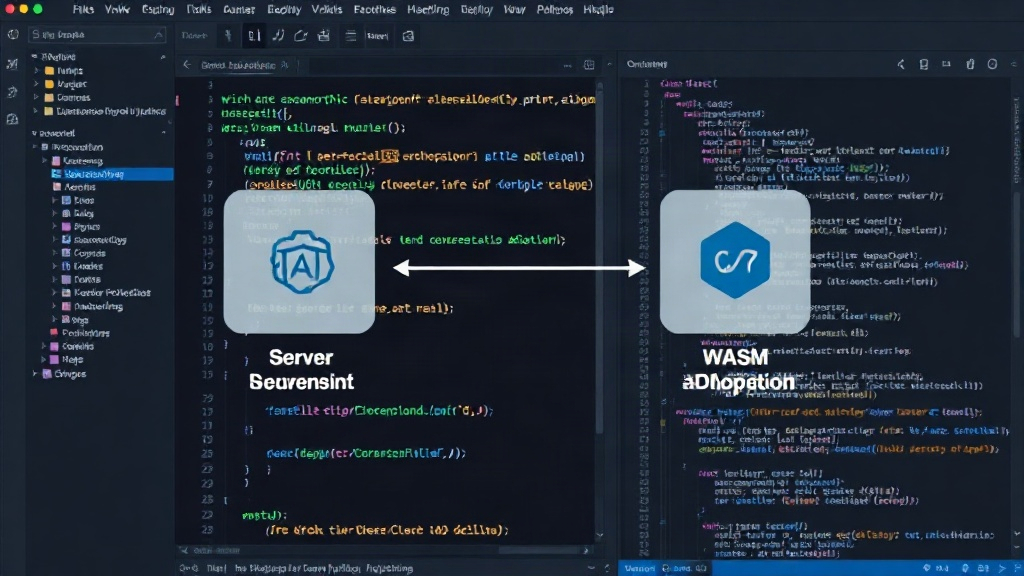
The magic of Fitz's isomorphic hydration lies in its ability to leverage the server's rendered HTML as the authoritative starting point for the client. When a component is marked for hydration, Fitz generates HTML on the server. This HTML includes not only the structural markup but also a serialized representation of the component's state, typically embedded in a <script> tag. This script is crucial; it contains the data necessary for the client-side WASM runtime to reconstruct the component's interactive state without needing to re-execute the component's rendering logic from scratch.
Once the browser receives the HTML and the JavaScript bundle (which includes the WASM runtime), the process begins. Instead of the client-side framework tearing down the server-generated DOM and rebuilding it, the Fitz WASM runtime inspects the existing DOM. It reads the serialized state from the embedded script and uses this information to attach event handlers to the correct elements, update the component's internal state, and establish the necessary bindings. This direct adoption of the existing DOM is key. It means the browser doesn't perform a costly DOM diff and reconciliation process that often leads to visual flickering or a perceived lag as the client re-renders. The DOM elements retain their identity, and the application state is preserved without the typical challenges associated with hydrating complex UIs.
Eliminating Hydration Mismatches
One of the most persistent and frustrating bugs in modern web development is the "hydration mismatch." This occurs when the HTML rendered by the server does not precisely match what the client-side JavaScript expects to render. This can happen for numerous reasons: differences in locale-sensitive formatting (like dates or numbers), variations in how certain HTML elements are self-closed, or even subtle differences in conditional rendering logic between server and client environments. When a mismatch occurs, frameworks often have to choose between discarding the server's DOM and re-rendering entirely (leading to a flash of unstyled content or a jarring visual reset) or attempting to patch the DOM, which can be complex and error-prone.
Fitz's isomorphic hydration approach fundamentally sidesteps this problem. By marking a component for hydration, developers signal that the server-rendered DOM is intended to be adopted directly by the client WASM runtime. The runtime's job is not to generate new DOM but to interpret the existing DOM and imbue it with interactivity based on the provided serialized state. It walks the nodes, attaches listeners, and restores state. This creates a single source of truth: the server's initial render is the foundation, and the client's role is to enhance it with dynamic behavior. This eliminates the possibility of the server rendering a date as "Oct 26, 2023" and the client attempting to render "26/10/2023" and throwing a mismatch error. The client simply finds the element that's supposed to display the date, reads the state, and ensures the correct event listener is attached to it, preserving the server's output.
Performance and Developer Experience Gains
The benefits of this approach extend beyond bug reduction. Performance is a significant win. A fast first paint is guaranteed because the HTML is served directly from the server. Crucially, the client-side performance is also enhanced. By avoiding a full client-side re-render and instead adopting the existing DOM, Fitz saves precious CPU cycles and reduces the time to interactivity. This is particularly impactful for complex applications with many components or large amounts of state.
For developers, the experience is streamlined. The need to write separate rendering logic for server and client, or to manage complex SSR state synchronization, is greatly diminished. A single .fitzv component file defines the UI and its behavior. Marking a component with hydrate is the primary signal to Fitz that this component should participate in isomorphic hydration. This simplicity reduces cognitive load and speeds up development. The framework handles the intricate details of state serialization, DOM adoption, and event wiring. This allows developers to focus on building features rather than wrestling with the complexities of SSR and client-side synchronization. It’s akin to having a highly organized assistant who prepares everything perfectly on the server, and then hands the baton to a skilled technician on the client who knows exactly where to pick up without missing a beat.
The Road Ahead
This isomorphic hydration strategy is a critical piece of Fitz's vision for a more performant and developer-friendly full-stack web experience. By enabling the WASM runtime to adopt server-rendered DOM, Fitz tackles one of the most challenging aspects of modern web development: seamless SSR and client-side integration. The implications for SEO, initial load performance, and the reduction of common web bugs are substantial. As Fitz continues to evolve, this foundational capability will enable more sophisticated full-stack features, all while maintaining the promise of a unified and efficient development model.