
The Challenge of AI Agent Interaction
Artificial intelligence agents are rapidly evolving, moving beyond simple chatbots to perform complex tasks. However, a significant bottleneck exists: their ability to interact with the digital world. Most AI agents operate within text-based environments, limited to APIs or command lines. This severely restricts their potential to leverage the full spectrum of software and services that humans use daily. Interacting with graphical user interfaces (GUIs), web applications, and desktop software requires a level of dexterity and understanding that traditional AI models struggle with.
Agent Interface emerges as a solution to this challenge. It's designed to equip AI agents with the capability to utilize computers more effectively, much like a human would. This means moving beyond predefined scripts or limited API calls to a more dynamic and intuitive form of interaction. The goal is to enable agents to navigate, operate, and derive information from virtually any application or website, thereby unlocking a new level of AI autonomy and utility.
How Agent Interface Works
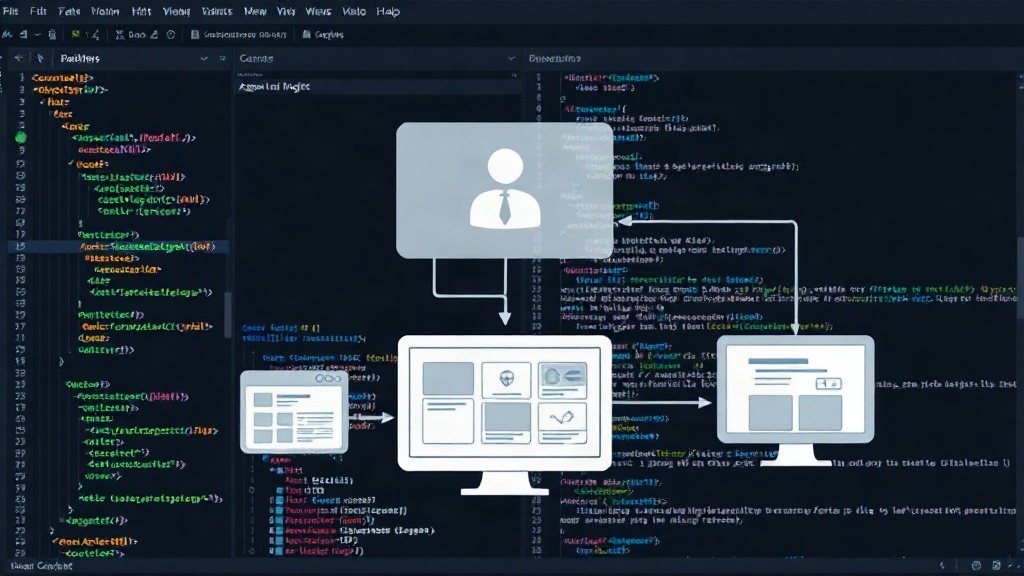
At its core, Agent Interface acts as a sophisticated intermediary. It translates the high-level goals provided to an AI agent into a series of precise actions that can be executed on a computer. This involves understanding the visual layout of applications, identifying interactive elements like buttons and input fields, and simulating user input such as clicks, keystrokes, and scrolling. The system can observe the screen, interpret the current state of an application, and decide on the next best action to achieve the agent's objective.
This process is not merely about automating repetitive tasks. Agent Interface aims for a more cognitive form of interaction. It needs to handle dynamic web pages, unexpected pop-ups, and variations in user interface design. For instance, an agent tasked with booking a flight might need to compare prices across different dates, select specific seats, and enter passenger details. Agent Interface facilitates this by allowing the AI to 'see' the booking website, 'read' the flight information, and 'interact' with the booking form as a human would.
Key Capabilities and Use Cases
Agent Interface offers several key capabilities that differentiate it from simpler automation tools:
- Visual Understanding: The system can interpret visual cues from application interfaces, understanding where elements are located and what they represent.
- Action Simulation: It can accurately simulate human input actions, including mouse movements, clicks, keyboard entries, and scrolling.
- Stateful Interaction: Agent Interface maintains an understanding of the current state of an application, allowing agents to make context-aware decisions.
- Cross-Platform Compatibility: The aim is to work across various operating systems and application types, from web browsers to native desktop applications.
These capabilities open up a wide range of potential use cases. For developers, it could mean automating complex testing scenarios that require intricate user interactions. For businesses, it could enable AI agents to perform customer support tasks that involve navigating internal systems, data entry, or information retrieval from disparate software. Researchers could leverage it to build more sophisticated AI agents capable of interacting with complex scientific software or data visualization tools.
Consider an agent tasked with monitoring stock prices and executing trades. Agent Interface would allow the AI to log into a brokerage account, navigate to the trading platform, input order details, and confirm transactions, all without explicit, pre-programmed API endpoints for every single action on that platform. This is akin to giving an AI a mouse and keyboard and teaching it how to use them.
The Broader Impact on AI Development
The development of tools like Agent Interface signifies a crucial step towards more capable and autonomous AI systems. By empowering AI agents to interact with the digital environment more naturally, we move closer to AI that can assist humans not just in specialized tasks but in broader, more complex workflows. This could reduce the need for humans to act as constant intermediaries between AI and the software they need to operate.
The surprising detail here is not the ambition of the project, but the directness of its approach. Instead of trying to build a universal API for every possible software interaction, Agent Interface focuses on replicating the human method of interaction – through the visual interface. This analogical approach to AI-computer interaction is what makes it so powerful.
As AI agents become more sophisticated, the ability to interact with a wide range of software without custom integrations will be paramount. Agent Interface addresses this need, potentially accelerating the adoption of AI in numerous industries by lowering the barrier to integrating AI into existing digital workflows. The future of AI may well depend on its ability to seamlessly operate within the human-designed digital landscape.
Looking Ahead
While Agent Interface is still in its early stages, its premise addresses a fundamental limitation in current AI agent technology. The ability for AI to effectively 'use' computers is a critical enabler for more advanced applications. As development continues, the focus will likely be on improving the robustness, speed, and accuracy of its interface interpretation and action execution. The ultimate goal is an AI agent that can learn to use any computer program with minimal human guidance, fundamentally changing how we interact with and leverage artificial intelligence.