
The Fintech Credit Paradox: From Disruption to Rediscovery
Fintech promised to democratize credit, leveraging data to serve the unbanked and underbanked. The initial wave focused on alternative data points – social media activity, mobile phone usage, even psychometric tests – to underwrite loans for individuals with no traditional credit history. This approach allowed for rapid scaling and offered access to credit for millions. However, a significant shift is underway. The core tenets of responsible lending, long practiced by traditional banks, are re-emerging at the heart of fintech's credit strategies. The age of lending to relative strangers, based on opaque algorithms and sparse data, is drawing to a close. The new frontier, or rather a return to the old one, is defined by a deep understanding of a borrower's verifiable income and predictable cash flows.
Why the Shift? The Limits of Algorithmic Guesswork
The initial excitement around alternative data was driven by the potential to bypass the gatekeepers of traditional finance. It offered a pathway for individuals overlooked by credit bureaus. Yet, the inherent challenges in verifying and consistently interpreting this data proved substantial. The predictive power of many alternative data sources, when isolated from actual income and expenditure, was often lower than anticipated. This led to higher default rates in certain segments and a realization that while data is crucial, the *right* data matters more. The cost of acquiring, cleaning, and analyzing these diverse datasets, coupled with the increasing sophistication of fraud detection, began to outweigh the benefits for many lenders. More importantly, regulators started scrutinizing the fairness and transparency of these scoring models, pushing lenders towards more grounded, evidence-based underwriting.
Think of it less like a sophisticated AI predicting a borrower's future based on their online browsing history, and more like a seasoned shopkeeper who knows their regular customers, understands their business cycles, and can gauge their ability to pay based on visible transactions. The fintech pivot is a move back toward this tangible understanding of financial health.
The New Underwriting: Verifiable Income and Visible Cash Flows
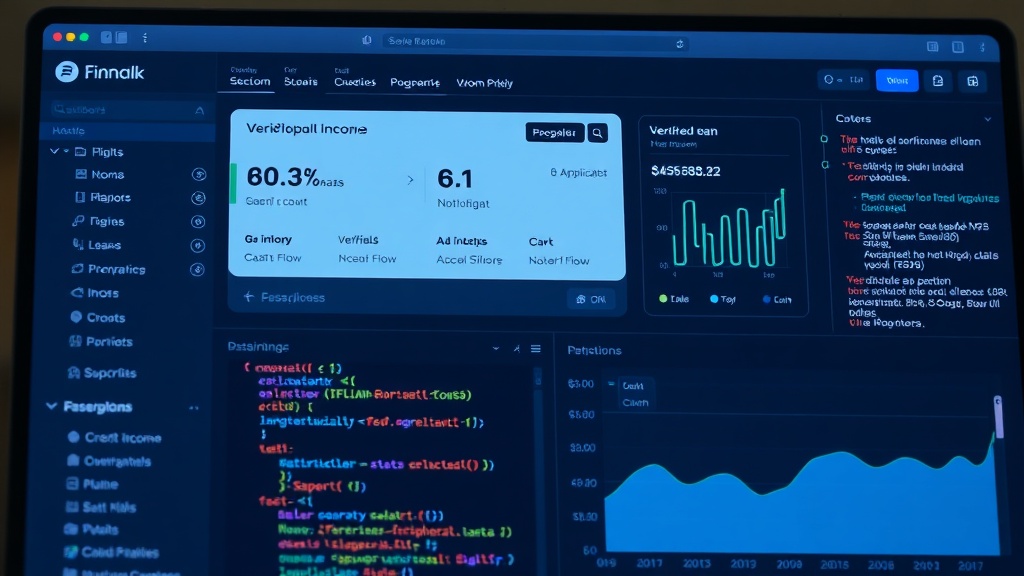
The next wave of fintech lending is characterized by a return to basics, but with a modern twist. Instead of relying solely on credit bureau scores or speculative alternative data, lenders are now prioritizing direct access to and analysis of borrowers' income streams and spending patterns. This involves integrating with payroll providers, open banking APIs, and direct bank account aggregation to build a clear picture of a customer's financial reality. The focus is on consistency and predictability: Is the income stable? Are there regular deposits? What are the essential outgoing expenses? This data provides a far more robust foundation for credit decisions than abstract digital footprints.
Platforms are increasingly offering tools that allow users to securely link their bank accounts, providing lenders with real-time visibility into their financial activities. This transparency benefits both parties. Borrowers can often access credit more quickly and on better terms if their financial health is clearly demonstrable. Lenders, in turn, can underwrite loans with greater confidence, reducing risk and the potential for defaults. This approach doesn't necessarily exclude individuals with thin credit files, but it requires them to provide verifiable proof of income and cash flow, rather than relying on proxy data.
Implications for the Market and Borrowers
This recalibration has significant implications. For fintech companies, it means a potential slowdown in hyper-growth fueled by mass-market, lightly underwritten loans. The emphasis shifts from sheer volume to portfolio quality and sustainable profitability. Companies that can master the art of analyzing real-time cash flows and income data will gain a competitive edge. It also suggests a consolidation within the fintech lending space, as those unable to adapt their underwriting models may struggle to compete or face higher capital costs.
For consumers, this means a more nuanced lending landscape. Those with stable, verifiable incomes will likely find it easier to access credit. However, individuals whose financial lives are inherently unpredictable or difficult to document may find it harder to secure loans through these new fintech channels. This could inadvertently create a new class of 'unlendable' individuals, echoing the very problem fintech initially sought to solve. The challenge for the industry now is to balance the need for verifiable data with the imperative to maintain financial inclusion.
The Future of Credit: A Hybrid Approach?
The transition is not an abandonment of technology, but a refinement of its application in credit. Artificial intelligence and machine learning are still critical, but they are being trained on more concrete, financially relevant data. The goal is to build models that are both sophisticated and grounded in economic reality. The future of lending will likely involve a hybrid approach, combining traditional financial metrics with advanced data analytics, but always with a strong emphasis on understanding the borrower's actual capacity to repay.
This is less about reinventing credit and more about returning to its fundamental principles: lending responsibly, based on a clear understanding of repayment ability. The age of lending to abstract digital personas is over; the era of lending to financially understood individuals, facilitated by modern technology, has begun.