The Hidden Costs of Fine-Tuning: A Multi-Term Equation
When discussing the cost of fine-tuning large language models (LLMs), the conversation invariably circles back to GPU hours. This is understandable; the raw compute power required for training is significant and easily quantifiable. However, focusing solely on GPU-hours paints an incomplete, and often misleading, picture of the true financial and operational investment. A more accurate assessment requires understanding at least four distinct cost categories, each with its own set of variables and potential for escalation.
The first major component, often underestimated, is the data cost. This encompasses the hours spent on data curation, meticulous labeling, or the generation of high-quality teacher data if synthetic data is being employed. For many, especially those working with specialized domains, acquiring or creating a sufficiently large and accurate dataset can be a labor-intensive and expensive undertaking. Think of it less like buying a pre-made ingredient and more like growing your own organic produce from seed – the initial effort is substantial.
Next, we have the obvious compute cost. This is the GPU-hours multiplied by the prevailing rate, and crucially, multiplied again by the number of attempts. Few LLM fine-tuning projects succeed perfectly on the first try. Iterations for hyperparameter tuning, architectural adjustments, or simply correcting unforeseen issues mean that the initial GPU-hour estimate is often a baseline, not the final figure. Running multiple experiments, even for a few hours each, can quickly inflate this cost.
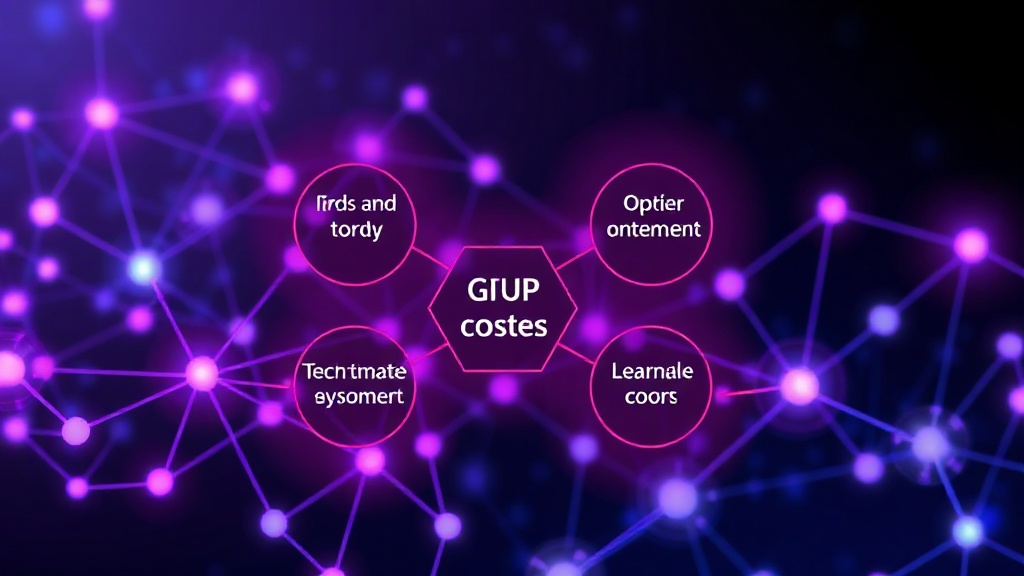
The third term is evaluation. Building a robust evaluation suite is critical for understanding model performance and identifying regressions. This involves not only the time to construct the suite itself but also the cost of 'judge tokens' (if using LLM-based evaluation) and the essential, though often costly, human review to validate automated metrics. A model might perform well on benchmark datasets, but without a tailored evaluation process, its real-world utility remains uncertain. This is where the quality of your fine-tune is truly tested.
Beyond the one-off costs of each fine-tuning attempt, there are significant recurring expenses. The primary ongoing cost is serving. Whether you host your fine-tuned model on your own infrastructure or rely on a managed service, there are perpetual hosting fees or per-token charges. As your application scales, so too will this cost, potentially becoming the largest line item over time.
Finally, there is the often-overlooked aspect of maintenance. This includes the necessity of re-training when the base model is deprecated or updated, requiring a new fine-tuning cycle. It also involves keeping the evaluation suite alive and relevant as the underlying technology or your application's requirements evolve. Neglecting maintenance can lead to model drift, decreased performance, and ultimately, obsolescence.
The interplay between these terms dictates the total cost. A simplified formula for the first year might look like: Total Year 1 Cost ≈ (Data Curation + Compute Hours x Rate x Attempts + Evaluation Costs) x Number of Attempts + 12 x (Serving Costs + Maintenance Costs). This highlights that the 'one-off' costs are multiplied by the number of experimental runs, while recurring costs are paid monthly, indefinitely.
Navigating the Licensing Labyrinth for Fine-Tuning and Deployment
Beyond the financial investment, a critical, yet frequently misunderstood, hurdle in fine-tuning and deploying LLMs lies in their licensing. The question, "Can I use this model commercially?" is deceptively simple. In reality, it masks a complex web of permissions and restrictions that can vary significantly across different components of the AI system. Successfully navigating this landscape requires understanding that you are dealing with multiple, independent licenses, not a single overarching agreement.
The most commonly checked license is that of the base weights. This is the license attached to the pre-trained model checkpoint you download and begin your fine-tuning process with. Many popular open-source models have permissive licenses, but it is imperative to read the specific terms, as variations can exist even within model families or across different sizes of the same release.
However, this is only the first layer. The training data used for fine-tuning carries its own license. This is a crucial point of potential conflict. A model might be released under a permissive commercial license, but if you fine-tune it using a dataset that itself has a non-commercial clause, your resulting fine-tuned model may inherit that restriction. Imagine building a race car with a legally acquired chassis, but then painting it with a non-approved, restricted paint – the car might not be race-legal.
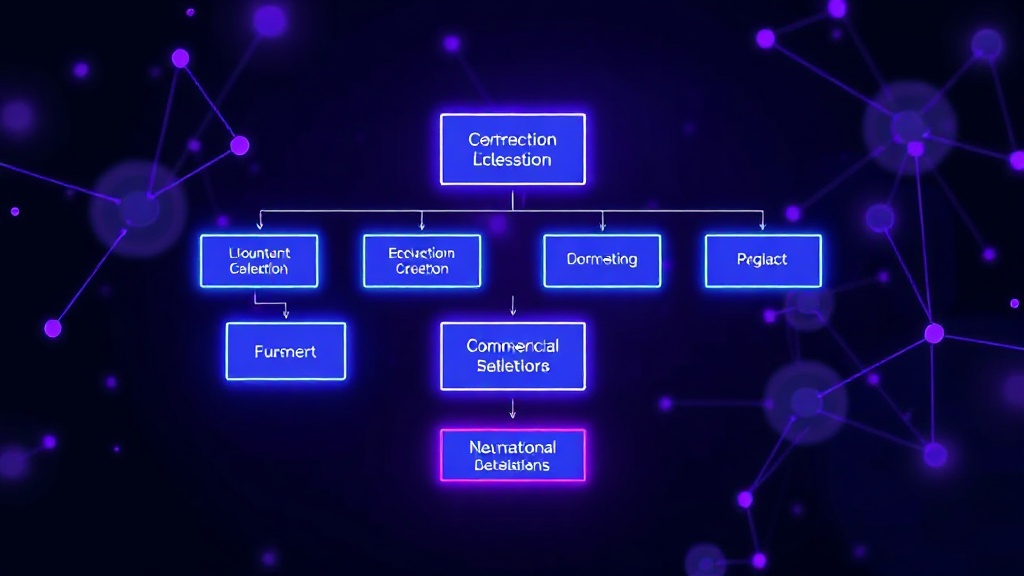
The complexity doesn't end there. Depending on the model architecture and its dependencies, there might be additional licenses governing specific components or libraries used in the training or inference pipeline. Furthermore, the deployment environment itself can introduce licensing considerations. If you are using a cloud platform or a specific inference framework, their terms of service or associated licenses might impose further obligations or restrictions on how you can use and serve your fine-tuned model.
Therefore, a comprehensive licensing strategy involves disentangling these layers. It requires diligence in checking the license for the base weights, meticulously verifying the licensing terms of all training data, and understanding any restrictions imposed by the software stack used for training and deployment. Failure to do so can lead to significant legal repercussions, including intellectual property disputes and forced cessation of services. Consulting with legal counsel specializing in AI and intellectual property is not merely advisable; for commercial deployment, it is essential.
What remains unaddressed by current documentation is how these layered licenses interact when models are distributed as part of a larger SaaS product. If a fine-tuned model is embedded within a feature of a larger application, does the application's overall license subsume the model's, or do the individual license terms remain paramount and independently enforceable? This ambiguity creates a significant risk for companies integrating fine-tuned models into their core offerings.