The Foundation: Understanding Pretrained Models
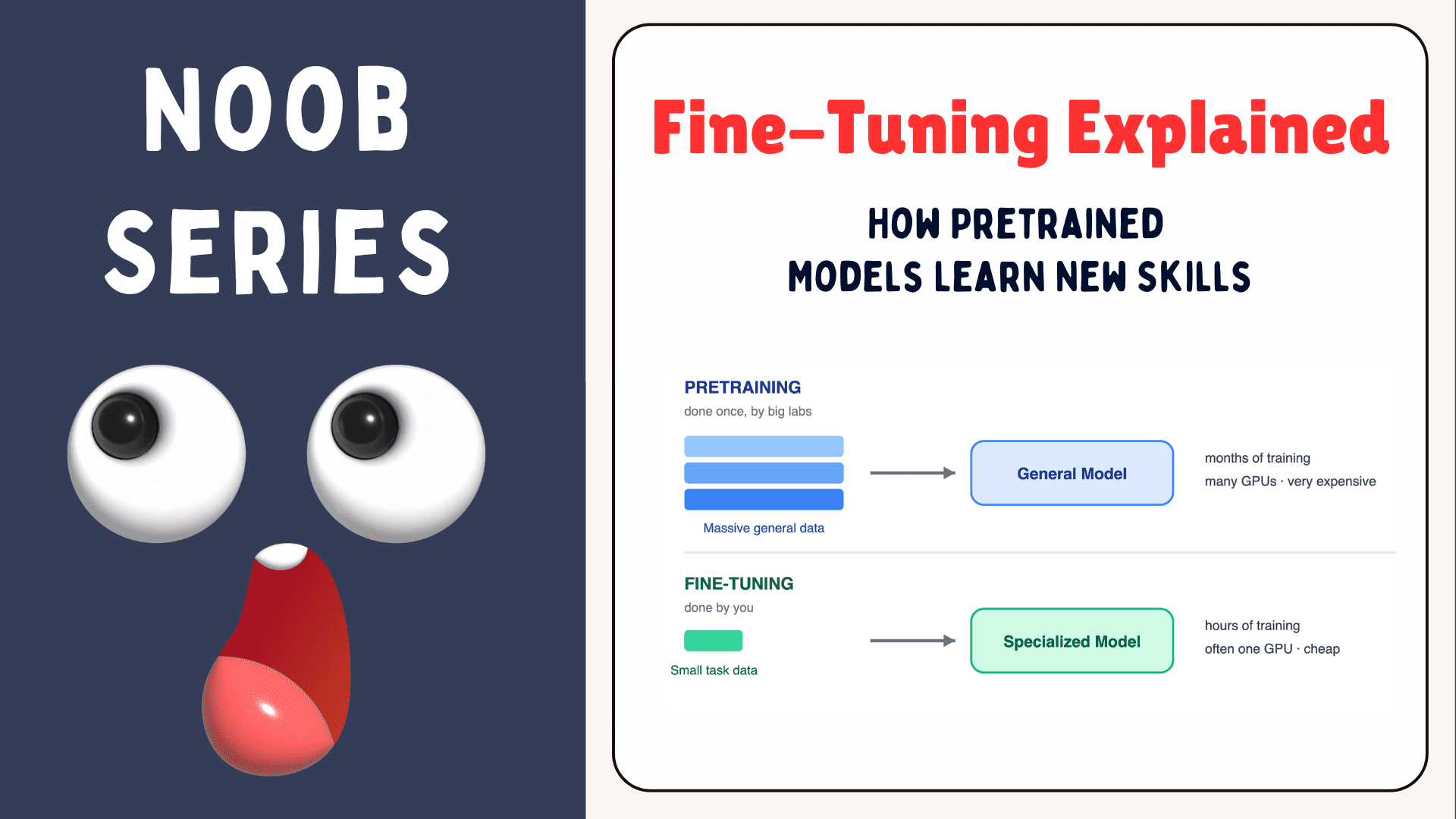
Large language models (LLMs) and other sophisticated AI systems don't start from scratch for every new task. Instead, they are typically built upon a foundation of extensive pretraining. This initial phase involves exposing the model to massive datasets—think the entire internet, vast libraries of books, and countless code repositories. During pretraining, the model learns fundamental patterns, grammar, facts, reasoning abilities, and general knowledge about the world. It develops a broad understanding, akin to a human who has absorbed a wealth of information through years of education and experience. These pretrained models are incredibly powerful, capable of general tasks like answering questions, summarizing text, and generating creative content. However, their knowledge is broad rather than deep in any specific domain.
For instance, a general-purpose LLM might be able to discuss medical topics based on its broad training data, but it won't possess the nuanced diagnostic capabilities or specialized terminology of a model trained specifically for radiology reports or clinical trial analysis. This is where fine-tuning becomes essential. It's the process of taking a model that already has a strong general understanding and teaching it to excel at a narrower, more specific task or domain.
What is Fine-Tuning?
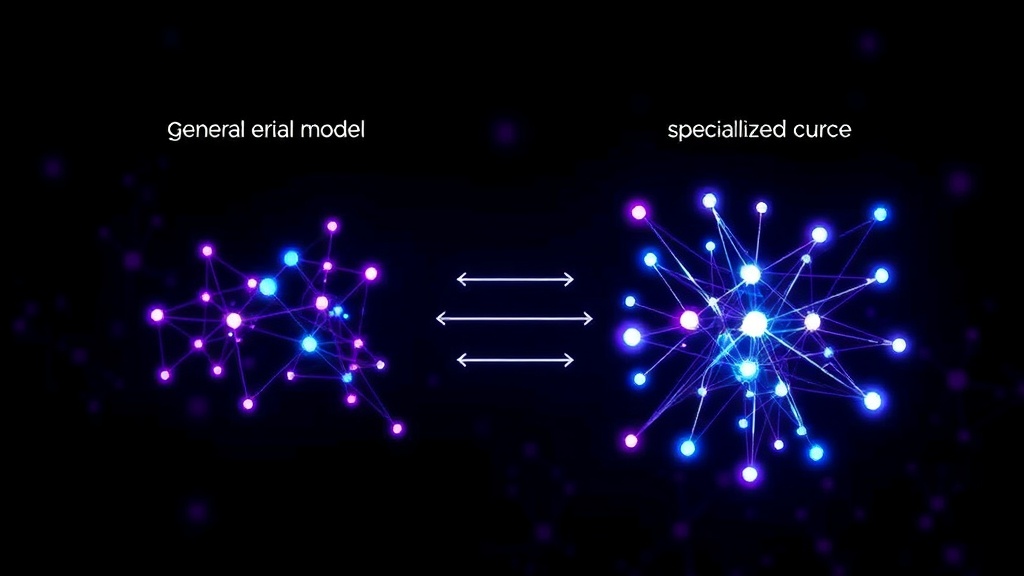
Fine-tuning is a transfer learning technique. In essence, it's about adapting a pretrained model to a new, often smaller and more specialized, dataset. Instead of training a model from zero, which would require immense computational resources and data, fine-tuning leverages the existing knowledge gained during pretraining. The model's existing parameters (the internal weights and biases that define its behavior) are adjusted slightly based on the new, specific data. This is like taking a highly educated generalist and giving them specialized on-the-job training in a particular field.
The process typically involves feeding the pretrained model examples relevant to the target task. For example, if you want to fine-tune a model to classify customer support tickets, you would provide it with a dataset of past tickets labeled with their respective categories (e.g., 'billing issue,' 'technical problem,' 'feature request'). The model then processes these examples, and its internal parameters are updated to better recognize the patterns associated with each category. This adjustment is usually done with a much lower learning rate than during pretraining, ensuring that the model doesn't forget its general knowledge while adapting to the new task.
Why Fine-Tune? The Benefits
The advantages of fine-tuning are significant, especially for organizations and developers looking to leverage AI for specific applications:
- Efficiency: It drastically reduces the time, computational power, and data required compared to training a model from scratch. Pretraining can take weeks or months on massive GPU clusters; fine-tuning can often be accomplished in hours or days on less intensive hardware.
- Performance: Fine-tuning allows models to achieve state-of-the-art performance on specialized tasks. By focusing on domain-specific data, the model becomes highly accurate and relevant within that niche.
- Customization: It enables the creation of AI solutions tailored to unique business needs, industry jargon, or specific user requirements. This is crucial for applications requiring a high degree of accuracy and contextual understanding.
- Cost-Effectiveness: The reduced computational and data requirements translate directly into lower costs, making advanced AI accessible to a wider range of users and businesses.
The Fine-Tuning Process: A Closer Look
The practical steps involved in fine-tuning usually follow a structured approach:
- Select a Pretrained Model: Choose a base model that has been trained on a broad dataset relevant to your general area of interest. For text tasks, models like BERT, GPT-3, or T5 are common starting points. For image tasks, ResNet or Vision Transformer (ViT) models are frequently used.
- Prepare the Specialized Dataset: Gather or create a dataset that is representative of the specific task you want the model to perform. This dataset should be high-quality and accurately labeled. The size of this dataset can vary, but it's typically much smaller than the pretraining dataset.
- Configure Training Parameters: Set up the fine-tuning process. This involves choosing hyperparameters such as the learning rate (usually kept low), the number of training epochs (how many times the model sees the dataset), and the batch size (how many data samples are processed at once).
- Train the Model: Feed the specialized dataset to the pretrained model. The model's weights are adjusted through backpropagation to minimize the error on this new dataset. This stage requires monitoring to prevent overfitting (where the model performs well on the training data but poorly on unseen data) or underfitting (where the model doesn't learn the task well enough).
- Evaluate and Iterate: After training, evaluate the fine-tuned model's performance on a separate test set. If the performance is not satisfactory, adjust hyperparameters, augment the dataset, or even try a different base model and repeat the process.
When to Use Fine-Tuning (and When Not To)
Fine-tuning is a powerful technique, but it's not always the best approach. It's most effective when:
- You have a well-defined, specific task.
- You have a reasonably sized, high-quality dataset for that task.
- A general-purpose pretrained model already exhibits some understanding of the domain.
- You need high performance and customization beyond what prompt engineering alone can achieve.
Conversely, fine-tuning might be overkill or less effective if:
- Your task is very general and can be handled well by a pretrained model with just good prompting.
- You lack sufficient high-quality labeled data for your specific task.
- The task requires entirely new knowledge or capabilities not present in any existing pretrained models.
- Computational resources are extremely limited, and even fine-tuning is too expensive.
The Future of Adaptation
Fine-tuning represents a critical step in democratizing AI. It allows developers and researchers to build upon the massive investments made in large-scale pretraining, adapting these powerful general models for a myriad of specialized applications. As models continue to grow in size and capability, efficient adaptation techniques like fine-tuning will become even more crucial. The ongoing research in this area focuses on making the process more efficient, requiring even less data, and enabling models to adapt more rapidly and robustly to new, unseen tasks. This iterative refinement is how AI systems move from being knowledgeable generalists to indispensable specialists.