The Challenge: Scaling Support Beyond a Search Box
Findnix.eu, a European privacy-focused search engine operating under the motto "Find alles, speichere nix" (find everything, store nothing), quickly encountered a common problem for growing digital products: user queries. As real users adopted the service, questions poured in about its spam filter, site indexing processes, data storage policies, and how to report fraudulent listings. Initially, these were handled via email, a method that proved unsustainable as the user base expanded. A simple, static FAQ page also fell short, lacking the capacity for in-depth, community-driven explanations and longer articles, such as child-safe explainer content or general knowledge entries.
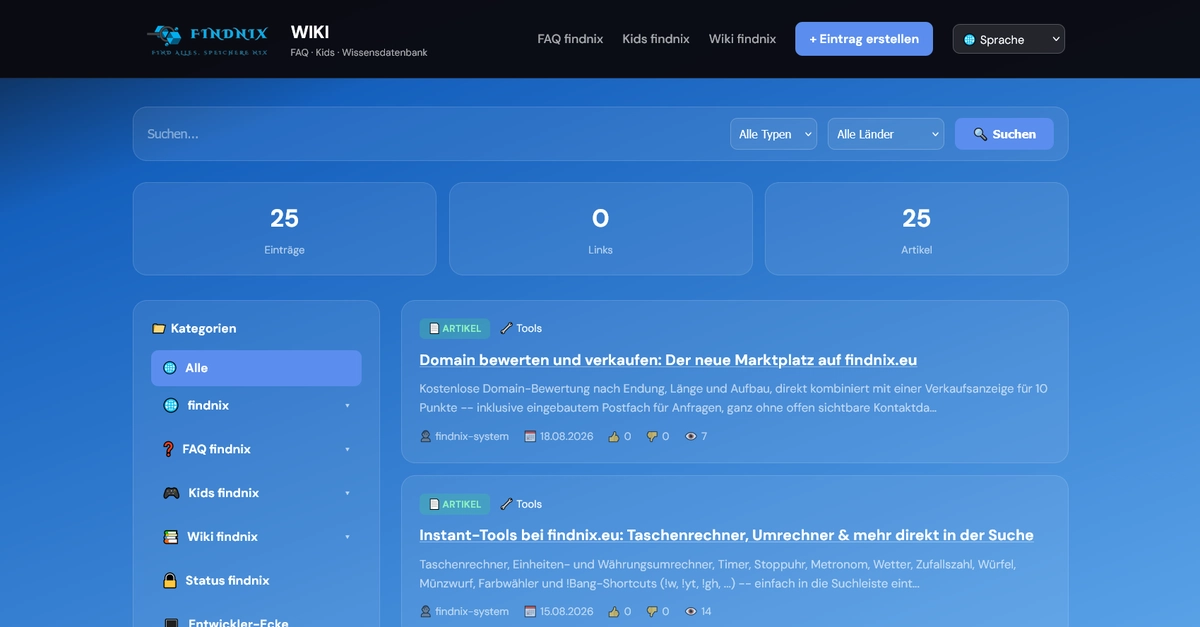
Recognizing this limitation, the Findnix team decided against integrating a sprawling FAQ into their core search engine. Instead, they opted to create a distinct project dedicated to knowledge management and community support: wiki.findnix.eu. This strategic separation allows for a focused environment to manage user inquiries, provide detailed documentation, and foster community contribution without cluttering the primary search experience.

Organizing Knowledge: Three Pillars for the Wiki
The wiki is structured around three core categories, each accessible via a dedicated short-link in the site's header. This organizational approach ensures that users can quickly navigate to the information most relevant to their needs. The categories are designed to cover the breadth of potential user inquiries and contributions, moving beyond basic troubleshooting to encompass broader aspects of the search engine's functionality and purpose.
The first category, typically labeled 'Support' or 'Help,' addresses the immediate concerns of users. This section includes detailed explanations of how the spam filter operates, clarifying the criteria and processes involved in identifying and filtering unwanted content. It also provides clear guidance on site indexing, explaining what factors influence a website's inclusion in Findnix's results and offering advice for site owners. Crucially, this section directly tackles the privacy aspect, elaborating on what specific data, if any, Findnix actually stores, reinforcing the 'store nothing' promise. Information on how users can report issues, such as fake shops identified in search results, is also prominently featured here, providing a clear reporting mechanism.
The second category, often termed 'Features' or 'How It Works,' delves into the technical and functional aspects of the search engine. This is where longer-form, community-contributed articles can flourish. Explanations might cover the nuances of their search algorithms, the technologies employed to ensure privacy, and the user experience design choices that differentiate Findnix from other search providers. This section serves as a knowledge base for understanding the 'find everything' part of their tagline, detailing the scope and capabilities of the search engine. It also provides a platform for educational content, such as kid-safe explainers that demystify search engine technology for younger audiences or those new to the concepts.
The third category, designated as 'Community' or 'About,' focuses on the broader ecosystem around Findnix. This includes information on contributing to the wiki itself, guidelines for content creation, and potentially a forum or discussion area for users to interact with each other and the Findnix team. It might also host general knowledge entries related to online privacy, digital security, and the ethical considerations of search technologies. This section aims to foster a sense of ownership and engagement among users, transforming them from passive consumers of information into active participants in the platform's growth and development. By centralizing these diverse needs—support, technical details, and community engagement—the wiki becomes an indispensable asset for Findnix's long-term success and user satisfaction.
Building a Scalable Knowledge Hub
The decision to create a dedicated wiki platform is a strategic move that addresses the scalability challenges inherent in supporting a growing user base for a privacy-centric service. Unlike traditional search engines that may monetize user data, Findnix's commitment to privacy means it cannot rely on such methods for revenue or operational insights. Therefore, building a robust, self-sustaining knowledge base becomes paramount. The wiki serves as a public, transparent repository of information, reducing the burden on the core support team while empowering users with the knowledge they need.
This approach contrasts sharply with the proprietary, often opaque, support systems of many large tech companies. For Findnix, transparency is not just a feature but a core tenet of its privacy-first philosophy. By enabling community contributions, the wiki also benefits from a diversity of perspectives and a potentially wider range of expertise than a small in-house team could provide. This collaborative model can lead to more comprehensive and accurate documentation over time, as users who encounter specific issues or discover unique solutions can share their findings. The wiki becomes a living document, evolving alongside the search engine and its user community.
Furthermore, the separation of the wiki from the main search engine site allows for a more flexible and iterative development process for the knowledge base itself. The Findnix team can experiment with different wiki software, organizational structures, and community engagement strategies without impacting the core search functionality. This agility is crucial for adapting to user feedback and evolving informational needs. The success of wiki.findnix.eu will likely depend on effective moderation, clear contribution guidelines, and active engagement from both the Findnix team and its user community. The goal is to create a resource that is not only informative but also trustworthy and accessible, reinforcing Findnix's commitment to user privacy and empowerment.