
Analyzing Global Economic Divergence with Free Macro Data
The stark contrast in monetary policy between Brazil and Japan in 2022—Brazil's central bank at 13.75% policy rate while Japan's remained at -0.1%—illustrates a fundamental truth about macroeconomic data: economies rarely move in perfect lockstep, even when facing similar global shocks like post-pandemic inflation. This divergence, rather than global synchronicity, is often where the most profound insights lie. Understanding these differences requires robust data, and the Finance Toolkit's new Economics module aims to provide just that, freely accessible to all.
This module offers a comprehensive dataset covering key macroeconomic indicators for over 60 countries. Users can access historical data on unemployment rates, GDP growth, inflation figures, government debt levels, central bank policy rates, and bond yields. Some data series extend back over a century, providing an unparalleled historical perspective. The data is sourced from reputable institutions like the OECD and the Global Macro Database, ensuring reliability and depth.
A significant advantage of this Economics module, especially compared to other components of the Finance Toolkit, is its complete lack of an FMP API key requirement. This means that the wealth of public macro data is available to anyone, without the need for authentication or subscription. This accessibility is crucial for researchers, analysts, students, and even casual observers who wish to explore global economic trends without financial barriers.
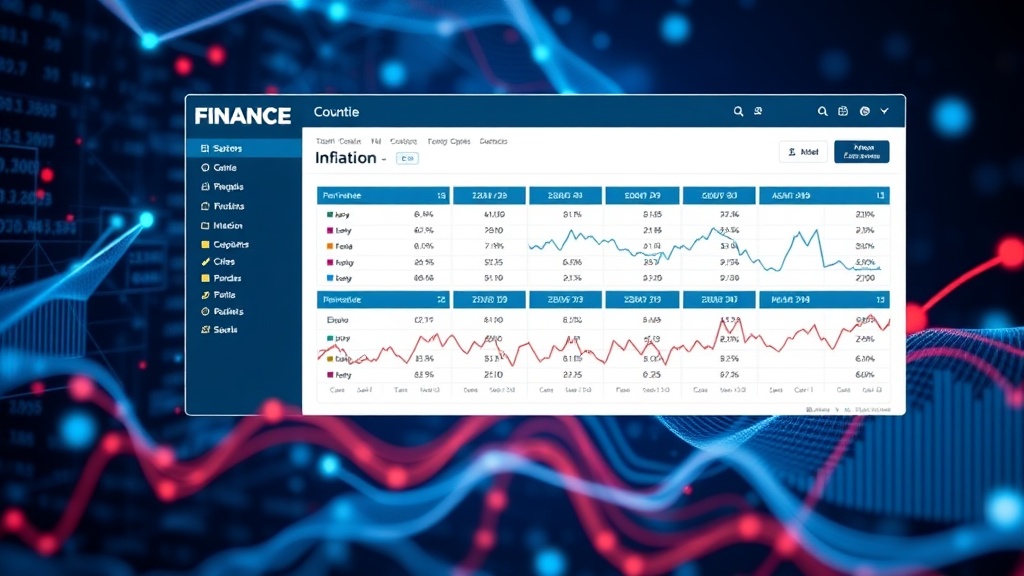
The implications for analysis are substantial. For instance, tracking inflation trends across different nations reveals not only the impact of global factors but also the effectiveness of country-specific policy responses. The divergence in interest rate policies between countries like Brazil and Japan, as seen in 2022, highlights how different economic structures, fiscal policies, and historical contexts shape responses to common challenges. The Finance Toolkit's module allows for direct comparison and historical analysis of such policy decisions and their outcomes.
Leveraging the Economics Module for Insight
The Finance Toolkit's Economics module is designed to be intuitive and powerful. By pulling data from established sources, it bypasses the often complex and fragmented process of data aggregation that typically hinders macroeconomic analysis. The ability to query data for over 60 countries, with some series dating back over 100 years, allows for both granular, country-specific studies and broad, cross-national comparative analyses. This historical depth is invaluable for understanding long-term economic cycles, the impact of major global events (like world wars, recessions, or pandemics), and the evolution of economic policies over time.
Consider the case of government debt. Analyzing debt-to-GDP ratios across developed and developing economies over decades can reveal patterns related to fiscal policy, economic growth, and the impact of financial crises. Similarly, comparing central bank rates and bond yields can illuminate the transmission mechanisms of monetary policy and the market's expectations about future economic conditions. The module's direct connection to assistant-powered tools, as mentioned in its description, suggests a future where complex queries about these indicators can be handled through natural language, making sophisticated economic analysis more accessible than ever.
The free and open nature of this data is a significant boon. It democratizes access to economic intelligence, leveling the playing field for smaller institutions, academic researchers, and individual investors who may not have the resources to subscribe to expensive commercial data services. This can foster greater transparency and a more informed public discourse on economic issues. The sheer breadth of data available means that users can explore a multitude of hypotheses, from the relationship between unemployment and inflation in emerging markets to the long-term effects of different fiscal stimulus approaches.
Beyond Simple Data Retrieval: Analytical Potential
The true value of such a comprehensive dataset lies not just in its availability, but in the analytical possibilities it unlocks. For developers and data scientists, this module acts as a readily available sandbox for building predictive models, backtesting trading strategies, or developing economic indicators. The ability to pull historical data for multiple countries means that comparative studies on policy effectiveness are straightforward. For example, one could analyze how different countries' responses to the 2008 financial crisis impacted their subsequent GDP growth and unemployment rates.
For founders and business strategists, understanding macroeconomic trends is paramount. The data can inform decisions about market entry, investment timing, and risk management. Knowing the inflation trajectory, interest rate environment, and government fiscal health of target markets provides a critical layer of due diligence. The module allows for a dynamic assessment of economic stability and growth potential, moving beyond static reports to interactive data exploration.
The availability of free, high-quality macroeconomic data is a powerful enabler. It lowers the barrier to entry for sophisticated economic analysis, encouraging more individuals and organizations to engage with the complex dynamics of the global economy. As the Finance Toolkit continues to integrate more advanced analytical capabilities, this economics module is poised to become an indispensable resource for anyone seeking to understand the forces shaping our world.
What remains to be seen is how the integration with AI-powered assistants will evolve. The promise of querying this vast dataset through natural language is significant, but the nuances of economic causality and the potential for misinterpretation require careful consideration. The development of robust, reliable AI interpretations of this data will be key to its long-term impact.