The Evolving Landscape of Device Reliability
The semiconductor industry is rapidly moving towards multi-die architectures, driven by the relentless pursuit of higher performance, increased functionality, and improved power efficiency. Devices are no longer monolithic blocks of silicon; instead, they are sophisticated integrations of multiple specialized dies, often packaged together to form a single, cohesive unit. This shift, while offering significant advantages, fundamentally challenges traditional approaches to reliability testing. The simple truth is that a device that functions perfectly at the moment of manufacture – time zero – offers no guarantee of sustained reliability throughout its operational lifespan in the field. The complex interactions between multiple dies, each with its own manufacturing variations and potential failure modes, create a new frontier for ensuring long-term device integrity.
Historically, reliability testing has focused on identifying and mitigating defects introduced during the manufacturing process. Methods like accelerated life testing (ALT), highly accelerated stress testing (HAST), and temperature cycling have been cornerstones of ensuring that a single die performs as expected under various environmental and operational stresses. These techniques aim to expose latent defects that could manifest as premature failures. However, the advent of multi-die systems introduces a new layer of complexity. These systems involve not just the individual dies but also the intricate interconnects between them, the packaging materials, and the thermal management solutions that keep everything within operating parameters. Failures can now originate not only within a single die but also from the interactions between dies, signal integrity issues across complex interconnections, or even thermal hotspots exacerbated by the proximity of multiple active components.
Challenges Posed by Multi-Die Architectures
The primary challenge lies in the increased complexity and the emergent behaviors that arise from the integration of multiple dies. Each die within a package can have its own unique set of process variations, material properties, and potential defect types. When these dies are brought together, their interactions can lead to new failure mechanisms that were not present in single-die designs. For instance, power delivery networks become more intricate, with the combined current demands of multiple dies potentially stressing interconnects and voltage regulators in ways that are difficult to predict. Similarly, thermal management becomes a critical concern. The heat generated by one die can affect the performance and reliability of adjacent dies, leading to localized temperature gradients that accelerate degradation. Without proper thermal design and testing, these hotspots can become the Achilles' heel of an otherwise well-designed system.
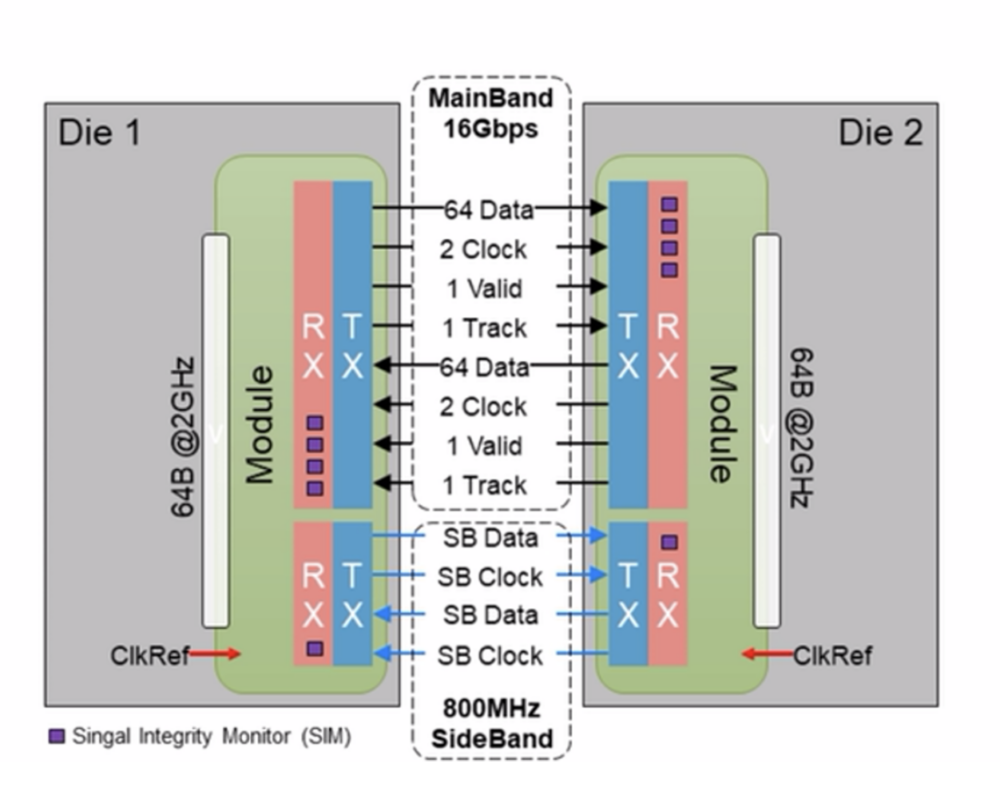
Furthermore, the communication interfaces between dies, whether they are high-speed serial links or parallel buses, are also potential sources of failure. Signal integrity can be compromised by noise coupling between adjacent signals, reflections from impedance mismatches, or timing skew. As these interfaces operate at increasingly higher frequencies, even minute imperfections can lead to data corruption and system malfunction. Testing these inter-die communication paths requires sophisticated techniques that can isolate and characterize signal quality under various operating conditions, which goes beyond the scope of traditional single-die testing methodologies.
The sheer number of components and their interdependencies means that the failure rate of a multi-die system is not simply the sum of the failure rates of its individual components. Instead, it's a complex function of component reliability, interconnect integrity, thermal management, and the specific workload the device is subjected to. This emergent complexity makes it difficult to extrapolate reliability from individual die tests to the system level.
Building on Established Test Methodologies
The critical takeaway is that the industry cannot afford to discard the wealth of knowledge and established practices developed over decades of single-die testing. Instead, these methodologies must be adapted and extended to address the unique challenges of multi-die systems. This means leveraging existing techniques like ALT, HAST, and temperature cycling, but applying them in a more nuanced and system-level context. For example, ALT can be used to stress not just individual dies but also the package and its interconnects. This might involve applying higher thermal gradients across the package, stressing the power delivery network with higher ripple currents, or subjecting the entire assembly to more aggressive humidity and temperature cycles.
New testing paradigms are also emerging. System-level stress testing, where the entire multi-die device is operated under realistic workloads while being subjected to environmental stresses, is becoming increasingly important. This approach allows for the observation of emergent failure modes that might not be apparent during isolated component testing. Techniques such as built-in self-test (BIST) and boundary scan, which have long been used for manufacturing test, are being enhanced to provide more diagnostic information during field reliability testing. These enhanced BIST capabilities can monitor the health of individual dies and their interconnections in real-time, providing early warnings of potential issues.
What remains to be fully addressed is the development of standardized benchmarks and testing protocols specifically for multi-die systems. While individual companies are developing their own approaches, a universal framework that accounts for the diverse range of multi-die architectures (e.g., 2.5D, 3D ICs, chiplets) would accelerate progress and build confidence in the reliability of these advanced devices. This would involve defining standard stress conditions, failure criteria, and data analysis techniques that can be applied across the industry.
The Future of Field Reliability
As devices become more complex and are deployed in increasingly demanding environments, the importance of robust field testing cannot be overstated. The transition from single-die to multi-die systems is not merely an incremental change; it represents a paradigm shift in how we design, manufacture, and, crucially, test semiconductor devices. Companies that fail to adapt their testing strategies risk delivering products that suffer from premature field failures, leading to costly recalls, reputational damage, and erosion of customer trust. Embracing and evolving established testing methodologies, while simultaneously developing new system-level approaches, is the only viable path forward to ensure the reliability of the next generation of advanced electronic systems.