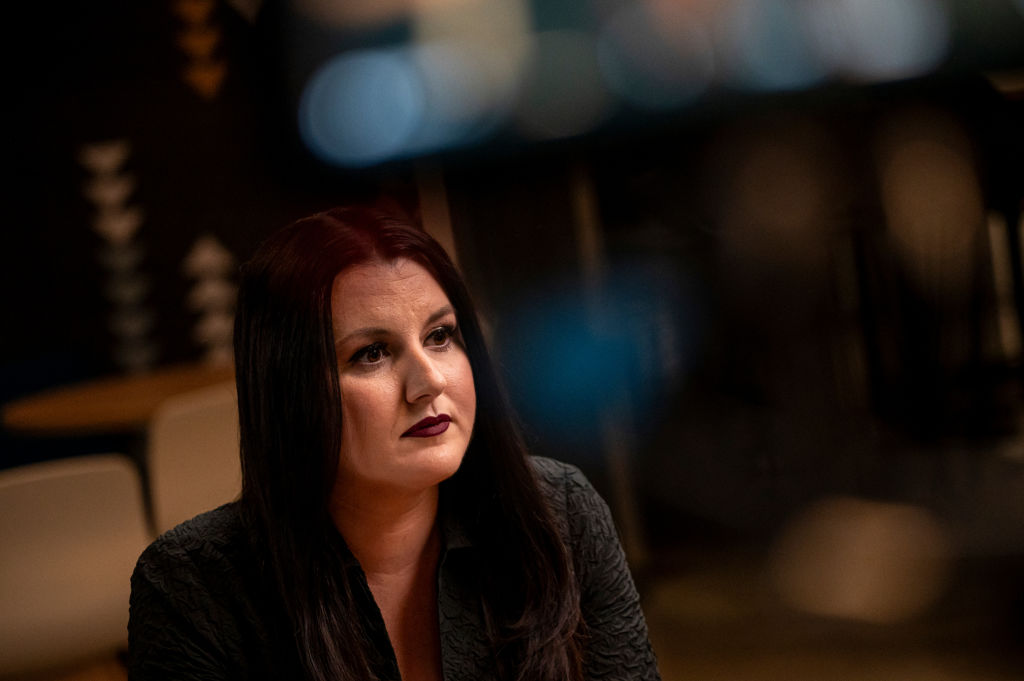
Leadership Shift at OpenAI Amidst Strategic Pivots
Fidji Simo, who held the crucial second-in-command position at OpenAI, is stepping down from her full-time executive duties. The departure stems from a medical leave that has extended beyond initial expectations. This leadership transition occurs at a pivotal moment for the artificial intelligence powerhouse, as the company reportedly gears up for a potential Initial Public Offering (IPO) and intensifies its efforts to capture market share in the enterprise sector, a domain where competitors like Anthropic are making significant inroads.
Simo's role was instrumental in navigating OpenAI through a period of rapid growth and intense public scrutiny. As COO, she was deeply involved in the operational and strategic aspects of the company, overseeing a period that saw the explosive rise of generative AI and the widespread adoption of tools like ChatGPT. Her departure leaves a notable leadership vacuum, particularly concerning the company's commercialization strategies and its push into business-critical applications.
The timing of Simo's exit is particularly consequential. OpenAI is reportedly in discussions with investment banks for a potential IPO, a complex process that demands stable and experienced leadership. Furthermore, the competitive landscape is intensifying. Anthropic, backed by Amazon and Google, has been aggressively pursuing enterprise clients with its Claude models, positioning itself as a formidable rival. Simo's operational expertise was seen as a key asset in OpenAI's race to solidify its position in this lucrative market.
Context of Simo's Tenure and OpenAI's Market Position
Fidji Simo joined OpenAI after a distinguished career at Meta, where she led the company's Facebook app. Her transition to OpenAI in 2022 marked a significant executive hire, bringing with her extensive experience in managing large-scale consumer platforms and driving product adoption. At OpenAI, she was credited with building out the company's go-to-market strategy and expanding its commercial operations, including the development of API access and enterprise solutions.
OpenAI's journey since the public release of ChatGPT has been nothing short of meteoric. The company has faced both immense opportunity and significant challenges. On one hand, its technology has captured the world's imagination and demonstrated the potential of large language models. On the other, it has grappled with internal governance issues, ethical considerations surrounding AI development, and the relentless pace of innovation required to stay ahead. Simo's role was critical in translating groundbreaking research into tangible products and services that could be commercialized effectively.
The enterprise market represents a substantial growth vector for AI companies. Businesses are increasingly looking to integrate AI into their workflows for everything from customer service and content creation to data analysis and software development. OpenAI's ability to secure and retain enterprise clients will be a key determinant of its long-term success and valuation, especially as it prepares for a public offering. The departure of a leader with Simo's operational acumen at this juncture raises questions about the continuity of its enterprise strategy and execution.
Implications for OpenAI's Future and the AI Industry
Simo's departure is more than just an executive reshuffling; it signals a period of potential recalibration for OpenAI. The company must now demonstrate its ability to maintain momentum and execute its strategic objectives without a key figure who was instrumental in its commercial build-out. This is analogous to a ship navigating treacherous waters without its first mate at a critical juncture. The leadership vacuum could impact investor confidence as the IPO process unfolds and may create an opening for competitors to press their advantage.
The immediate challenge for OpenAI will be to ensure a smooth transition and to communicate a clear path forward regarding its leadership structure and strategic priorities. The company has a deep bench of talent, but the absence of Simo's specific expertise in operational scaling and commercial strategy will undoubtedly be felt. How OpenAI addresses this gap will be closely watched by employees, investors, and the broader tech industry.
The broader implication for the AI industry is a reminder of the human element in even the most technologically advanced companies. The success of AI giants is contingent not only on their algorithms and data but also on the leadership, operational stability, and strategic vision of their human teams. As the AI race continues, companies will need to demonstrate resilience and adaptability in their leadership, especially during periods of intense market competition and significant corporate milestones like an IPO.
What remains to be seen is how OpenAI will redistribute Simo's responsibilities and whether this transition will lead to any strategic shifts in its approach to the enterprise market or its IPO timeline. The company's ability to weather this leadership change while maintaining its aggressive growth trajectory will be a key test of its organizational strength.